
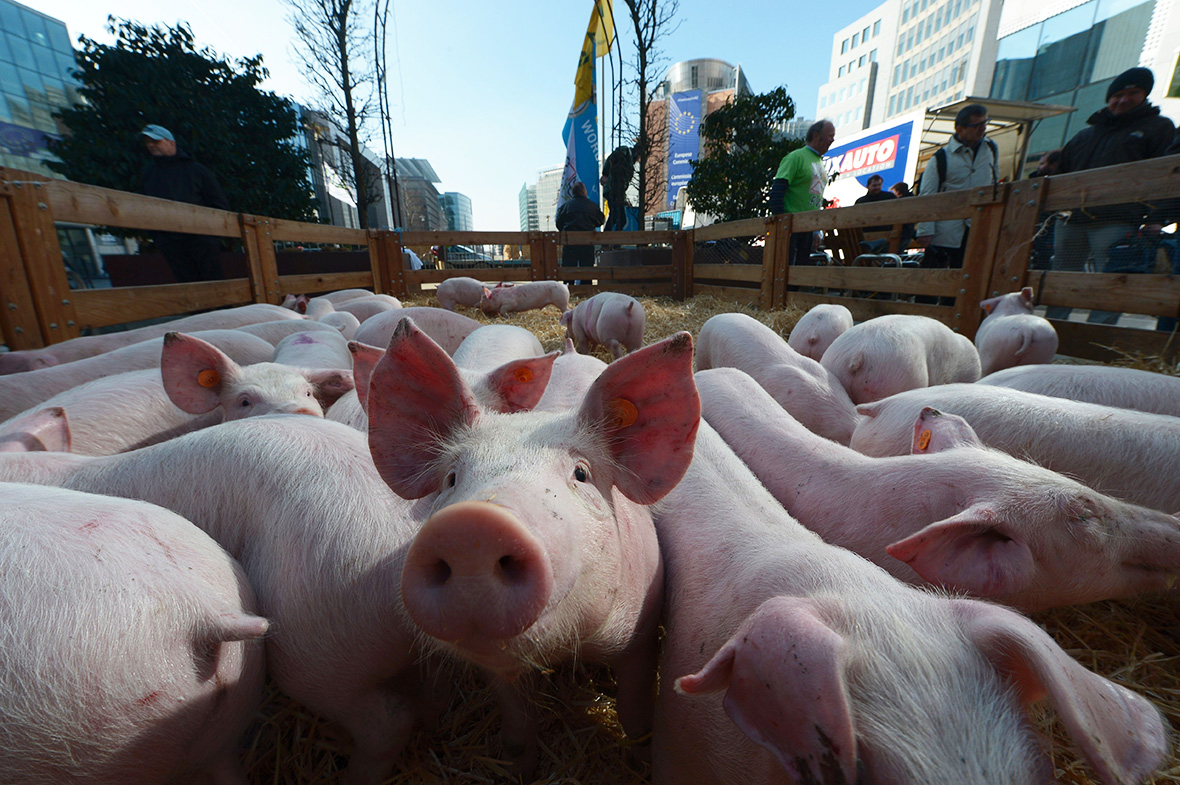
Swine flu has a wide antigenic diversity
John Thys/AFP
Flu strains appear to evolve faster in pigs than they do in
humans, a study of over 600 viruses has shown. Researchers say that this
increased diversity could potentially pose a pandemic threat to humans
if newly-evolved pig strains are transmitted to us.
Previous studies found swine flu
to have a wide genetic variability, meaning it has lots of different
virus strains. However, the diversity of swine flu surface proteins is
poorly understood."Once in pigs, flu viruses from humans continue to evolve their surface proteins, generically referred to as antigens, resulting in a tremendous diversity of novel flu viruses that can be transmitted to other pigs and also [back] to humans," said Nicola Lewis, first author of the research.
Researchers from the University of Cambridge analysed antigens from 600 flu viruses to improve their understanding of antigenic diversity in swine flu. Two hundred of these viruses had never been studied before. Their results were published in eLife.
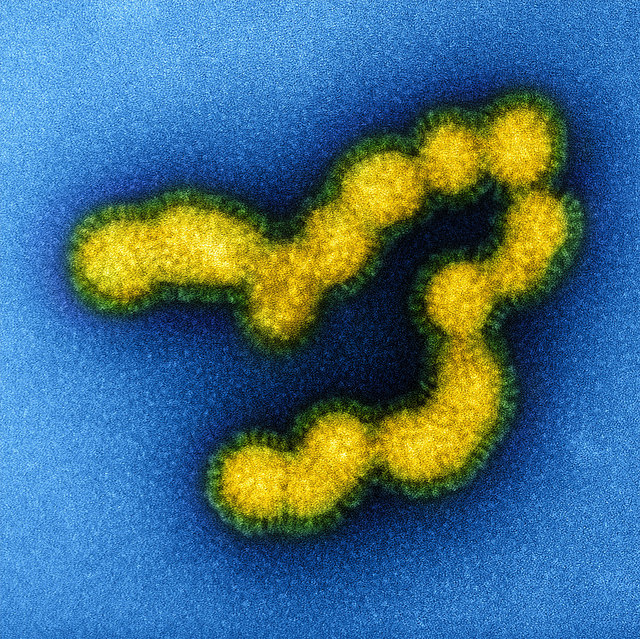
Swine flu has many different virus strains, and a wide antigenic diversity
NIAID/FlickrSome strains of the swine flu virus are likely to be 'antigenically similar' to the human flu virus. This means we should have an immunity to it as they were originally human flu strains of the virus.
However some virus strains have evolved so much that they are now almost completely different from the original strain, Lewis says. If these strains are transmitted to humans, their immune systems will not be able to defend against them.
"At some point all these diverse strains in pigs – introduced at different times into different pig populations around the world – have changed so much, many people in the human population will no longer be immune," Lewis said. "So the risk of these swine viruses re-infecting people to possibly cause a pandemic increases."
Vaccination is used in some parts of the world – including the US – to control flu in pigs. However, the researchers say it is highly unlikely one vaccine strain will be effective in controlling the virus, as its antigenic diversity is so large. They say there is a need for more focused surveillance in areas with high pig populations, like China. This could assess the rate of flu transmission between animals and humans more accurately.
Post a Comment