Articles by "ASIA"

How we get around our cities has suddenly flared up in our news. Even media colleagues are calling each other haters and zealots, and calling each other out for fake news. But is this just background noise or does it have a real impact?

Under the headline Cycleway figures in doubt, the New Zealand Herald said last Tuesday a leaked report showed demand for bike lanes in Auckland had not lived up to expectations.

The report showed figures used in the business cases for funding from the government may have overestimated demand for them, according to the Herald.

That was a red rag to vocal cycleway opponent - and sports car enthusiast - Mike Hosking on Newstalk ZB.

He said the Herald had revealed cycleways as a product of “sheer dishonesty” based on “exaggerated nonsense” and dodgy numbers.

Not for the first time, Mike Hosking framed the issue as a 'cyclists vs motorists' battle, and he was on the frontline with the drivers.

When Leighton Smith took over from him later than morning, he claimed he could have written the Herald's story all by himself.

The cycleways were a wasteful disgrace he said, and he knew all along they were based on "lies" and "fake figures." He wanted the heads of the top five to ten people at Auckland Council to roll over this.

By this time, Mike Hosking’s earlier on-air editorial had also been published by the Herald online, and as a Mike’s Minute's daily video sermon.

On his show’s Facebook page, his followers overwhelmingly agreed cycleways were an expensive sham and a financial fraud on ratepayers.

"Perhaps some balance should be applied to future projected cycle usage. Good things take time," said one who bucked the trend.

"But this doesn’t excuse Auckland Transport using false figures. Well done for exposing this, if this is the case," he added.

But was it? The next ZB host on air last Tuesday didn't think so.

"So I need to warn you that there are forces abroad that are prepared to fudge the facts to get their arguments across. They are guilty of spreading fake news," said Andrew Dickens.

He ran through the same numbers of cycleway users in the Herald's report, but pointed out Auckland Transport's claim the target figures were for the year 2026.

"The figures being compared after two years should be compared after 10," he said.

The Herald’s report compared "last year’s apples with oranges from 2026," Jolisa Gracewood from cycle advocacy group Bike Auckland said on the Spinoff.

Asked for clarification, AT released new figures and cycling manager Kathryn King said:

"Staff identified that early business cases were predicting trip levels that weren’t expected until 2026, and this has been rectified in the process."

Readers of the Herald in print on Tuesday would have no idea the yet-to-be-met targets were actually figures for the future when a fuller network would be up and running.

Readers of the online version would only know that if they read to the very end of the Herald's article.

Andrew Dickens reckoned that called for a re-write from the top down.

"You could have written a completely opposite headline: ‘Demand for parts of the unfinished Auckland urban cycle way are eight years ahead of schedule’. Another headline could have been: ‘Auckland cycleway numbers increased 15 per cent in the past year’ - which is true," he told ZB listeners.

Andrew Dickens said the actual cycling stats would not convince those he called the anti-cycleway “fake news purveyors”.

Hosts and journalists at NZME's flagship news brands calling each other out for fake news and fact-checking their reckons on air and in print isn’t a great look for a company currently working on how to charge people for its premium content.

If AT has presented misleading figures to get funding for cycleways, it wasn't obvious in the Herald's report on Tuesday.

Mediawatch has not seen the leaked draft report the story was based on - so we can't be sure what it says.


But after criticism of The Herald report - and its amplification on Newstalk ZB - there was no clarification in the paper later in the week.


On Friday The Herald’s senior writer Simon Wilson reported Auckland Transport's boss Shane Ellison had nothing to say about his organisation coming under under “a highly publicised attack”. That's odd, if AT is sure the story was wrong.


But all the same, Simon Wilson wondered why bikes and bikers provoke such a “flamethrower of fury” especially among people in the media - including his own colleagues.

"Hating on bikes has had a destructive impact in this city. Good plans have been compromised and delayed and good planners have been sidelined. Several of the city’s senior public servants have been spooked," he wrote.
Scooting round the issue

Meanwhile in Wellington, Newstalk ZB's political editor Barry Soper said he was pleased to see the controversial Lime e-scooters on the Wellington waterfront.

They were there because of a charm offensive by the Lime company outside a major conference about transport in New Zealand - Traffinz 2018.

A press release issued from Sydney airily referred to the Auckland and Christchurch roll-outs as “a success” - overlooking all the negative publicity about the injury toll (more than 150 ACC claims so far according to recent reports).

Lime wants a green light to roll out in Wellington, sparking a flood of reckons on the region's ZB morning show on Tuesday.

But we heard nothing from any of the the transport experts from here and overseas at the Trafinz conference who might have shed some light on all this.

One was Hamish Mackie, from self-titled Mackie Consulting company, who’s been hired by MBIE and others to research plans for transport.

He said what's playing out in our media has happened in other places where cycleways have developed earlier.

"It's common overseas. There's been big media problems in the New York story where they've had major boulevards where they've put in cycle lanes and the media have conspired against it," he told Mediawatch.

"But the thing that's overcome that hurdle was clear leadership and a plan for what they want to do. Bitter arguments have turned around around into progress," he said

Dr Alistair Woodward from the University of Auckland's school of population health said media controversy can influence decision-makers.

"I think people are conscious of the way they're being presented. Policymakers need to lead but they don't want to be seen as out of touch with what people are expecting and tolerating," he said.

He sees positive moves in the media now.

"The diversity of voices is increasing. There are 'the regulars' who have predictable views but we are now seeing commentary from other angles," he said.

"There are people other than middle aged men like me who have things to say and we should listen," he said.

Herald social media reporter Vera Alves - a non-cycling driver - wrote a rebuttal to "​the loud naysayers" who say Auckland's cycle lanes are underused.

"Cycle lanes are often empty because they are so efficient. Your cycling workmates are already at work, showered and ready to start​. Meanwhile, you (and me) are still sitting at the stupid traffic lights on the motorway on-ramp," she wrote.

"When you get a range of voices that gives you a more accurate reflection of what people really want and what they think," said Hamish Mackie.

https://www.geezgo.com/sps/47005

Join Geezgo for free. Use Geezgo's end-to-end encrypted Chat with your Closenets (friends, relatives, colleague etc) in personalized ways.>>

Marilynn Webb, won the supreme award for excellence and achievement in Māori art at the Te Waka Toi Awards at Te Papa in Wellington last night.

The Dunedin-based printmaker's work has featured in more than 200 exhibitions around the world over several decades, and her art explores concepts of land, ecology, politics, women in art, and Māori and post-colonial history.

Ms Webb, who is 82, said she was surprised to hear she had been given the award, but feels privileged to be recognised for her work.

"I felt quite emotional about it because I have worked in this area for 52 years so I feel quite overwhelmed actually."

Some of her old colleagues, who she trained with, were at the awards ceremony this evening, including visual artist Sandy Adsett who won the Te Tohu o Te Papa Tongarewa Rongomaraeroa Award recognising excellence and outstanding contribution to Māori arts.

"To go down in the history ledgers as part of it ... I'm feeling very happy about this, and I'm feeling very that the people here have acknowledged the importance and the creation of the contemporary Māori arts movement and are rewarding everybody," Ms Webb said.

New Zealand Art Council Māori committee chair Suzanne Ellison said Marilynn Webb had made an outstanding contribution to Ngā Toi Māori (Māori art).

"I congratulate Marilynn for this award recognising her outstanding body of work over many years, which is a significant contribution to Ngā Toi Māori and also to art in this country."

In all, 13 awards were presented to 12 of New Zealand's most talented Māori artists, advocates and community leaders.

The awards recognised excellence and achievement across all artforms including marae arts (traditional, marae-based artforms such as carving, and weaving) as well as contemporary artforms such as theatre, literature and visual arts.
Award winners:

Te Tohu o Te Papa Tongarewa Rongomaraeroa Award recognising excellence and outstanding contribution to Māori arts

Sandy Adsett

Ngā Tohu ā Tā Kingi Ihaka - Sir Kingi Ihaka Awards recognising lifetime contribution to strengthening Māori art and culture

Ranui Ngarimu
Gavin Bishop
Tā Tipene O'Regan
Mere Walker
Parekowhai Whaitiri

Te Tohu Whakamānawa o Te Matatini | Award for outstanding contribution to Kapa Haka

Kuini Moehau Reedy
Pita Sharples

Te Tohu Toi Kē a Te Waka Toi |Award recognising a significant, positive impact on the development and practice of Māori arts

Lyonel Grant
Isaac James
Nerys Ngaruhe
 

Join Geezgo for free. Use Geezgo's end-to-end encrypted Chat with your Closenets (friends, relatives, colleague etc) in personalized ways.>>

Malaysian Prime Minister Mahathir Mohamad has criticised his Australian counterpart Scott Morrison who has said that he is “open” to the idea of ​​moving his country’s embassy in Israel from Tel Aviv to Jerusalem. Australia is set to decide on whether the move will go ahead or not by Christmas.

Mohamad made the remarks at a press conference held after his meeting with Morrison on the sidelines of the Asean summit in Singapore.

Mohamad said he discussed with Morrison Australia’s intention to transfer its embassy in Israel from Tel Aviv to Jerusalem, and its recognition of Jerusalem as the capital of Israel.

The Malaysian Prime Minister pointed out that Australia’s transfer of its embassy to Jerusalem is tantamount to recognising Israel’s terrorist practices:

“I pointed out that in dealing with terrorism one has to know the causes. Adding to the cause for terrorism is not going to be helpful” he said.

https://www.geezgo.com/sps/46827

Join Geezgo for free. Use Geezgo's end-to-end encrypted Chat with your Closenets (friends, relatives, colleague etc) in personalized ways.>>

JAKARTA: Saudi Arabia’s Young Falcons pulled off a remarkable win against South Korea in the Asian Cup final on Sunday, with talisman Turki Al-Ammar leading the line to land the Kingdom its third title at U-19 level and their first since 1992.
It caps a wonderful week for Saudi Arabia as their semifinal win over Japan saw them qualify for next year’s FIFA U-20 World Cup in Poland, where they will be joined by their beaten opponents Korea.
It took the Saudis just two minutes to go ahead, with Al-Ammar finishing on the rebound after Abdulmohsen Al-Qahtani’s initial shot had been saved.
Twenty minutes later, they had a second goal. Khalid Al-Ghannam struck a scintillating drive over Lee Gwang-yeon in the Korean goal from distance to send the Saudi supporters in the Bogor’s Pakansari Stadium into raptures.
Korea pressed harder in the second half in a bid to rescue the game, and they reduced the deficit midway through the half, as Cho Young-wook calmly despatching a penalty, which had been given after Jeon Se-jin was upended in the area by Muhannad Al-Shanqiti.
Ten minutes after that, Jeon should have dragged his team level, but he steered his attempt wide at the far post from a pinpoint cross from Um Won-Sang.
But the Young Falcons showed the defensive resolve that had got them to the final and held on to claim the title and spark wild celebrations.
https://www.geezgo.com/sps/45391

Join Geezgo for free. Use Geezgo's end-to-end encrypted Chat with your Closenets (friends, relatives, colleague etc) in personalized ways.>>

Attempt to separate Taiwan from China and Chinese armed forces will 'take resolute action', warns defence minister.

China vowed it will never give up an inch of its territory - whether it's the self-ruled island of Taiwan it claims as its own or in the disputed waters of the South China Sea.

China's Defence Minister Wei Fenghe made the remarks on Thursday at the opening of the Xiangshan Forum in Beijing, which China styles as its answer to the annual Shangri-La Dialogue security forum in the wealthy city-state of Singapore.

"If someone tries to separate Taiwan from China, the Chinese armed forces will take action at any price," Wei warned.

China's military ties with the United States are important and sensitive, he said, adding Taiwan is a "core" interest and Beijing opposes displays of strength by "outside forces" in the South China Sea.

Beijing has been infuriated by recent US sanctions on its military, one of a growing number of flashpoints in ties with Washington that include a bitter trade war, Washington's backing of Taiwan, and the US' military posture in the South China Sea.

"The islands in the South China Sea have long been China's territory. They're the legacy of our ancestors and we can't afford to lose a single inch of them," said Wei.

The world's two largest economies need to deepen high-level ties to navigate tension and rein in the risk of inadvertent conflict, US defence chief James Mattis told his Chinese counterpart last week.
War with China?

A former US military commander warned on Wednesday it's likely the United States will be at war with China in 15 years.

Retired Lieutenant-General Ben Hodges said the US will need to focus more attention on defending its interests in the Pacific.

"I think in 15 years - it's not inevitable - but it is a very strong likelihood that we will be at war with China," Hodges told military and political experts.

"The United States does not have the capacity to do everything it has to do in Europe and in the Pacific to deal with the Chinese threat," Hodges said.

"So you're going to see us … permanently assign forces for the eventuality that in 10 or 15 years we're going to be having to fight in the Pacific."

Hodges told AP news agency a recent near-miss between a US Navy destroyer and a Chinese warship in the South China Sea was only one of the signs pointing to "an increasingly tense relationship and increasing competition in all the different domains".

Foreign Minister Wei said there's no such thing as a threat from China.

"The Chinese military will never become a threat to other countries. Regardless of our level of development, we will not seek hegemony, we will not engage in any military expansion or arms race," he told the forum.
Taiwan question

China has been angered by the US sanctions on its military for buying weapons from Russia, and by what Beijing sees as stepped-up US support for democratic Taiwan, which it claims as sacred territory.

On Monday, the United States sent two warships through the Taiwan Strait in the second such operation this year.

China-Taiwan relations have deteriorated since the island's President Tsai Ing-wen swept to power in 2016.

Beijing, which has never renounced the use of force to bring Taiwan under its control, has also viewed US overtures towards the island with alarm.

"The Taiwan question concerns China's sovereignty and territorial integrity. It is a matter of our core interests. It is extremely dangerous to repeatedly challenge China's bottom line on this question," said Wei.
https://www.geezgo.com/sps/44286

Join Geezgo for free. Use Geezgo's end-to-end encrypted Chat with your Closenets (friends, relatives, colleague etc) in personalized ways.>>

Mai Khoi, a dissident musician dubbed Vietnam's Lady Gaga, has appealed to Facebook's directors to safeguard freedom of expression as the government looks to bolster its control of the web.

With 53 million users, Facebook is extremely popular in Vietnam -- where the internet has become a battleground for activists like Khoi.

A controversial cybersecurity bill, due to come into effect in January, will require internet companies to remove "toxic" content and hand over user data if asked by the communist government to do so.

It also requires firms to host servers in-country, which has sparked fears of further government meddling.

"Protecting freedom of expression should be an official policy of Facebook, but sadly, it's not," Khoi told AFP during an interview at the city's airport.

"Facebook is the only space in Vietnam where we can talk freely, express our mind freely and we can access uncensored information, and sometimes organize the peaceful protests. That's why the government is scared. So now they try to control Facebook," she said.

"The crackdown is very heavy."

Banned from selling her CDs and organising concerts, Khoi performs secret gigs away from the watchful eyes of police -- and is now afraid of becoming an online target.

Facebook and Google have so far declined to comment on Vietnam's impending cybersecurity law, though rights groups have slammed the bill.

Khoi said during Friday's meeting with Facebook, she urged the company to prevent government supporters abusing the network's community standards to silence dissidents.

"Facebook said they already worked on this. But in reality, in Vietnam, many independent journalists and activists have their accounts locked and the post deleted every day," she added.

Placed under informal house arrest in late 2017 after she brandished an anti-Donald Trump sign when the US president visited last year, Khoi was also banned from running in parliamentary elections a year earlier.

"I think Facebook should do the right thing to show what they do is protecting freedom of expression," Khoi said.

https://www.geezgo.com/sps/43602

Join Geezgo for free. Use Geezgo's end-to-end encrypted Chat with your Closenets (friends, relatives, colleague etc) in personalized ways.>>

YANGON, Myanmar: Three detained journalists have appeared in a Myanmar court to face charges filed against them by the Yangon government, which alleges a story they published was false.
The journalists for local Eleven Media Group were arrested Oct. 9 after publishing a story alleging fund mismanagement by Yangon government officials.
A director in the Yangon government filed a complaint that alleged the Eleven Media journalists violated a Myanmar law banning publication of “incorrect information” that could cause “fear or alarm to the public.” Punishment under the law can include two years’ imprisonment, a fine, or both.
The next court appearance is expected to be Oct. 26.
An increasing number of journalists in Myanmar have been arrested and jailed for their work.
https://www.geezgo.coam/sps/43211

Join Geezgo for free. Use Geezgo's end-to-end encrypted Chat with your Closenets (friends, relatives, colleague etc) in personalized ways.>>

The bodies of five South Korean mountaineers who lost their lives climbing the Himalayas were returned to their home country on Wednesday, with officials attributing the disaster to a “sudden gust of wind.”

The team of nine, including four Nepalese, led by climber Kim Chang-ho, died in Nepal’s worst climbing disaster in two years when the Himalayan peak they were scaling was hit by a storm last week.


Kim had set the record in 2013 for being the fastest to reach the summits of the world’s 14 highest mountains over 8,000 meters (26,250 feet) without using supplemental oxygen.

The team was trying to blaze a new route on the south face of Mount Gurja, Yonhap news agency said, before being found near their base camp about 3,500 meters (11,500 feet) above sea level on the 7,193 meter-high (23,600-foot) peak on Saturday.

The disaster appeared to be caused by a “sudden gust of wind,” Union of Asian Alpine Associations Chairman Lee In-jung said in an interview.

“I believe it might be the first time in the history of climbing the Himalayas that an accident was caused this way,” he said. “The incident might deter people from climbing the Himalayas,” Lee added, breaking into tears when talking about the dead.

Lee said that most of the belongings of the climbers, including footage from a documentary filmmaker on the team, were yet to be recovered.

The climbers’ remains will be moved to different funeral sites according to their families’ wishes, while a joint funeral ceremony will be held at Kim’s alma mater, the University of Seoul.
https://www.geezgo.com/sps/43115

Join Geezgo for free. Use Geezgo's end-to-end encrypted Chat with your Closenets (friends, relatives, colleague etc) in personalized ways.>>

Wooden beams tilted at crazy angles poke out of piles of shattered concrete littered with battered motorbikes and household items, from crumpled pots and pans to smudged notebooks and soft toys.

After an earthquake of magnitude 7.5 hit Indonesia’s coastal city of Palu, a pile of broken pink concrete is all that remains of fruit vendor Kaharuddin’s home.

He stared quietly at the rubble in his hometown of Balaroa, saying it concealed the body of his one-year-old daughter, who was among the hundreds missing after the Sept. 28 disaster.

“I’m just waiting here and hope that I can find my child,” said Kaharuddin, 40, who goes by one name, like many Indonesians. “Or maybe I have to accept that one will have to remain buried here.”

Four days after the quake, he said, rescue workers found the remains of his wife, Hastuti, still holding in her arms the bodies of their other two daughters, aged four and two.

As many as 5,000 people may still be buried under the mud, disaster relief officials estimate. Indonesia called off the search for victims on Friday, two weeks after the quake, citing health concerns, despite residents’ pleas to continue.

The town in the province of central Sulawesi was among those hardest hit by the phenomenon of ground liquefaction, when the shaking earth turns soft, damp soil into a roiling quagmire, dragging thousands of houses and people under mud and asphalt.

The destructive waves of soil smashed thousands of homes, cars and buildings into each other, carrying some of them hundreds of meters from their original position within minutes.

“It felt like the earth was alive,” said Darmi, 48, who saw half of her two-storey home collapse. “It was opening up, swallowing people, and then closing again. And the noise was so loud. This loud cracking ‘k-k-k-k’ sound.”

Returning to Balaroa for the first time two weeks after the disaster, Hesti Andayani, 27, was shocked to find her childhood home had slid downhill, far from its original location.

“It took so long to find,” she said, through tears. “I don’t know where we can live now.”

Hesti, who lost her younger sister in the quake, sat on a pile of tiles that once covered part of her second-floor bedroom, surrounded by dusty jewelry and cosmetics.

“These are all the things I have left. My makeup, my necklaces, the pins for my hijab,” she sobbed, referring to the headgear worn by devout Muslim women.
Slideshow (22 Images)

Searchers arrived with dozens of excavators to help dig out bodies, while some residents made frequent trips to retrieve treasured belongings from the rubble of destroyed homes.

Government district officer Yassir Garibaldi, 43, pushed and pulled at a white car stuck under a collapsed porch.

“I bought this car for my parents,” he said. “They’re gone now but it’s still a good car. It’s the only thing of theirs I can recover.”

He was forced to watch helplessly as his parents and niece suffocated to death after the quake trapped them in a concrete hole flooded with water.

“I found them the morning after the earthquake,” Yassir said.

“I managed to speak with them, even gave them some water to drink. But they were crushed against each other, and the water must have been cold. After a while, they just stopped breathing.”

Others must reconcile themselves to the loss of loved ones.

In Petobo, about 12 km (7.5 miles) away, Ameriyah, 56, lost three of her children, a grandchild and a son-in-law. She has accepted it is unlikely that searchers will now uncover their remains.

“We’ve held funeral prayers for them, so we hope their souls will be at peace,” she said.

Some remain inconsolable.

“I don’t know what to do next. There’s nothing left for me here,” said Kaharuddin, the fruit vendor still looking for his daughter’s body under the pink concrete rubble of their former home.
https://www.geezgo.com/sps/43117

Join Geezgo for free. Use Geezgo's end-to-end encrypted Chat with your Closenets (friends, relatives, colleague etc) in personalized ways.>>

A Dhaka court also sentences top opposition leader Tarique Rahman to life imprisonment over 2004 attack on a rally.

Dhaka, Bangladesh - A Dhaka court has handed down death penalty to 19 people, including two former ministers, and sentenced a top opposition leader to life imprisonment over a 2004 attack on the current Prime Minister Sheikh Hasina.

"They shall be hanged by their neck," said Justaace Shahed Nuruddin of the special tribunal, who also awarded life imprisonment to Tarique Rahman, exiled son of former Prime Minister Khaleda Zia.

Zia is already languishing inside a Dhaka jail following her conviction in a corruption case, which came in advance of the country's general election scheduled to be held by the end of the year.

Rahman, who is the acting chairman of the opposition Bangladesh Nationalist Party (BNP), was jailed for 10 years in absentia in the same corruption case as her mother. He has been living in exile in London since 2008.

Bangladesh's Law Minister Anisul Haque said the government will move a higher court to seek death penalty for Rahman too.

"We will also take diplomatic steps to bring Tarique back from London," he said.

The security in and around the special tribunal in the capital, Dhaka, was beefed up anticipating protests from BNP leaders and activists.

Senior BNP leaders, including former State Minister of Home Affairs Lutfuzzaman Babar and former Deputy Minister of Education Abdus Salam Pintu, were given capital punishment for hatching the plot to assassinate Hasina.

The BNP said the conviction was "politically motivated" and the party does not "accept it".

Mirza Fakhrul Islam Alamgir, the party's secretary general, said the verdict against its leaders is "just another example of using judiciary for political revenge".
2004 attack

The "August 21 grenade attack case", as it is known in Bangladesh, relates to the deadly attack on a rally organised by Hasina's Awami League (AL) in Dhaka in 2004 when she was the opposition leader.

Hasina narrowly survived the attack after some of her party leaders formed a human shield around her, but up to 20 people were killed, including top AL leader Ivy Rahman.

The case documents said the attack was a "meticulously designed plot" to assassinate Hasina hatched by the BNP.

The BNP and Jamaat-e-Islami coalition government, which was in power at the time of the attack, was accused of scuttling the investigation to protect the masterminds.

After the verdict on Wednesday, Sayed Rezaur Rahman, one of the main prosecutors, said, "The grenade attack is considered one of the most heinous crimes in the country’s history. This is not a politically motivated case, rather a criminal one."

According to the documents submitted by the prosecution, the attack was carried out by the armed group, Harkat-ul-Jihad (HuJI).

Citing the alleged involvement of Mufti Abdul Hannan, the prosecution also alleged the purpose of the attack was to establish "fanatic Islam" in the south Asian country.

Hannan, a senior HuJI leader accused of multiple attacks in Bangladesh, was executed last year.

The BNP alleges that Hasina is crushing dissent and putting rivals behind bars to strengthen her re-election bid.

https://www.geezgo.com/sps/42440
Join Geezgo for free. Use Geezgo's end-to-end encrypted Chat with your Closenets (friends, relatives, colleague etc) in personalized ways.>>

Pakistan extradited a man to the United Kingdom on Tuesday where he will be tried for murder in connection with a 2002 fire that killed eight members of one family, the West Yorkshire Police said.
Shahid Mohammed was arrested in the northern garrison city of Rawalpindi in 2015 after nearly 13 years on the run and is scheduled to appear at the Leeds Magistrates’ Court on Wednesday.
Mohammed is wanted over a fire in Birkby, a suburb of Huddersfield in West Yorkshire, that killed eight members of the Chishti family including five children.
He has been held by Pakistani authorities since 2015, when he was arrested after a joint operation launched by British and Pakistani authorities, the West Yorkshire Police said in a statement.
“At the center of this investigation is the Chishti family, who lost eight members of their family during the fatal house fire and have shown such dignity since the tragedy occurred in 2002,” detective Nick Wallen said.
Pakistan’s interior ministry did not respond to request for comment.
Mohammed is the second man to be extradited by Pakistan to Britain in the past 10 years after Mohammed Zubair in 2016, who was wanted in connection with a double murder in Bradford in 2011.
https://www.geezgo.com/sps/41547

Join Geezgo for free. Use Geezgo's end-to-end encrypted Chat with your Closenets (friends, relatives, colleague etc) in personalized ways.>>

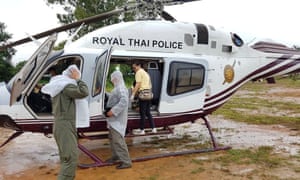
Rescue personnel prepare the transport for the evacuation of the boys and their football coach trapped in a flooded caveReuters has a little more detail.
A tenth person was rescued on Tuesday from a flooded Thai cave complex where 12 boys and their soccer coach were trapped for more than two weeks, raising hopes all 13 would be out by the end of the day.
A Reuters witness saw two people being carried out of the Tham Luang cave on stretchers. They were the first two to be taken out on Tuesday, the third day of the rescue operation.
Eight of the boys were brought out on stretchers over the first two days - four on Sunday and four on Monday. Officials were not immediately available to comment on who had been brought out.


This story is still developing.

https://www.geezgo.com/sps/29963

The Chinese Government faces a difficult dilemma — sacrifice some economic growth in the short term, or risk a debt-induced financial crisis down the track.


ANZ's chief China economist Raymond Yeung explains the problem.

"If President Xi Jinping truly prioritises reforms over growth, we must see more corporate defaults or foreign borrowing," he warned in a note.

"But if the Government does not want higher offshore US dollar debts, they must sacrifice some growth. They can't have all three."

He believes Chinese authorities will opt for lower debts, since China's foreign debt is already at a record high $US1.8 trillion.

Moreover, nearly two-thirds of this is short-term debt that will soon have to be refinanced in the face of rising US interest rates.

The combination of rising external liabilities and a weaker trade environment saw China post a rare current account deficit in the first quarter, its first since 2001.

But JP Morgan still rates China as one of the safer developing economies during the current period of US dollar appreciation that has unsettled many countries, notably Turkey and Argentina.

China has also had an addiction to non-bank "shadow lending", which companies and local authorities have used to get around Beijing-imposed controls on borrowing.

However, those authorities are now cracking down on this backdoor lending channel.

Short-term pain for longer lasting gains
As unprofitable Chinese firms that have relied on injections of cheap debt from overseas or domestic shadow banks find these funding sources drying up, many will face default and collapse.

Mr Yeung says that, in turn, is likely to see China's economic growth rate slow further to 6.3 per cent per annum.

"While this will be the lowest since the GFC, China's GDP will still expand sequentially," he said.

The slowdown means Australian exporters can expect to face tougher times later this year, with Chinese authorities also cracking down on highly polluting industries such as steel production.

However, Mr Yeung believes this mild, short-term pain will yield longer-term gains.

"We believe that slowing GDP growth is not a risk; the temptation to pump-prime the economy is," he said.

"Market sentiment will be poor. But targeting growth over reform will be worse, in our view."

https://www.geezgo.com/sps/29908


The Islamic Council of Queensland wants the state government to follow NSW and increase penalties for hate speech after a group of men badgered worshippers at two Brisbane mosques this week.

Four men, led by self-styled pastor Logan Robertson, allegedly told a teenager at the Kuraby Mosque on Wednesday he was a terrorist, threatened an older man and targeted a second mosque in Darra.

Council spokesman Ali Kadri will write to Premier Annastacia Palaszczuk, urging her to strengthen laws around hate speech to better protect worshippers of all faiths from abuse.

"The same individuals that came to the mosque also went to a Mormon church, by their own admission, and did the same thing," Mr Kadri told AAP on Friday.

"This is not just about Muslims, it's about hate, it's about preaching hatred, it's about dividing society and if we don't nip it in the bud it will affect society as a whole."

Ms Palaszczuk on Thursday said she believed existing laws afforded the right level of protection in such instances.

Islamic leaders held a community meeting on Thursday night, where worshippers voiced their frustration over intimidation Mr Kadri says is not unusual, and agreed existing laws were not enough to deter hate-driven crimes.

In NSW it is a crime to publicly threaten or incite violence on the grounds of race, religion, sexual orientation, gender identity and intersex or HIV/AIDS status under laws passed last month.

Self-styled Pastor Logan Robertson says he went to the Kuraby mosque, and a second mosque at Darra this week, seeking footage for a documentary he's making about "the false religion" of Islam.

Mr Robertson, who says he's from the Pillar Baptist Church at Goodna, denies doing anything wrong and says he did not call the boy a terrorist, saying: "I hate the religion of Islam. I don't hate Muslims."

Police had to intervene when Mr Robertson and Mr Kadri had a heated exchange outside the Darra mosque on Thursday, asking the pastor to leave.

Officers are continuing to investigate what happened at Kuraby and have seized Mr Robertson's camera equipment.

Two brothers, aged 14 and 15, filmed Mr Robertson when he went to the Kuraby mosque, and captured footage of him outside in which he questioned what the mosque had to hide, and made derogatory comments about Islam.

One of the boys told AAP that Mr Robertson called them terrorists and threatened to burn the mosque down.

Mr Kadri says Queensland's Islamic community feels terrorised, with women regularly labelled terrorists and intimidated on the street.

"These are not considered to be major crimes, however these are precursors to other crimes and when you disturb social cohesion it has an impact larger than it would look," he said on Friday.
https://www.geezgo.com/sps/29305

Thai rescue workers will drill a narrow shaft into a cave where 12 schoolboys and their soccer coach are believed to be trapped by flood waters, Thailand’s interior minister said on Wednesday, the fourth day of a search that has been hampered by heavy rain.

The boys, aged between 11 and 16, and their 25-year-old assistant coach, went missing on Saturday after soccer practice when they set out to explore the Tham Luang cave complex, even though it is known to be prone to flooding in the rainy season.


Thai volunteers and military teams, including 45 Navy SEAL unit members, have been deployed at the flooded cave complex, which runs 10 kilometres under a mountain in the northern province of Chiang Rai.

“Tomorrow we can drill into the mountain but we won’t drill too deep. Just enough to allow people through,” interior minister Anupong Paochinda told reporters in Bangkok.

“We are trying every way to find the children,” he added.

While distraught relatives and friends gathered at the mouth of the cave, rescue workers pumped water out, but the persistent heavy rain has slowed their progress.

“Water is the biggest challenge. There is a lot of debris and sand that gets stuck while pumping,” Army officer Sergeant Kresada Wanaphum told Reuters.


“We have to switch out units because there is not enough air in there,” he added, before heading back down the cave.

According to messages the boys exchanged before setting off, they had taken flashlights and some food.

Apart from some footprints and marks left by their muddy hands near the cave entrance, nothing has been seen or heard of them since Saturday evening, and the race to find them has dominated Thai news cycles.

“I’m confident all are still alive,” Prime Minister Prayuth Chan-ocha told reporters.
‘Massive amounts’ of water

Vern Unsworth, a British cave explorer based in Chiang Rai who has joined the search, said a lot of water was seeping into the cave from two directions.

“There is a watershed inside, which is unusual, it means there is water coming in from two directions,” Unsworth told Reuters. “The biggest challenge is the water. Massive amounts.”

Three foreign divers coming from Britain were expected to reach Thailand on Wednesday evening to join the search, the interior minister said.

Thailand has asked the United States for survivor detection equipment, said Tourism Minister Weerasak Kowsurat.

“We hope this equipment will allow us to locate the spots that we need to reach faster,” Weerasak told reporters.

A guidebook described the Tham Luang cave as having an “impressive entrance chamber” leading to a marked path. It then describes the end of the path and the start of a series of chambers and boulders.


“This section of the cave has not been thoroughly explored. After a couple of hundred metres the cave reduces in size to a mud-floored passage 2 meters wide and 3 meters high,” author Martin Ellis wrote in ‘The Caves of Thailand Volume 2’.

Nopparat Kantawong, the head coach of the team who did not attend practice on Saturday, said the boys had visited the caves several times and was hopeful that the boys would stick together and stay strong.

“They won’t abandon each other,” Nopparat told reporters.
https://www.geezgo.com/sps/28409

A 45 year old auto-rickshaw driver identified as Aagya Pal Singh and his brother have been arrested for allegedly molesting an unidentified 22-year-old Nigerian girl pursuing her second year graduation from a Delhi University college in West Delhi, India.

According to reports, the young Nigerian girl was out to visit her friend 's home around 1.30 a.m. on Friday January 8th and had gotten into a hired auto-rickshaw in Tilak Nagar, when another man entered the vehicle and sat next to her.

The two men allegedly took turns to molest her in the running vehicle. When she resisted, they pushed her out of the running vehicle, injuring her.

Since the crime spot was not an auto stand, police were clueless about the identity of the suspects. Indian police scanned 17 CCTV cameras in the area, but had no luck.
“Only one CCTV had captured the auto, but the registration number was unreadable. The woman’s frequent use of local language and her heavy-accented broken English turned out to be an additional barrier for the investigating officers,” Pushpendra Kumar, DCP (West), told Indian newspaper, The Hindu.
A South Indian woman married to a Nigerian national was invited to help with the language. The victim told the police that her assailants were possibly injured in their heads as they were wearing “bandages”.

A better communication with the victim led the police to realize that the “bandages” were turbans. The Nigerian woman was then taken to some turban shops to identify the kind of turbans worn by the suspects. Once that was ascertained, police used other visual descriptions provided by the victim to conduct local interrogation and identify the suspects.

The 45 year old man was arrested at his home on Monday January 11th . He confessed to the crime. “The arrested suspect was driving the auto-rickshaw while his brother Baljeet Singh was the one who sat next to the victim. Finding the woman alone in the dead of the night, the brothers tried to take advantage of her,” said a police officer.

Junichi Ihara, centre, director general of the Asia and Oceania affairs bureau of Japanese Foreign Ministry, arrives at the Sunan International Airport, Monday, Oct. 27, 2014 in Pyongyang, North Korea Junichi Ihara of Japan's foreign ministry is leading the team at the Pyongyang talks


Japanese and North Korean officials have held talks in Pyongyang for the first time in a decade to discuss the abduction of Japanese citizens.
North Korea has admitted it kidnapped 13 Japanese citizens in the 1970s-80s to train spies in Japanese customs.
Five of them were returned to Japan in 2002. Pyongyang says the other eight died.
But Japan does not believe this and it also believes more people were abducted.
Japan and North Korea have no formal ties partly because of this history.
Japan lifted some sanctions on Pyongyang in July in return for North Korea's agreement to reopen an investigation into the fates of Japanese abductees.
A first report on the probe was expected in late summer or early autumn, according to Kyodo news agency. But North Korea said it could not provide enough information by that deadline and no report was given.
The BBC's Rupert Wingfield-Hayes in Tokyo says Prime Minister Shinzo Abe may now be hoping a high-level delegation can make a breakthrough.
line
Shigeru and Sakie Yokota have campaigned for years to find out what happened to their daughter, Megumi
North Korea Japan Abductions
  • 1970s-1980s: North Korea admits kidnapping 13 Japanese citizens to train its spies in Japanese language and customs
  • 2002: Five Japanese nationals return to Japan. Pyongyang says eight others are dead
  • 2008: North Korea promises to re-open a probe - but does not fulfil its pledge
  • 2012: New Japanese PM Shinzo Abe says that resolving the abductions issue is a key policy priority
line
'Sincere response'
The Japanese government believes North Korea kidnapped 17 of its citizens in total. Five of them were repatriated in 2002.
North Korea claimed at that time that the others had either died or never entered the country to begin with, an assertion which sparked outrage in Japan.
Japan has never accepted this, saying it wants more evidence including the remains of the dead.
Japan's Chief Cabinet Secretary Yoshihide Suga told reporters on Monday: "We plan to use this visit to Pyongyang to tell the person in charge that Japan regards the abduction issue as a priority."
"We want them to explain the status of the investigation. At this meeting, we will call on them to carry out the probe swiftly and be sincere in their response to Japan," he said.
Officials from both sides last met in September to discuss the issue in China.
The issue is a priority for Japan because of high-profile cases such as Megumi Yokota, who was taken by North Korean agents on her way home from school in 1977 when she was 13.
North Korea said she killed herself in 1994, after marrying a South Korean abductee and having a daughter.
In 2004, North Korea returned what officials claimed were her remains but DNA tests showed they did not belong to Ms Yokota.

Her parents have campaigned for years to find out what happened to her.

Geezwild

Contact Form

Name

Email *

Message *

Powered by Blogger.
Javascript DisablePlease Enable Javascript To See All Widget