Articles by "LIFESTYLE"

5-6 minutes
A Marlborough wine maker is about to become one of only a few hundred Masters of Wine in the world, and one of a handful in New Zealand.
A Marlborough wine maker, Sophie Parker-Thomson is about to become one of only a few hundred Masters of Wine in the world, and one of a handful in New Zealand.
Marlborough wine maker Sophie Parker-Thomson says studying to become a Master of Wine is tougher than doing a law degree. Photo: Supplied
Sophie Parker-Thomson, who is general manager of Blank Canvas Wines she co-owns with her husband Matt Thomson, has the finish line in sight on years of intensive study.
She is now just a few ticks away from joining a league of people fewer in number than have qualified to go into space.
The 31-year-old grew up among the grapevines of Gisborne and central Otago, became a lawyer, and then heeded her mother's advice to go back to her roots.
And she has not looked back.
"I was born in Gisborne but my family moved to Central Otago when I was about 14.
"My father was a wine maker - among many others things. He was somewhat of an entrepreneur."
Phil Parker was the founder of winery, cellar door and pub in Gisborne, Smash Palace, but answered the call of the pinot noir grape, and off they went to Central Otago.
Parker-Thomson said there were moments growing up that were pivotal in her ultimate career decision.
"We had a harvest festival, and Dad and Mum would invite friends and family and everyone would come along to pick grapes."
She said it was the interaction of people from different countries and cultures that spun some magic.
"People coming together to harvest this fruit, which became this...mystical product. I guess I was enchanted from that time on."
A Marlborough wine maker, Sophie Parker-Thomson is about to become one of only a few hundred Masters of Wine in the world, and one of a handful in New Zealand.
Sophie Parker-Thomson grew up among the grapevines of Gisborne and central Otago. Photo: Supplied
But the law beckoned. Parker-Thomson made it through the ups and downs of gaining a law degree from Otago University, and became enrolled as a High Court barrister and solicitor.
"I enjoyed debating so I had it in my head I'd be quite a good lawyer. Mum and Dad were quite encouraged by the thought I'd be going into a profession with job security."
Commercial law took precedence over criminal law, but her parents were not too surprised when she gave it up to return to her roots.
"It was my mum who suggested I might like to pursue something in the industry. I think she could tell I wasn't enjoying law as much as I could have, I guess."
Parker-Thomson was writing wine reviews when her mother suggested tackling a Master of Wine.
That was more than a decade ago, and she now has only the finishing touches to go before final completion.
The Institute of the Masters of Wine is a professional trade body which offers the world's highest qualification in the wine industry.
It is so tough that few make the grade. Currently there are fewer than 400 Masters of Wine in the world, with only 138 of them women.
"It's phenomenally difficult. I found it a lot more intense than law - it really is a marathon."
Parker-Thomson said the title brings credibility in an international context.
"It's a respected qualification throughout the world and it does open doors, and dare I say it, being a woman and being younger you don't necessarily get the respect sometimes in a traditionally male-dominated industry.
"It is changing now, of course, but it also gives you a fantastic network of people who are everything from importers and distributors through to wine journalists, critics, and wine producers and they're all very willing to lend a hand personally or professionally.
"That's one of the major advantages of attaining it."
Marlborough produces more than 80 percent of the country's sauvignon blanc, but to Parker-Thomson it is much more. She said Marlborough is more than a single region when it comes to wine, and she is keen to promote the huge varietal differences, created by seismic rifts and constantly shifting soils.
"New Zealand is a very young country, and in Marlborough we have some of the youngest soils in the country but also some of the oldest because of the faultline that runs though the region.
"That is why we have distinctive sub-regions and the varieties associated with those regions are because of the soil types."
She said the young, alluvial and fertile soils of the Awatere and Wairau Valley plains were wonderful for growing expressive sauvignon blanc.
There are increasing numbers of plantings in the "low vigour" old clay soils on the hillside slopes of the southern Wairau Valley.
"That's where we're seeing a lot of high-quality pinot noir and chardonnay plantings."
Parker-Thomson had time recently to contribute to a Marlborough soil map, which went into the World Atlas of Wine.
"It's very exciting because now we're getting not only the trade but consumers and wine enthusiasts are able to refer to that book and see why Marlborough's not just about sauvignon - we've got some wonderful soils which are the reason we can do such high quality chardonnay and pinot, and other interesting aromatic varieties as well."
Increasing numbers of plantings in the "low vigour" old clay soils on the hillside slopes of the southern Wairau Valley are producing high-quality pinot noir and chardonnay plantings. (Photo of Wairau Vineyard
Increasing numbers of plantings in the "low vigour" old clay soils on the hillside slopes of the southern Wairau Valley are producing high-quality pinot noir and chardonnay plantings. Photo: RNZ / Tracy Neal
Join Geezgo for free. Use Geezgo's end-to-end encrypted Chat with your Closenets (friends, relatives, colleague etc) in personalized ways.>>

5-6 minutes
Bill Clinton says he had oral sex with Monica Lewinsky
Bill Clinton has opened up about his affair with then-White House intern Monica Lewinsky while he was US President.
In a new documentary about the life of Hillary Clinton, Bill Clinton claimed he had sex with Ms Lewinsky – who was just 22 at the time – to relieve the pressures of the job.
He said he saw his intern as "something that will take your mind off it for a while". He added that leading the country, makes you feel like "you’ve been in a 15 round prize fight that was extended to 30 rounds".
Having an affair, Mr Clinton said, was among "things I did to manage my anxieties for years".
Former presidential candidate and secretary of state Mrs Clinton told the documentary she was devastated by her husband’s infidelity.
"I could not believe it. I was so personally just hurt and I can’t believe this, I can’t believe you lied," she said.
Bill Clinton says he had oral sex with Monica Lewinsky
The documentary is in four parts and will be available to watch on Hulu from Friday. One episode of the documentary focused on the affair. In that episode, Mr Clinton offers an apology to Ms Lewinsky, who in recent years has begun to publicly speak out about their relationship, saying her view of it changed during the #MeToo movement. She struggled for years to fight her life being defined by the affair.
The former president said he felt "terrible" that her life had been "unfairly" tainted by it.
Hilary Clinton and Bill Clinton were interviewed separately for the show and they both reflected on Bill Clinton’s initial lie when he was asked during a deposition about having sex with Monica Lewinsky, before admitting to the nation that they had in fact had a sexual relationship. The relationship, and Mr Clinton lying about it during a deposition, led to his impeachment. He was subsequently acquitted by the Senate.
The couple recounted what it was like when the President informed the First Lady about the affair and how she told him that he needed to inform their daughter himself.
"I said, 'If this is going to be public, you have got to go tell Chelsea,'" Hillary Clinton says, adding that she personally felt "devastated and so personally hurt."
"So, I did that, which was awful," a visibly emotional Bill Clinton says, "What I did was wrong. I just hated to hurt her."
The former President is then asked why he thinks he took that risk at the time.
"Nobody thinks about that, nobody thinks I am taking a risk. That is not why people do stupid things," Bill Clinton says. "Nobody sits down and thinks I will take a really irresponsible risk, it is bad for my family, bad for my country, bad for the people who work with me. That is not what happens."
He adds: "It is you feel like you are staggering around, you have been in a 15-round prize fight that was extended to 30 rounds and here is something that will take your mind off of it for a while. That is what happens."
Bill Clinton also reflects on how he has changed two decades after the incident.
"I am a totally different person than I was," he says. "Maybe it is just getting older, but I hope it was also going through a lot of this."
He adds: "What I did, it was bad, but wasn't like I thought, let's see how can I think about the most stupid thing I could possibly do and do it. It is not a defense, it is an explanation. It was awful. I feel terrible."
Clinton says during the documentary that he feels "terrible about the fact that Monica Lewinsky's life was defined by it, unfairly I think."
"Over the years I have watched her trying to get a normal life back again," he says. "But you got to decide how to define normal," he says.
The portion of the documentary ends with both Bill and Hillary Clinton reflecting on Hillary Clinton's decision to stay with her husband.
"Some people thought I made the right decision and some people thought I made the wrong decision and so I have gotten both affirmation and criticism for the decision I made and that was true from the very beginning of deciding that," Hillary Clinton says.
She adds: "It is a funny time we live in, the kind of public opinion shifts and people say, 'Oh, so noble, she stayed in her marriage' to 'Oh, it is so incomprehensible that she stayed in her marriage'. You know that there are forces of work in a society that people are working through themselves."
The episode ends with an emotional Bill Clinton reflecting on the price that his wife has paid - both personally and professionally - for staying with him.
He says: "I was so grateful that she thought we still had enough to stick it out. God knows the burden she paid for that."
The couple underwent "painful" marriage counselling sessions as a result of the affair, Mrs Clinton said.
Bill Clinton says he had oral sex with Monica Lewinsky
Hillary was interviewed for 35 hours for the documentary, alongside many members of her 2016 election campaign staff. She recently told Vanity Fair that she signed up for it "because I’m not running for anything".
"I felt like if I didn’t tell my side of the story, who would? At least there’ll be a baseline: Here’s what actually happened in my life. Here’s what I actually said about it," she said.
The documentary will be available to watch on Hulu from Friday.
Join Geezgo for free. Use Geezgo's end-to-end encrypted Chat with your Closenets (friends, relatives, colleague etc) in personalized ways.>>

2 minutes Woman narrates her disastrous date with a man who insisted she pays for their meal then caused a scene
A Nigerian pastry chef took to Twitter to narrate the disastrous date she had with a man.
She said she met the guy through her cousin and he asked her out on a date. On the day they agreed to meet, he picked her up and took her to a restaurant he's been going on about.
However, when after they had ordered, he casually informed her that she was going to pay for their meal. This was after the man had ordered a drink worth 18, 500 and a fancy meal that cost almost as much.
The lady said she thought he was joking so she continued eating her meal while they had a conversation.
The conversation was mostly him telling her that he's tired of his current girlfriend and he wants to leave her and get married within 5 months to the pastry chef he was on a date with. He also told her that he loves her for how independent and hardworking she is.
After the meal, when the waiter brought the bill, it amounted to 33,500 Naira.
The woman said she paid for only hers but the man caused a scene and insisted she pays for him too. When she refused, he found a way to pay and they left the restaurant for the man's car.
To her shock, when she got into the car, the man asked her to get down from his car, then drove off without her.
Read her thread below.
Woman narrates her disastrous date with a man who insisted she pays for their meal then caused a scene
Join Geezgo for free. Use Geezgo's end-to-end encrypted Chat with your Closenets (friends, relatives, colleague etc) in personalized ways.>>

Caroline Pailliez Eleonore Laloux has battled all her life to be treated like others. Now the 34-year-old is waging a new campaign: to become one of the first women in France with Down syndrome to win a local council seat in this month’s municipal elections.
Armed with a broad smile and a gritty determination, Laloux is canvassing for support in Arras, her hometown in northern France, talking up her ambitions for a cleaner town and improved access for disabled people. But above all, a fairer society.
“I’ve fought hard to live with Down syndrome. It doesn’t trouble me any longer,” Laloux said.
“Now I am fighting for inclusion. Handicapped people have their place in society.”
As a young girl, Laloux’s parents refused to place her in a special needs school, instilling in their daughter a self-belief that would later help her overcome bullies and secure a job as an administrator in a private hospital.
She has made peace with her condition, she said. She founded “Friends of Eleonore”, an association which challenges the social stigmas confronting Down sufferers, and has written a book, “Down syndrome, so what?”
Laloux’s drive has not let up as she makes her first foray into politics.
She has drawn up a list of a dozen priorities for Arras, a relatively affluent town of 40,000 people in the economically depressed northeast of France.
They include audio and brail aides to help the hard of hearing and sight cross streets, electric buses with wheelchair ramps, and dedicated parks for dogs.
“I have loads of ideas in my head. I work on them every morning, every day,” she told one Arras resident on a walkabout in the town’s Baroque main square last week.
Laloux is running on the ticket of incumbent mayor Frederic Leturque, a centrist who won more than half the vote in 2014 and is favorite to win again.
“The disability she has, the force of her character, the ideas she has, will make us think differently,” Leturque told Reuters after a meeting with his team of candidates.
When she’s not at work or on the campaign trail, Laloux will pick up her electric guitar to relax. Bob Dylan is a favorite.
With less than two weeks until the March 15 first round of France’s municipal elections, Laloux is making headway in persuading townsfolk that she is a deserving candidate.
“I was surprised when I saw her on the list. But you know, what a great idea,” chocolate shop worker Chantal Legrand said, turning to Laloux to add: “I’m happy for you.”
Join Geezgo for free. Use Geezgo's end-to-end encrypted Chat with your Closenets (friends, relatives, colleague etc) in personalized ways.>>

Harcharan Chandhoke
I have restored what people call a work/life balance
iStock
"Once you quit, you'll never go back to a full-time job."
Those were the words uttered to me by a friend who had already trodden the path I was about to take, leaving the security of a senior post at a large corporation for the precarious world of freelance work.
Two years on, and despite several anxious moments teetering on the edge of a financial precipice, the words have rung resoundingly true.
I thought about them again when I read last week how the number of freelancers in Britain has increased by 36% since 2008, to 1.91 million. Collectively they contributed £109bn ($159bn) to the economy in 2015, according to data published by the Association of Independent Professionals and the Self-Employed (IPSE).
Other reports have suggested this trend will not merely continue, but accelerate in the coming years.
This does not surprise me in the slightest. It is not only the natural result of several current economic and technological trends, but it is – in my experience - the simplest way for any worker to take back ownership of their own life.
That is what I have found in the couple of years since I decided to leave my editorial management position at a national newspaper.
I had spent eight years working extremely long days, typically beginning with an ear to Radio 4's Today programme and ending with a sleepy eye on BBC2's Newsnight, with at least 12 hours of relentless desk-bound work in between.

Freelancing is the simplest way for any worker to take back ownership of their life
I had no desire to progress to the tiers above me, where these same pressures would be intensified even further, and decided to free myself from the bonds of a work contract rather than make a sideways move within the company.
But, and this is perhaps where my timing was fortunate, I was able to bid farewell to everyone at my leaving do and then return four days later to start freelance work in the same office. And I have kept it up, working a couple of days a week on my old job alongside other freelance journalists, while exploring alternative side projects.
More and more people can do this because the nature of the workplace is changing rapidly, as the IPSE reports shows. It now offers opportunities that were unimaginable just a few years previously. A quick Google search uncovers all manner of freelance work being offered to writers, designers, lawyers, accountants, IT staff – to name just a few – by companies that have abandoned their rigid ways of operating.
Various economic forces have consigned the old corporate culture, with its idea of a 'job for life', to the dustbin of history. The liberalising market reforms of the 1980s and 1990s created a flexible labour market that worked both ways - giving firms greater freedom to hire and fire but also loosening the ties of loyalty that bound workers to their employer.
Rapid advances in technology and the reality of the intimately-connected, 24-hour globalised economy means employees can work from anywhere, at any time
Since then, rapid advances in technology and the reality of the intimately connected, 24-hour globalised economy means employees can work from anywhere, at any time. This is the perfect context for flexible and part-time work to flourish. Throw in the added factor of the redundancies and recession that followed the 2008 crash, and it is clear why the freelance economy has mushroomed in the last eight years.
The change is bringing some clear benefits for companies. A friend running his own business has told me how he uses highly specialised freelancers on specific projects for a few days or weeks, getting targeted results he could not obtain so easily from the more general skills of his permanent staff.
This work is often rewarded at a considerably higher rate, pro rata, than being employed on a full-time salary. But it doesn't mean freelancers are flush with cash – far from it. I often have a feeling of trepidation when approaching my mortgage payment day every month, or when I see a particularly hefty bill drop through the letterbox.
I now work when I wish to. By and large, I also do the sort of work I wish to
I do earn less than before, and have had to shrink my expenditure accordingly. The whole process has required a mental recalibration, but it is one that judges the slight fall in income against a huge gain in free time. And that is the whole point – and great benefit – of going freelance.
I now work when I wish to. By and large, I also do the sort of work I wish to. Meanwhile my mind has been allowed to turn to other projects I can take on – that book I never wrote and the restaurant I never opened.
They will probably remain unwritten and unopened, but at least I can think of them again. My mind is free to wander.
I have the time, once more, to read books for sheer pleasure. And I have become a film buff again by catching up on all those movies I missed in the last decade, while grabbing the new ones when they come out at the cinema.
I have long boozy lunches with fellow freelancers – a welcome change from picking up a soggy sandwich to gobble quickly at my desk.
And I can spend an entire day with my young daughter, drawing rudimentary pictures of animals, watching cartoons and seeing her howl in laughter as I get myself entangled in a climbing frame designed for children aged under ten.
In short, I have restored what people call a work/life balance. But that has always struck me as a false dichotomy. Surely going to work is no less a part of life than taking a holiday?
I would prefer to describe it as bringing a better balance to life itself. A sense of equilibrium and tranquility.
And the feeling it transmits is contagious. When former colleagues ask me how I manage to get by as a freelance, I see the cogs in their mind whirring into action and exploring their own possibilities as I set out this alternative way of working.
In time, they may join me on the other side. And I doubt they'll ever go back.

Chocolate could reduce the risk of diabetes and cardiovascular disease
FRANCOIS NASCIMBENI/Getty Images
Eating a small amount of chocolate every day could have health benefits. A study found eating a bar of chocolate each day is linked to reducing the risk of diabetes and heart disease. Researchers say healthcare professionals could recommend patients to eat chocolate as a means of staying healthy.
Previous studies in mice found cocoa supplements reduced insulin resistance (where cells in the body are unable to use insulin as effectively, leading to high blood sugar). However, researchers from the Luxembourg Institute of Health said evidence of the possible role of chocolate on insulin resistance is "lacking".
The researchers looked at the chocolate eating habits from 1,153 people, using data from the 2007 survey, Observation of Cardiovascular Risk in Luxembourg. They also took into account whether the participants drink tea or coffee. These drinks can be high in polyphenol – a nutrient which could give chocolate its beneficial effects.
After taking into account other lifestyle and dietary habits, the findings, published in the British Journal of Nutrition, showed those eating 100g of chocolate each day had reduced insulin resistance and improved liver enzymes.
Bean-to-Bar Chocolate and the Future of the Chocolate Industry
IBTimes UK
"Given the growing body of evidence, including our own study, cocoa-based products may represent an additional dietary recommendation to improve cardio-metabolic health," said Saverio Stranges, researcher working on the study. Reducing insulin resistance reduces the risk of high blood sugar. Insulin resistance is also linked to a higher risk of cardiovascular disease.
"Potential applications of this knowledge include recommendations by healthcare professionals to encourage individuals to consume a wide range of phytochemical-rich foods, which can include dark chocolate in moderate amounts," Stranges said.
"However, it is important to differentiate between the natural product cocoa and the processed product chocolate, which is an energy-dense food. Therefore, physical activity, diet and other lifestyle factors must be carefully balanced to avoid detrimental weight gain over time."
The team added further research is needed to understand the role chocolate plays in reducing diabetes and cardiovascular disease. "Observational results need to be supported by robust trial evidence," said Stranges.

James Tennent
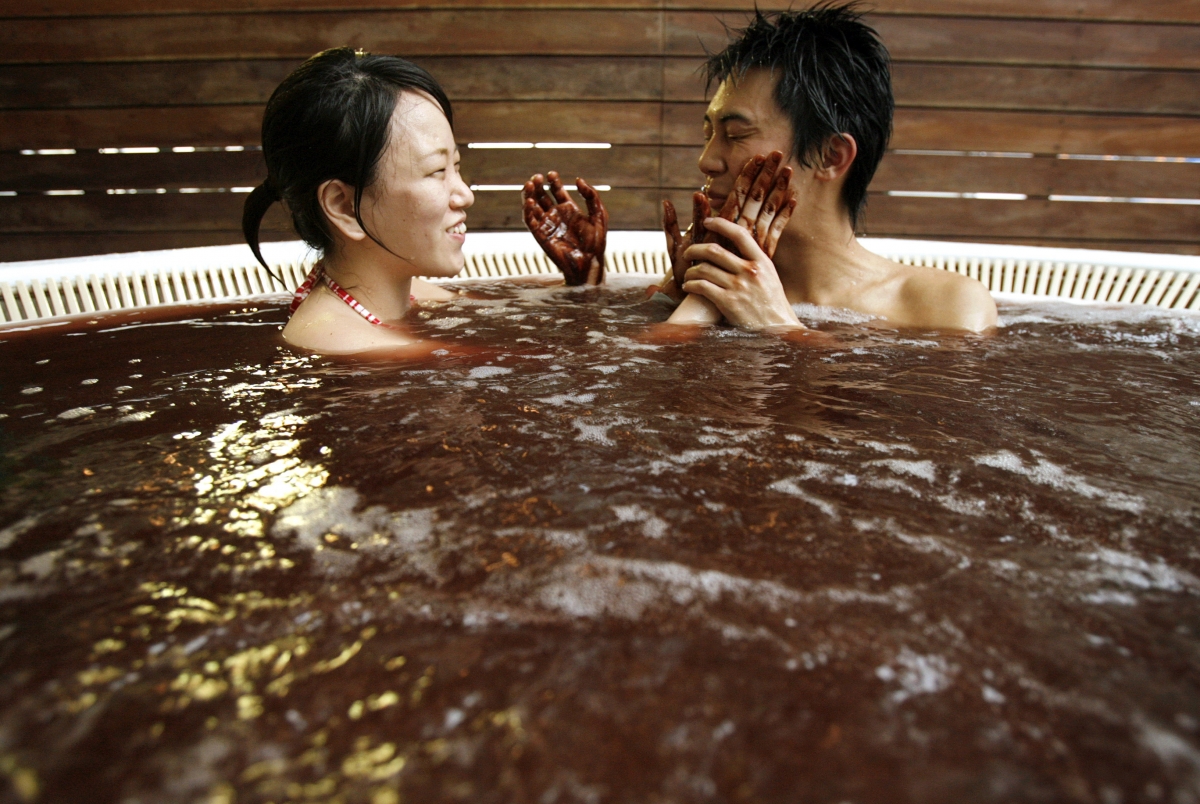
A couple enjoys a chocolate bath at a spa in Japan
Reuters
If two of your favourite things are chocolate and massages, you're in for a treat. Chocolate giant Cadbury is opening a one-day only free spa in London's Soho to celebrate their new chocolate bar.
The Cadbury Dairy Milk Medley Lounge will open on May 5 on Bateman Street. Lucky ticket holders will be able to enjoy a head massage, hand or arm massages or a Cadbury Dairy Milk Medley bar-inspired manicure.
Massage-having, manicure-getting punters will also be eating chocolate the whole time – with Cadbury giving bars of the new Nut & Raspberry Medley and Fudge Medley to the lucky few.
"The Lounge is the ultimate pampering experience for Cadbury lovers," said Cadbury, "it communicates the joyful and luxurious experience that comes from tasting the delicious soft centre and quality ingredients of Cadbury Dairy Milk Medley."
Tickets are first-come first-serve through this link. Cadbury says the spa is all inspired by the new bars: "The Cadbury Dairy Milk Medley Lounge will offer a host of beauty treatments inspired by the experience of tasting the exciting new textures and flavours of the bars... you'll feel more pampered than a panda in a petting-zoo."
If you want a more chocolate-filled experience, you could always try Japan's
Yunessun Spa Resort, which offers fans chocolate baths. Chocolate not your thing? They also offer wine and coffee...
Want a massage while you eat chocolate? Cadbury is opening a pop-up spa
Reviewed by Kogonuso on 8:46 PM Rating:

A security guard who stopped a middle-school choir from singing the national anthem at the September 11 memorial in Manhattan acted inappropriately and the students are welcome to come back and sing the anthem, a memorial official said on Monday.

NEW YORK: A security guard who stopped a middle-school choir from singing the national anthem at the September 11 memorial in Manhattan acted inappropriately and the students are welcome to come back and sing the anthem, a memorial official said on Monday.
Fifty-one choral students led by their teacher from Waynesville Middle School in North Carolina started signing "The Star-Spangled Banner" at the National September 11 Memorial in New York last week when a security guard stopped them because they lacked the required permit to perform.
The sixth- to eighth-graders, who generally range in age from 11 to 14, stopped immediately, even though another security guard had orally granted them permission.
Although the rules require a permit, which takes 10 business days to process and carries a US$35 fee, it was still appropriate for middle-school students to sing the national anthem at the site, where more than 2,700 people died in the Sept. 11, 2001, attacks, a spokeswoman for the 9/11 Memorial said.
"The guard did not respond appropriately," spokeswoman Kaylee Skaar said. "We are working with our security staff to ensure that this will not happen again. We reached out to the school to express our regret for how this was handled and asked the principal to share that with the students."
Skaar said the choir was welcome to return to sing the national anthem, as many groups have done. Waynesville Middle School Principal Trevor Putnam said it would be difficult during the school year as the students have already returned to North Carolina.
The next choral group to visit New York will get a permit to sing at the memorial, he said.
"This was a good civics lesson. Why are there limits put in place in public forums?" Putnam said. "I was really proud of our kids. They were asked to stop and did so respectfully."
(Reporting by Daniel Trotta; Editing by Leslie Adler)

The world's first cafe using the tiny domestic unmanned aircraft as servers has opened in a Dutch university.

THE HAGUE: Would you like a drone with your cocktail? The world's first cafe using the tiny domestic unmanned aircraft as servers has opened in a Dutch university.
The pop-up drone cafe will be serving up all weekend as part of celebrations for the "Dream and Dare" festival marking the 60th anniversary of the Eindhoven University of Technology.
The 20 students behind the project, who spent nine months developing and building the autonomous drone, aim to show how such small inside craft could become an essential part of modern daily life.
"It has potential as a useful tool for human kind. We see it as the next mobile phone. You choose and you programme it like you want," student and project leader Tessie Hartjes told AFP.
The drone, nicknamed Blue Jay, which resembles a small white flying saucer with a luminescent strip for eyes, flies to a table and hovers as it takes a client's order, who points to the list to signal what they would like.
"The blue eyes of the first drone load" up by scanning the list to register the order, said Hartjes.
"Once it's fully loaded, then the order is ready. And another one comes with the order in a cup in the grip."
The cafe is offering four different alcoholic and non-alcoholic cocktails, which are either bright blue or green - the same colour as the drone's "eyes."
The drinks are picked up and carried by a set of pinchers underneath the drone, in a bid to show that these aerial machines could be used to carry out delicate missions such as delivering medicines or even helping to track down burglars.
Each drone has cost about 2,000 euros to build, in a project funded by the university which the students say aims "to give a glimpse of the future".
Thanks to sensors and a long battery life they can fly inside buildings and navigate crowded interiors, unlike other drones, which rely on a GPS system.
"The Blue Jay is an intelligent bird that lives in complex, social environments," the students say in a video presenting their work.
They believe the drone's applications could be endless: as extinguishers to put out fires, alarm systems to warn of intruders or mini-servants which would respond to commands such as "fetch me an apple."
"We believe that one day, domestic drones will be a part of society. One day, a drone could be a friend," says one of the students in the video presentation.

Chancellor Angela Merkel raised a beer glass on Friday to help celebrate 500 years since the birth of Germany's oldest and most revered brewing tradition.

INGOLSTADT, Germany: Chancellor Angela Merkel raised a beer glass on Friday to help celebrate 500 years since the birth of Germany's oldest and most revered brewing tradition.
German beer fans are marking the anniversary of a decree of April 23, 1516 by the southern state of Bavaria imposing the "Reinheitsgebot" purity law, stating "no ingredients other than barley, hops and water are to be used" in making beer.
Amid guards in traditional costume and the sound of clinking glasses, Merkel joined a celebratory event in Ingolstadt, where on Thursday a special beer fountain was unveiled.
While no longer actual law, the Reinheitsgebot is still regarded as an important tradition and for many brewers a guideline on how German beer ought to be made.
(Reporting by Ralph Brock; Editing by Marie-Louise Gumuchian)

British painter J.M.W. Turner will feature on the Bank of England's next 20-pound note after he was chosen ahead of other visual artists ranging from Beatrix Potter and Alfred Hitchcock to Charlie Chaplin.

MARGATE, England: British painter J.M.W. Turner will feature on the Bank of England's next 20-pound note after he was chosen ahead of other visual artists ranging from Beatrix Potter and Alfred Hitchcock to Charlie Chaplin.
The Bank received nearly 30,000 nominations from the British public for the new note, due to be issued by 2020, to replace its current face, the 18th Century economist Adam Smith.
The BoE chose Turner, who died in 1851, from a shortlist of visual artists which included filmmaker Chaplin, sculptor Barbara Hepworth, painter William Hogarth and designer Josiah Wedgwood.
"Turner is perhaps the single most influential British artist of all time. His work was transformative, bridging the classical and modern worlds," BoE Governor Mark Carney said as he announced the decision at the Turner Contemporary gallery in Margate.
Turner, a master of watercolour landscape painting, did much of his work in the English seaside town
The new polymer 20-pound note, which is currently worth about US$30, will feature Turner's face and one of his most famous paintings, 'The Fighting Temeraire', which depicts a worn-out battleship under tow as it headed to be scrapped.
Novelist Jane Austen will appear on a new 10-pound banknote due next year, but only three out of the 18 characters on Bank of England notes between 1970 and 2020 will have been women, not including Queen Elizabeth who appears on all the currency.
Carney, who has spoken of the importance of promoting women into more senior roles at the BoE, said he hoped a diverse range of characters would be shown in future banknotes.
He also said Turner would have liked his art to appear on a slip of polymer. "It will last longer ... and as a consequence Turner will be on our banknotes for longer," he said.
"After all, if its done properly, money can be a piece of artwork in everyone's pocket."
(Writing by Andy Bruce; editing by William Schomberg and Richard Balmforth)

UPDATE: 7:21 p.m. EDT -- Nothing found at Prince's Paisley Park home in Minnesota suggested the singer's death Thursday was attributable to suicide or obvious trauma, local authorities said at a news conference Friday.
In addition, it could be days or weeks before results of an autopsy performed on the 57-year-old entertainer's body are known, authorities said.
Thursday's death of Prince, who was found unresponsive in an elevator in his home in Chanhassen, Minnesota, near Minneapolis, shocked fans around the world, including President Barack Obama, who commented on the singer's death in London during a joint news conference with British Prime Minister David Cameron.
Back in Minnesota, Carver County Sheriff Jim Olson said Prince was last seen alive by an acquaintance about 8 p.m. Wednesday, Reuters reported.
"There were no obvious signs of trauma on the body," Olson told reporters. "We have no reason to believe at this point that this was a suicide. The rest is under investigation."
The autopsy on Friday morning took about four hours, authorities said. Later, Prince's body was released to his family.
Original story:
The late, legendary singer Prince overdosed last week from a prescription medication called Percocet, according to a new report Friday. While there is still no official word on what caused his death Thursday, speculation has run rampant, especially since the overdose report. An autopsy was conducted Friday to determine the cause of death, and a statement is expected soon.

Prince is seen on stage at the 2005 NAACP Image Awards at the Dorothy Chandler Pavilion in Los Angeles. He was honored with the Vanguard Award.
Photo: Kevin Winter/Getty Images
Percocet is a doctor-prescribed painkiller that is both powerful and highly addictive, according to the U.S Centers for Disease Control and Prevention, which cites recent data that shows the drug was responsible for more than 165,000 overdose deaths between 1999 and 2014. It is commonly prescribed in pill form and made up of one part over-the-counter-style pain killer, like Tylenol, and another part oxycodone — a powerful opioid pain-killing sedative that has its own history of inducing fatal overdoses.
The prescription drug has especially affected users in Minnesota, Prince's home for the majority of 57 years of his life. Just this past summer, the state held its first conference to address the abuse of prescription pain-killing pills. During the conference, one speaker noted that his addiction to opioids started innocently enough after a dentist prescribed them following a "minor dental procedure," the Minneapolis Star-Tribune reported at the time.
African-Americans in Minnesota, like Prince, have died from opioid overdoses at a higher rate than white residents in the state, reported Minnesota Public Radio. 
Prince reportedly needed both of his hips surgically replaced. If true, he was likely experiencing varying degrees of pain as a result, which could have led doctors to prescribe Percocet. 
The performer reportedly suffered from an overdose last Friday, April 15, during a flight home from a concert in Atlanta that had to be diverted to seek emergency medical help; he reportedly was given a so-called save shot that reverses the effects of a narcotic overdose. A doctor told Hollywood Life that alleged episode points to evidence that Prince was dependent on prescription drugs.
“My concern is that someone has this injection, the ‘save shot,’ and then dies four or five days later from an overdose, it means they have used the drug again,” Dr. Deni Carise, chief clinical officer of Recovery Centers of America, said during an exclusive interview with Hollywood Life. “This leads me to believe one of two things — that the person is addicted to opiates, such as heroin or prescription drugs like Percocet, Vicodin or OxyContin. Or, the person purposely tried to overdose.”

Alex Wheeler
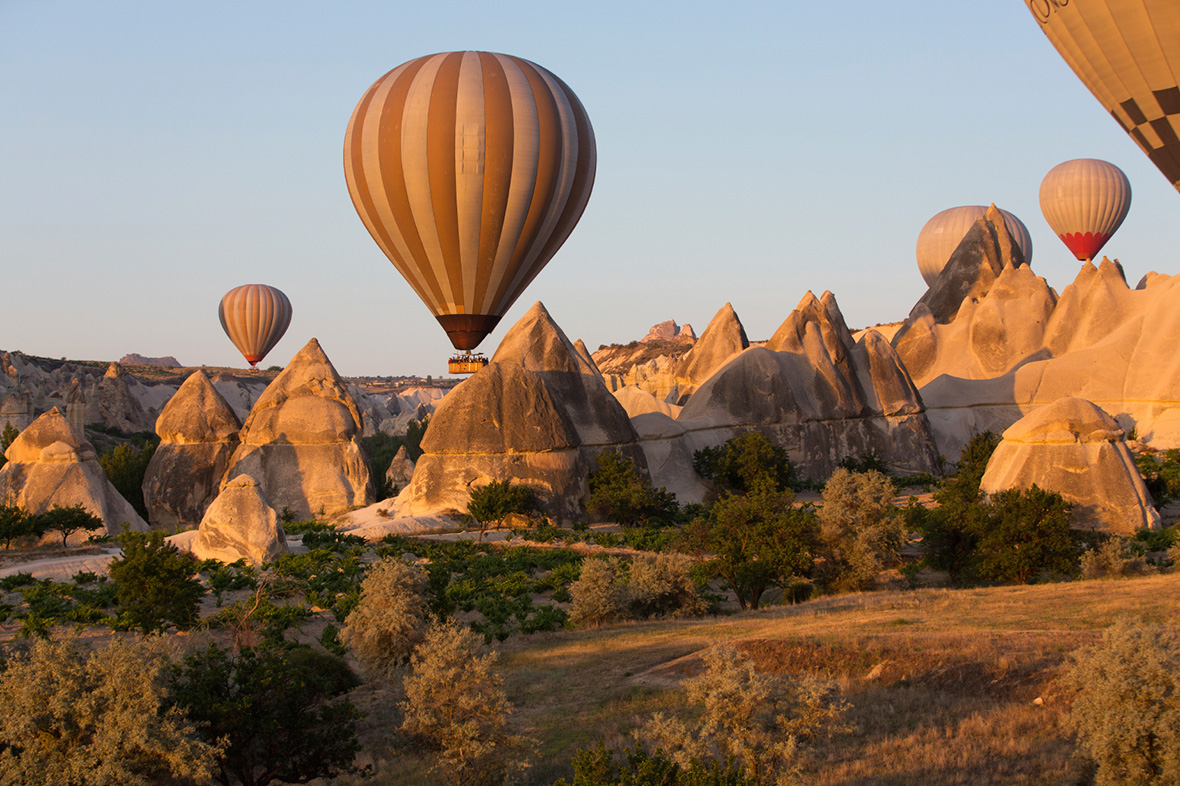
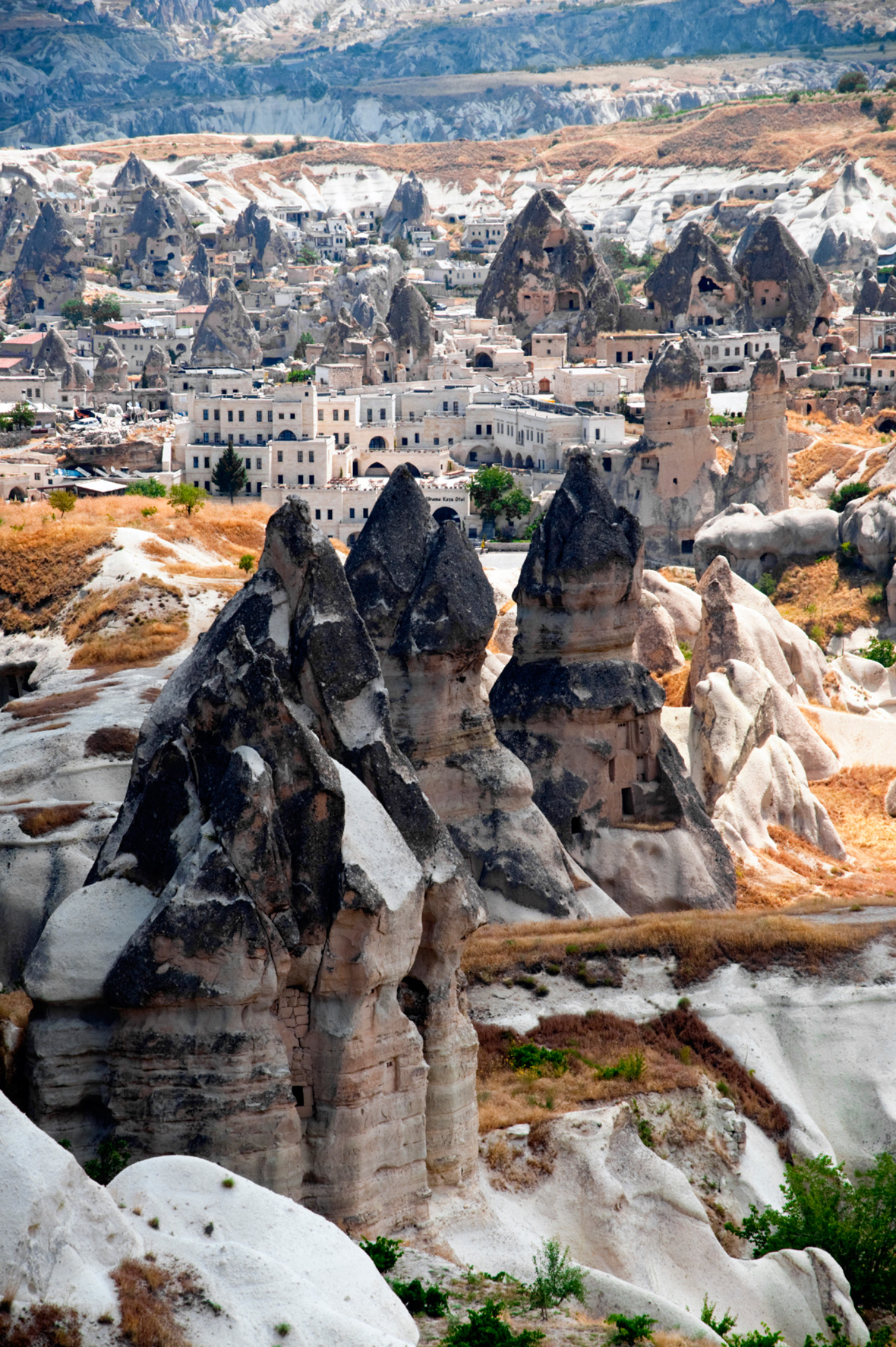
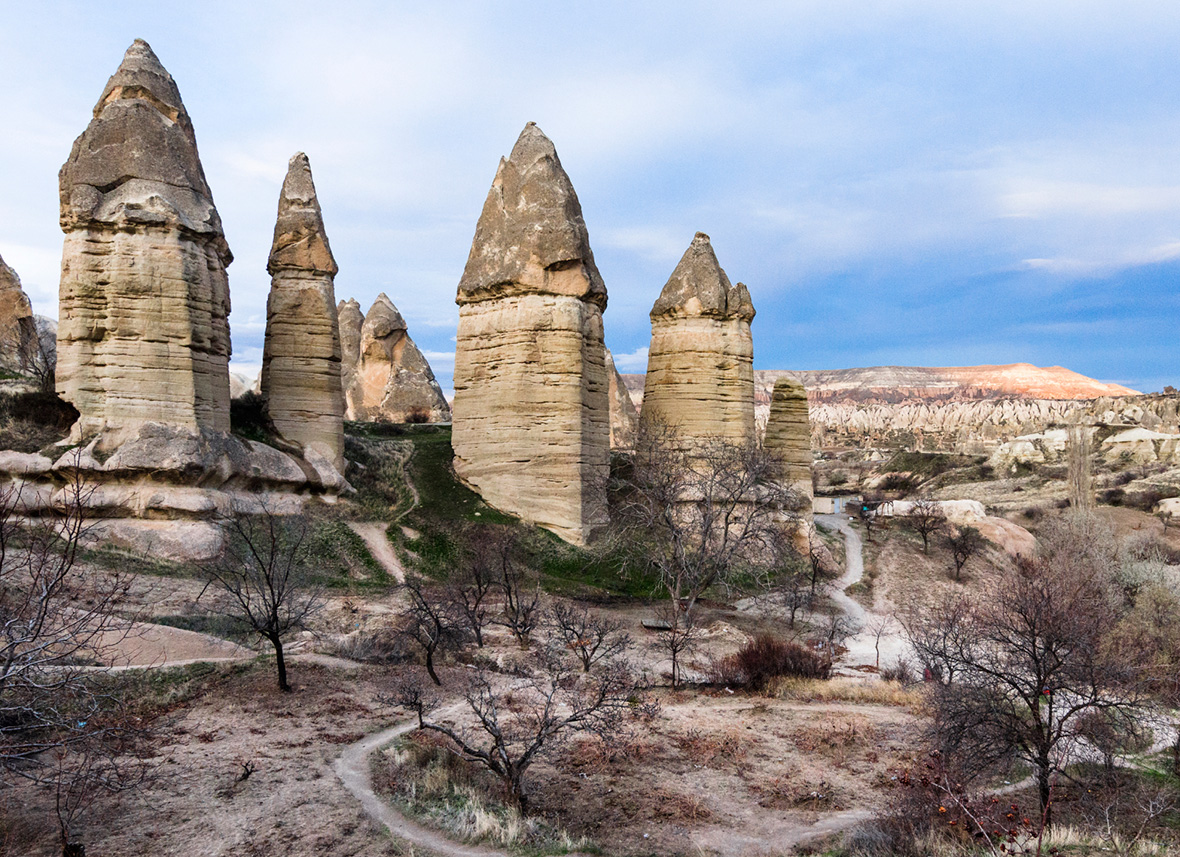
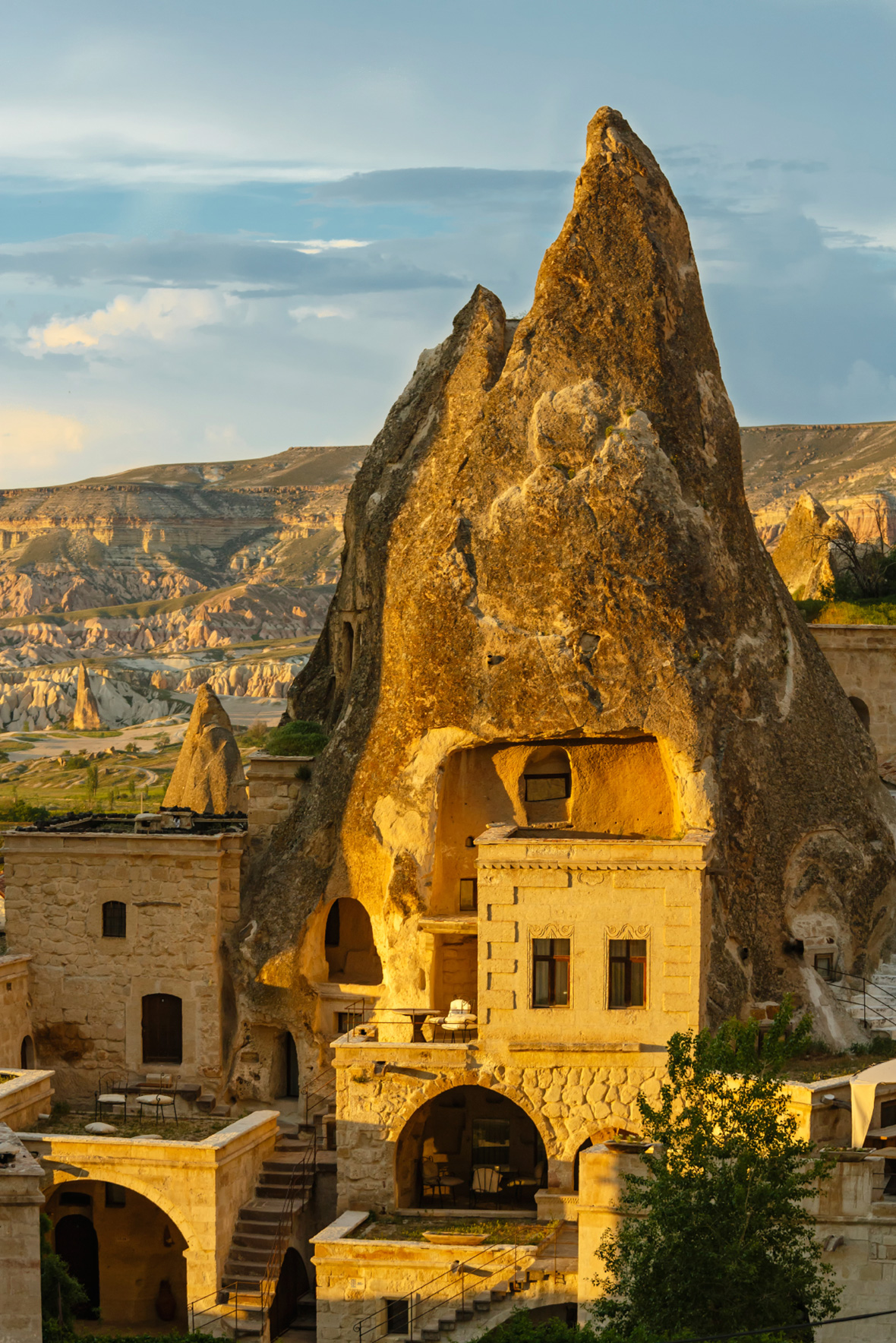
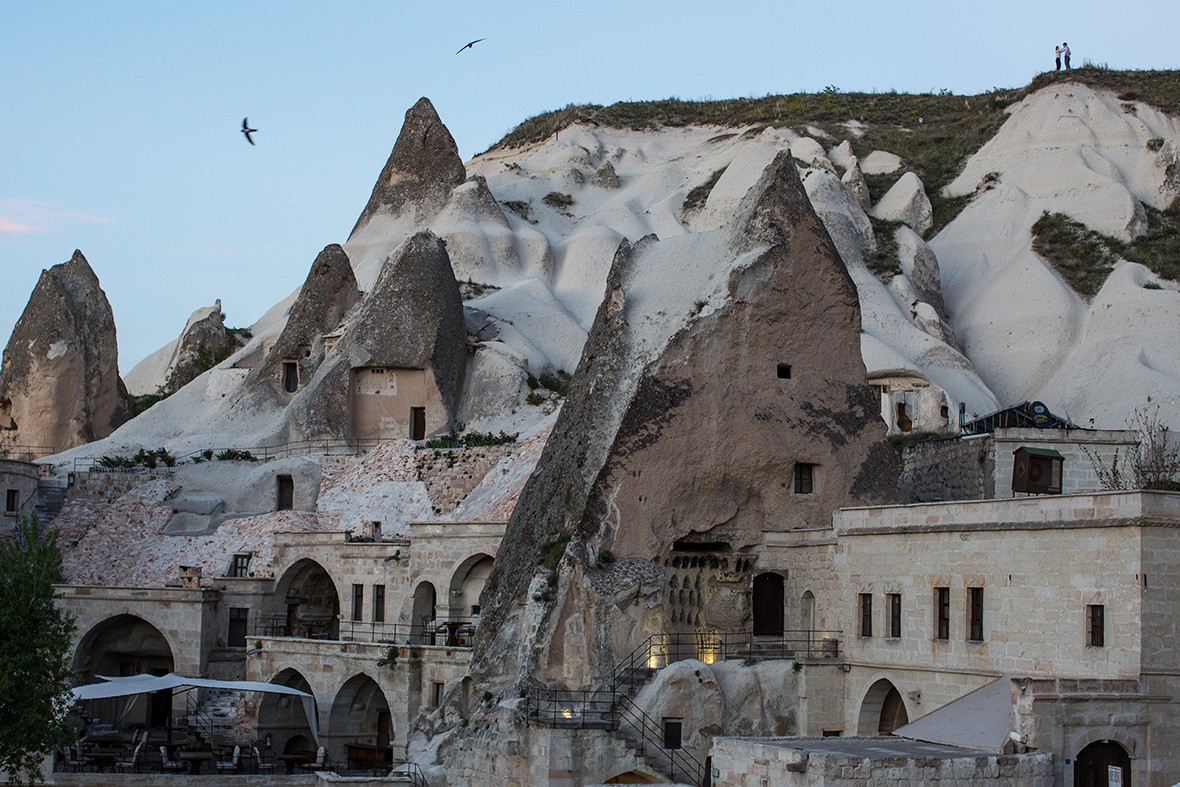
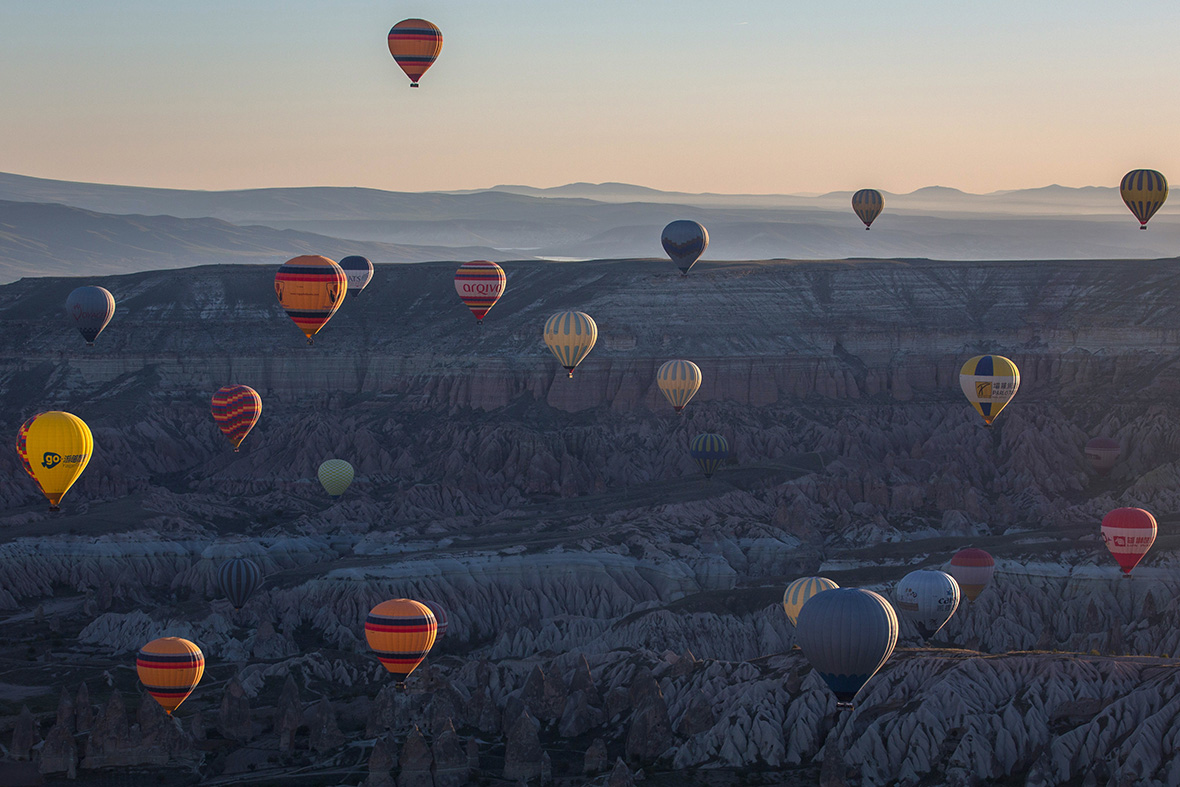
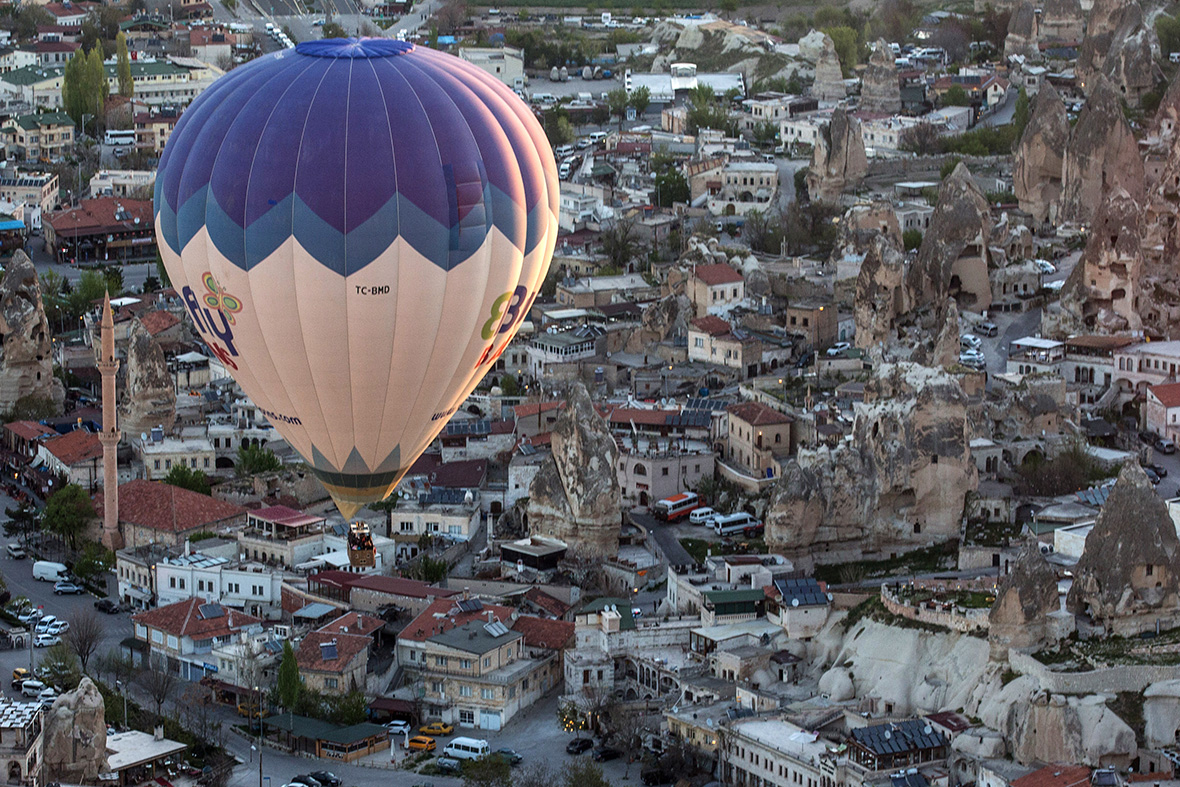
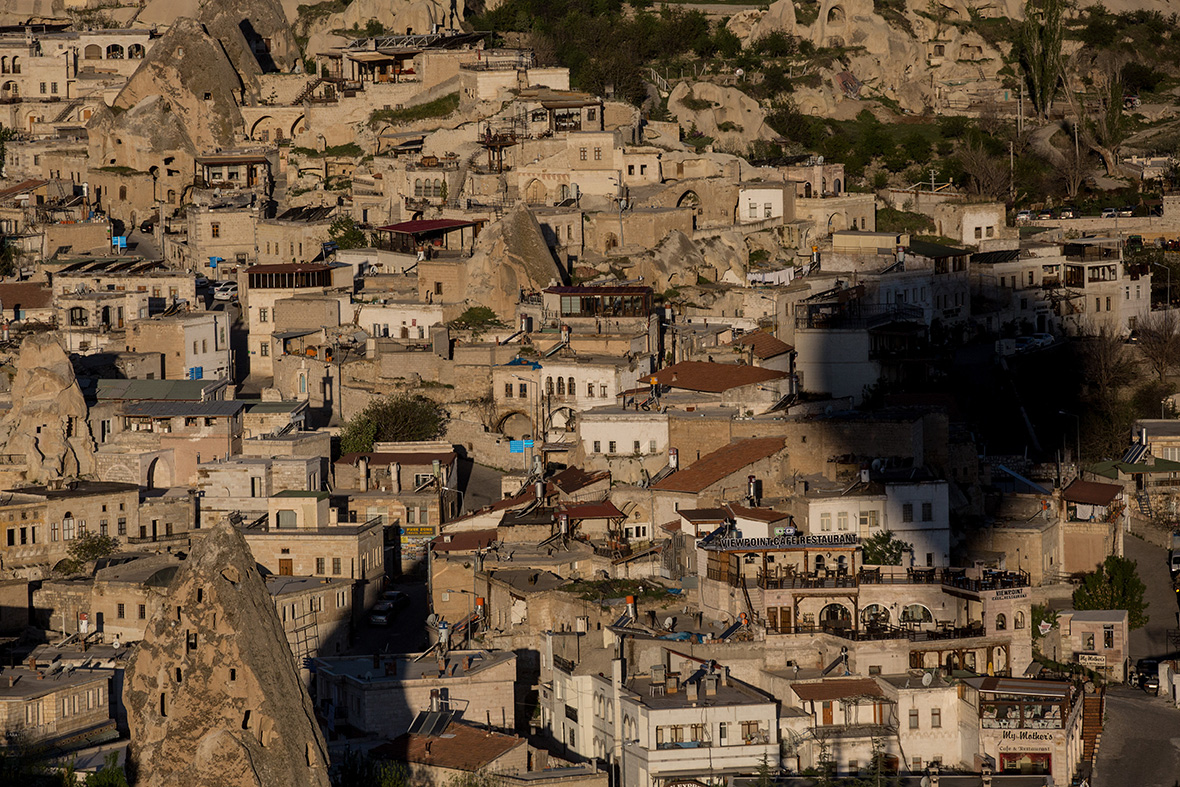
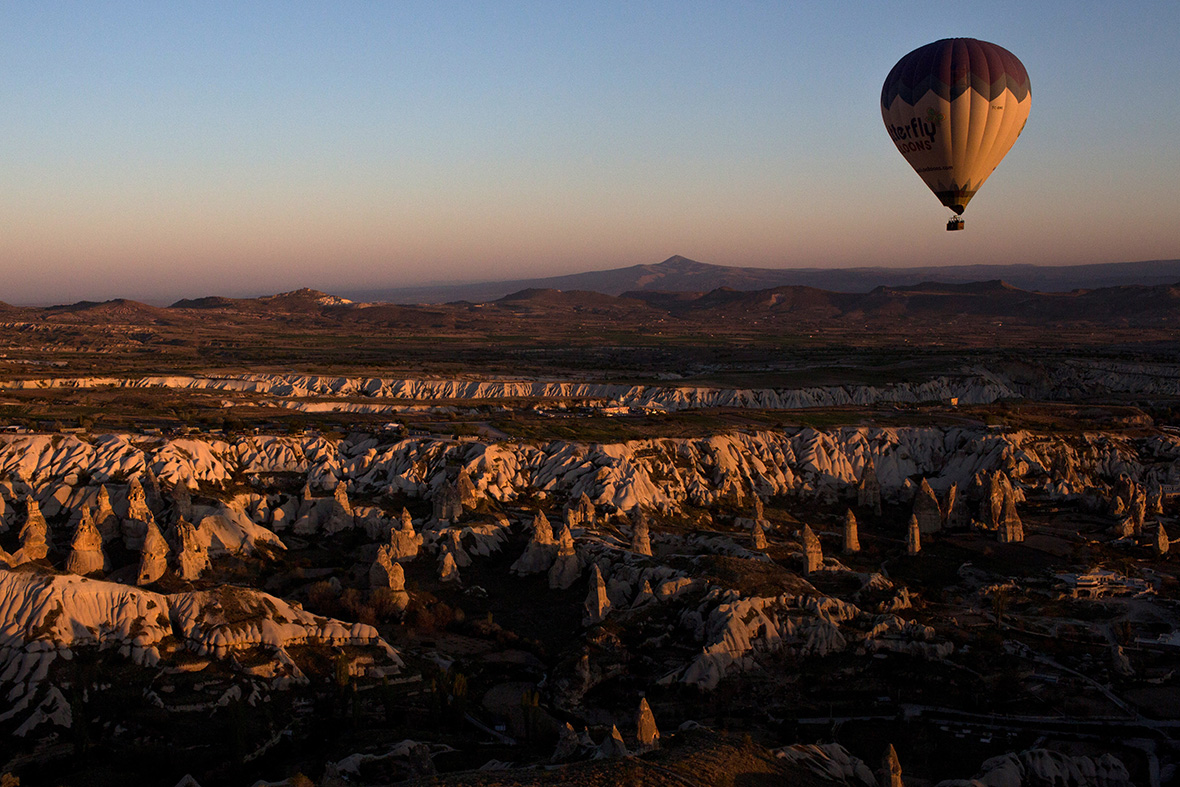
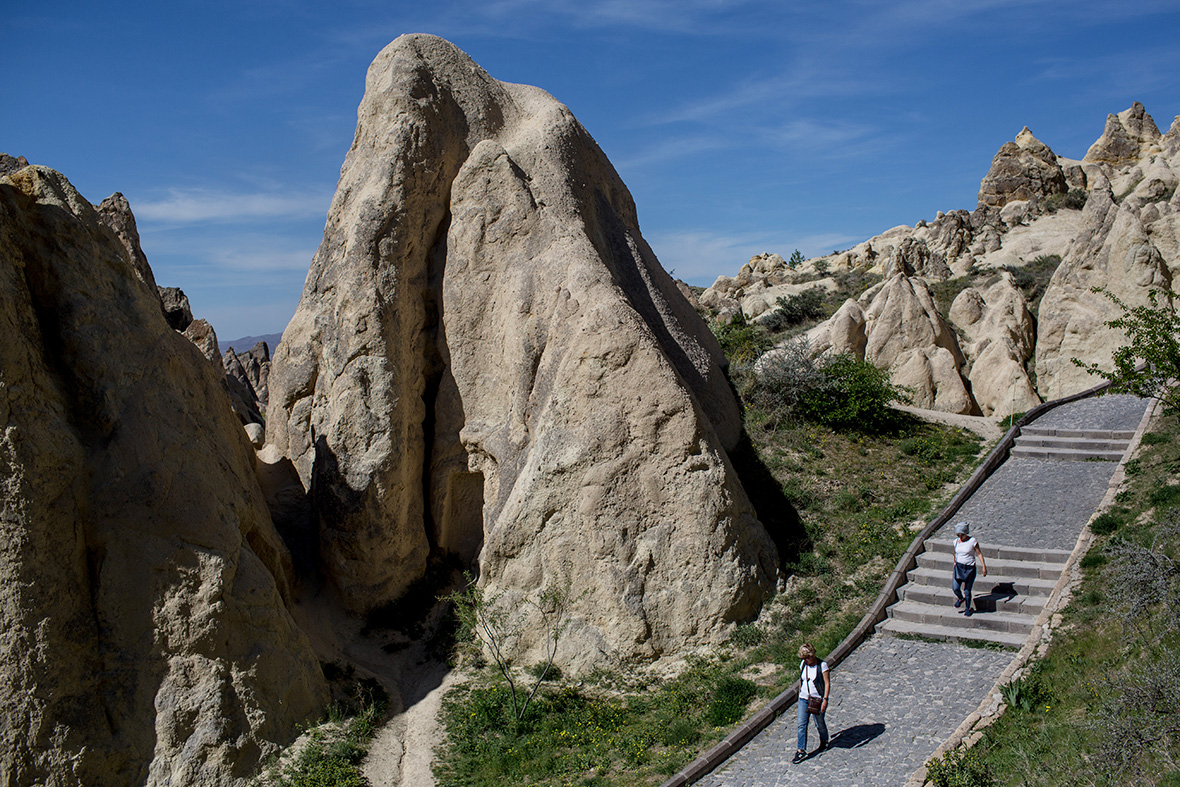
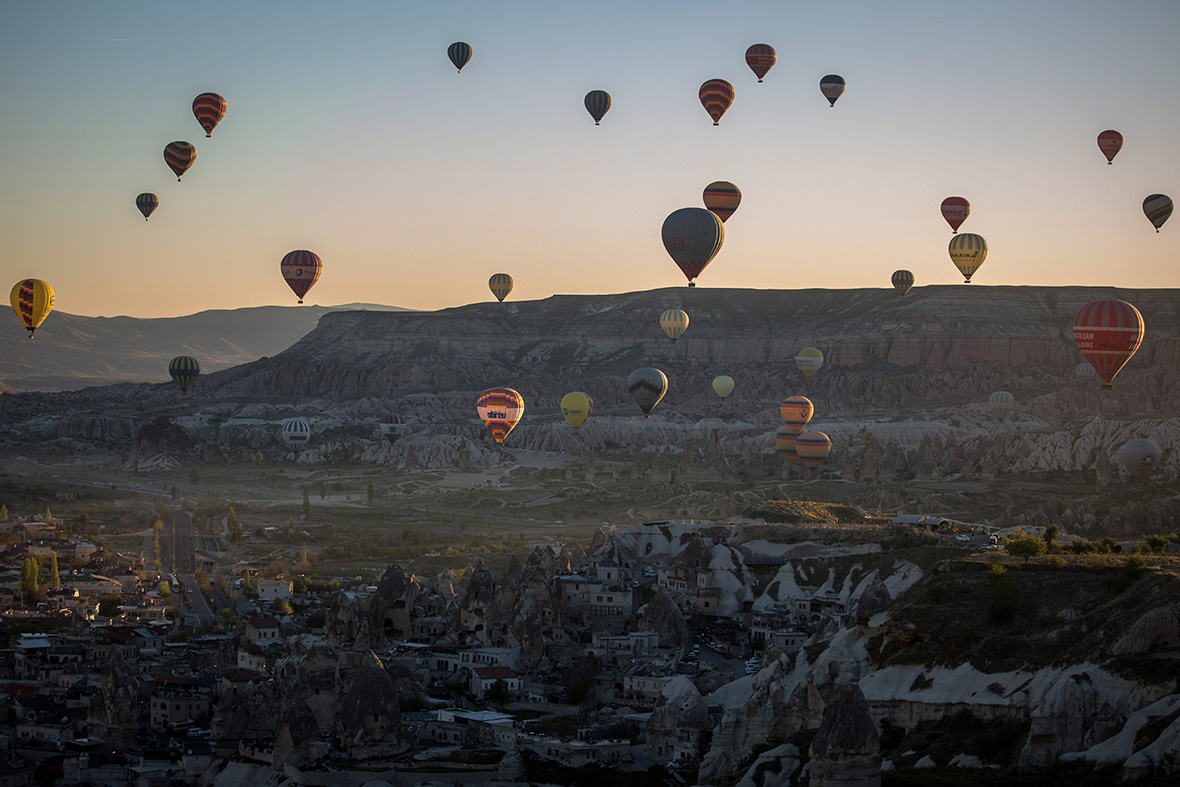
The historical region of Cappadocia in Central Anatolia is one of the most popular tourists sites in Turkey, known for its unique volcanic landscape, underground tunnels, fairy chimneys and spectacular hot air ballooning. Dating back to 3,000 BC, the World Heritage Site is now preparing for the start of its busiest tourist period, which begins in May.
Hot air balloons fly over Cappadocia
iStock
Cappadocia, TurkeyiStock
Local vendors are expecting the numbers of visitors to be stable, despite the recent downturn in visitors after the Ankara attacks,
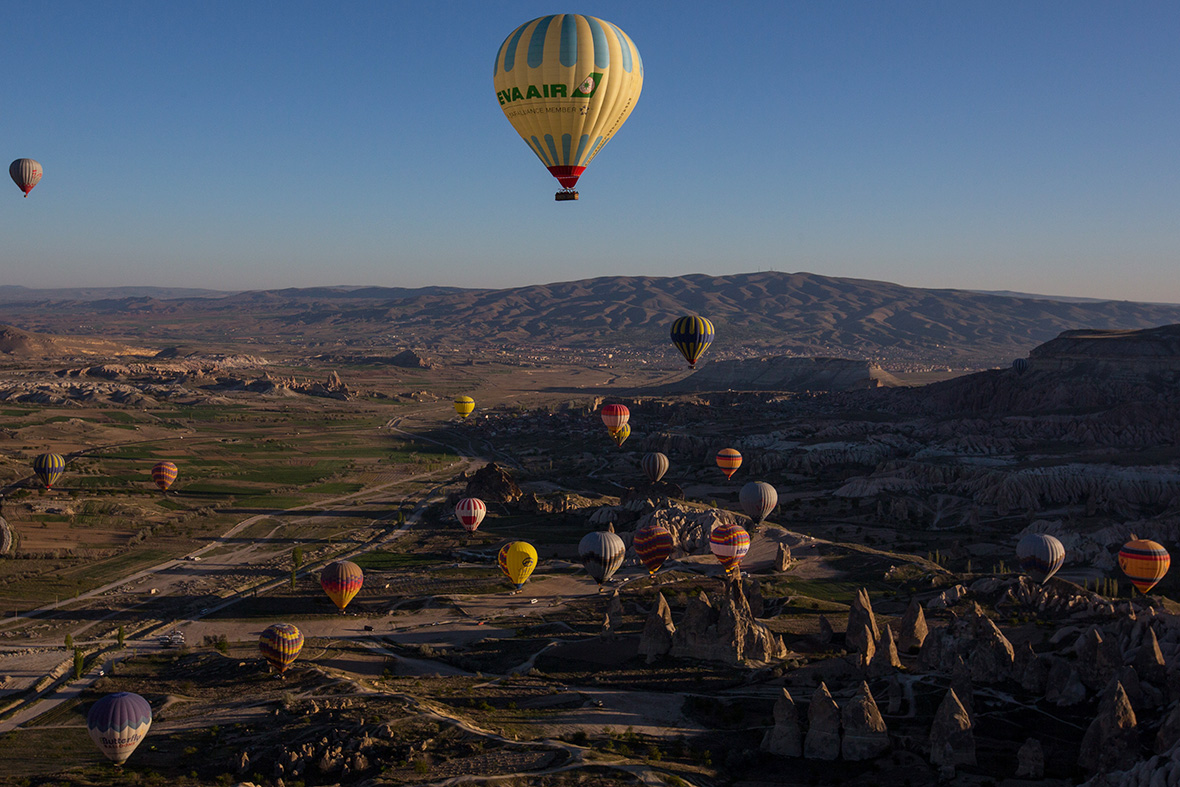
mainly because of the unique activities, which are unlike any other tourist areas in the country. Hot air ballooning is one of the main tourist highlights and is mainly available in Göreme,
a well-preserved isolated town within the region, first inhabited in the Hittite era, circa 1800 to 1200 BC.
Trekking is also a major part of Cappadocia's tourism, particularly in Ihlara Valley, Monastery Vallery (Guzelyurt), Urgup and Göreme.
A closer view of a house in Cappadocia
iStock
Getty Images photographer Chris McGrath
recently visited the sights that Cappadocia has to offer.
IBTimesUK
takes a look at some of his breathtaking photos:
Tourists look out at the view above a cave hotel in Nevsehir, Turkey
Chris McGrath/ Getty Images
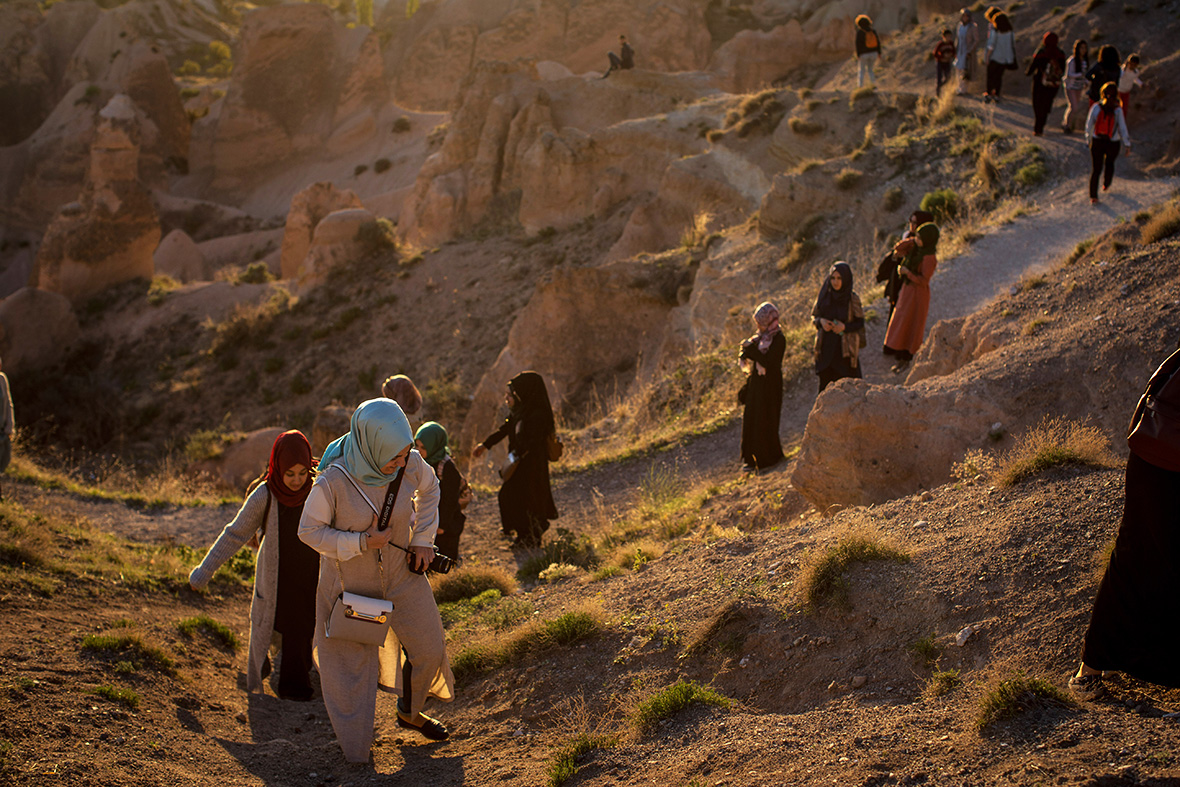
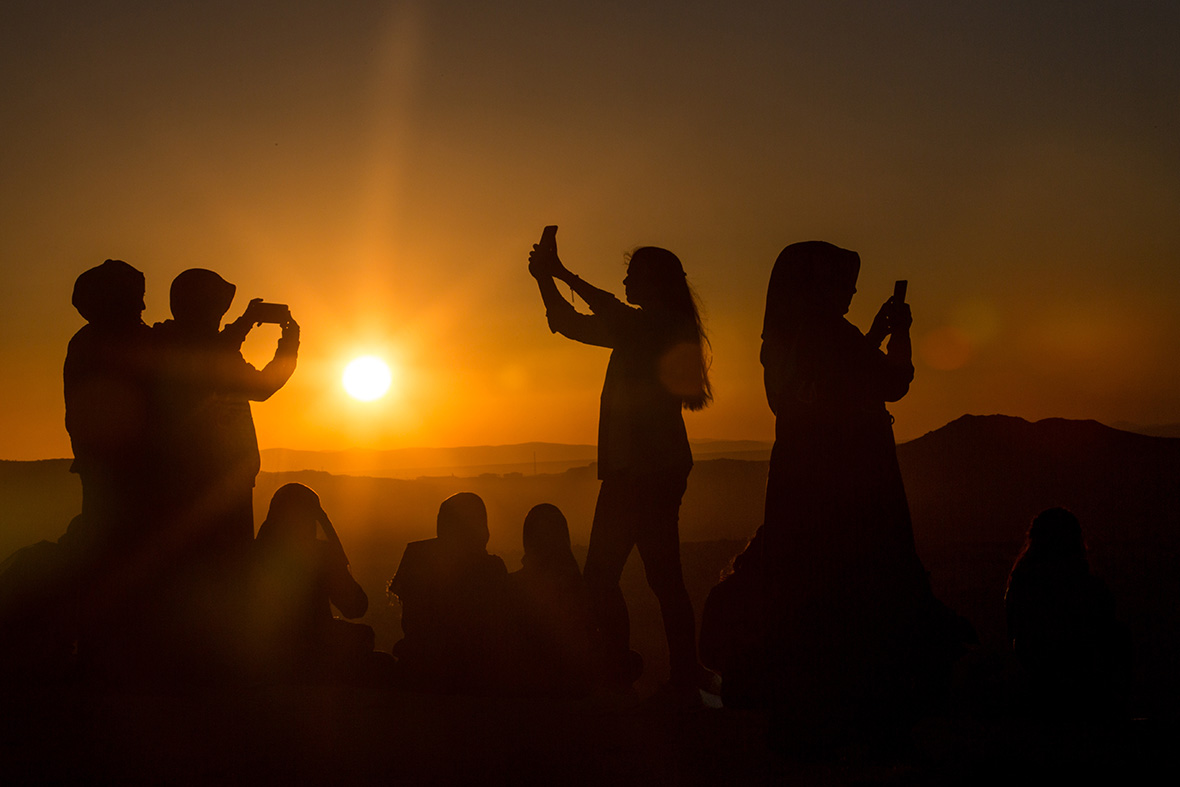
Tourists climb to the top of a mountain to view the sunset in Nevsehir, Turkey
Chris McGrath/ Getty Images
Hot air balloons are seen over rock formations near the town of Göreme in Nevsehir, Turkey
Chris McGrath/ Getty Images
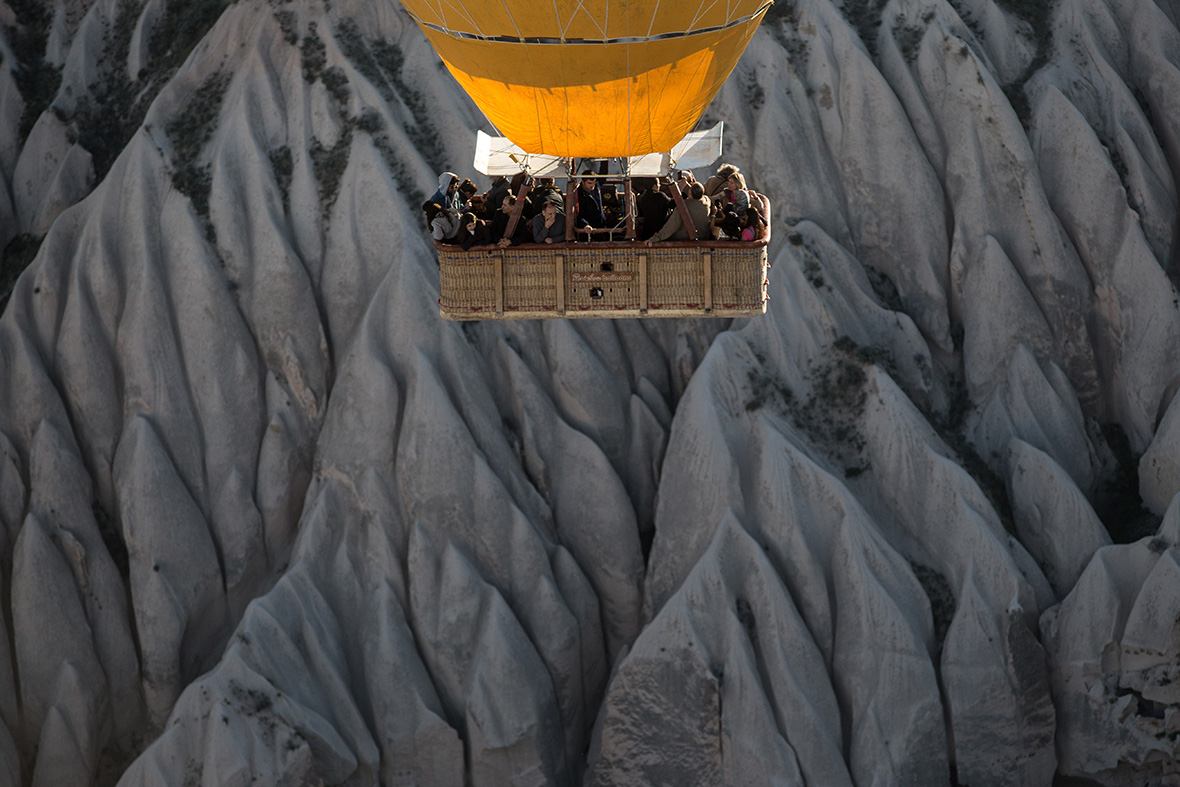
Tourists view rock formations during a hot air balloon tour in Nevsehir, Turkey
Chris McGrath/ Getty Images
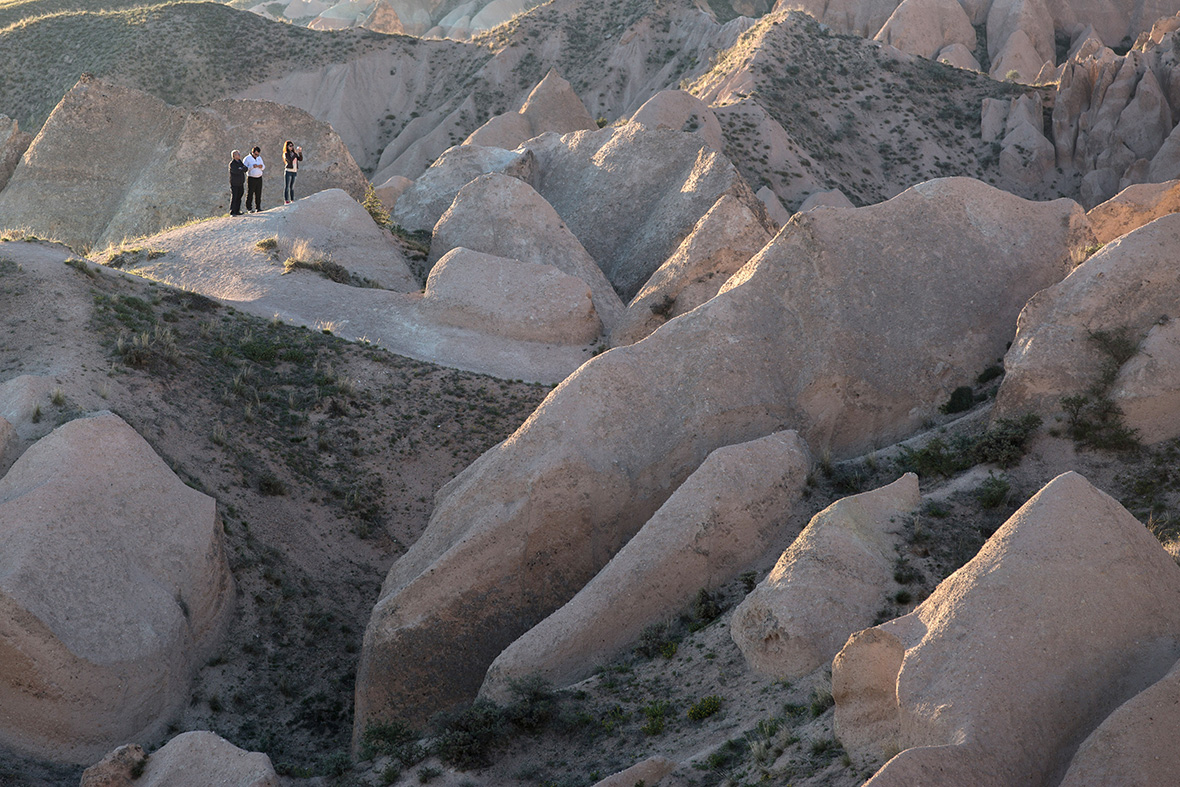
Tourists view rock formations in Nevsehir, Turkey
Chris McGrath/ Getty Images
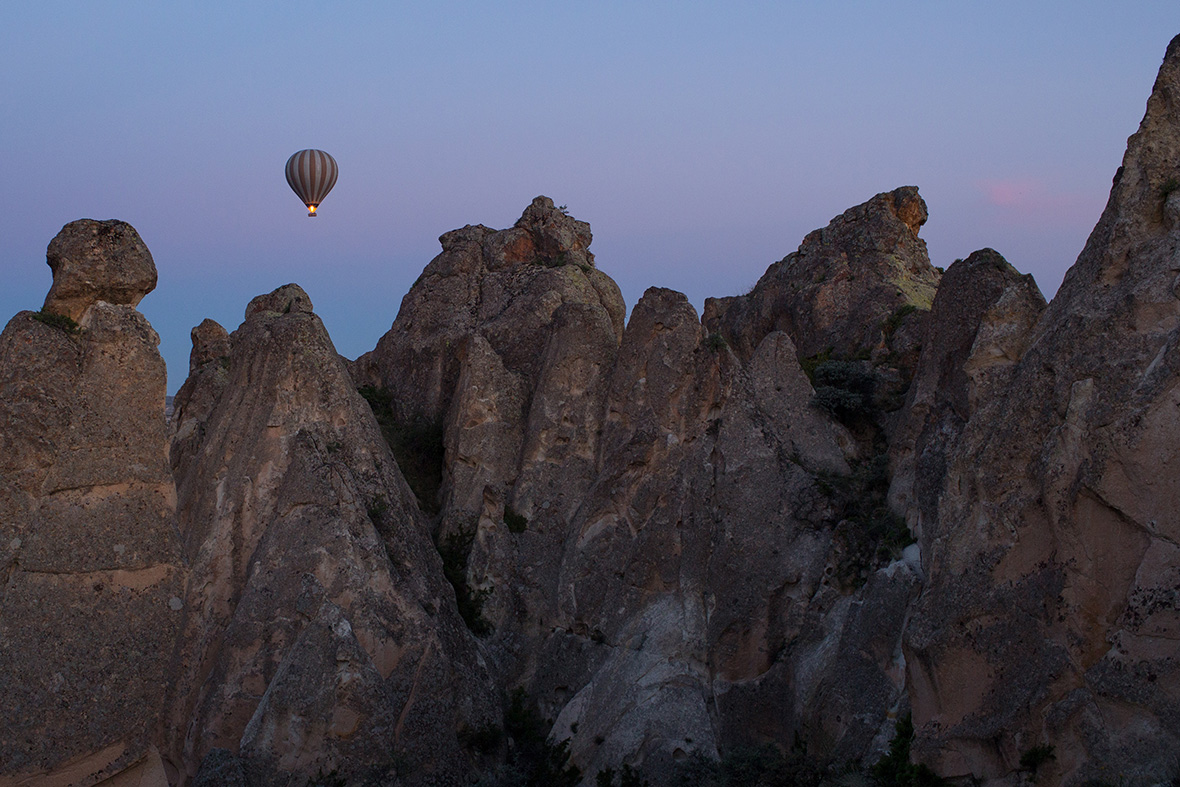
A hot air balloon is seen over rock formations in Nevsehir, Turkey
Chris McGrath/ Getty Images
Tourists take in the view over the town of Göreme during a hot air balloon ride in Nevsehir, Turkey
Chris McGrath/ Getty Images
The shadow of a hot air balloon is seen on the town of Göreme in Nevsehir, Turkey
Chris McGrath/ Getty Images
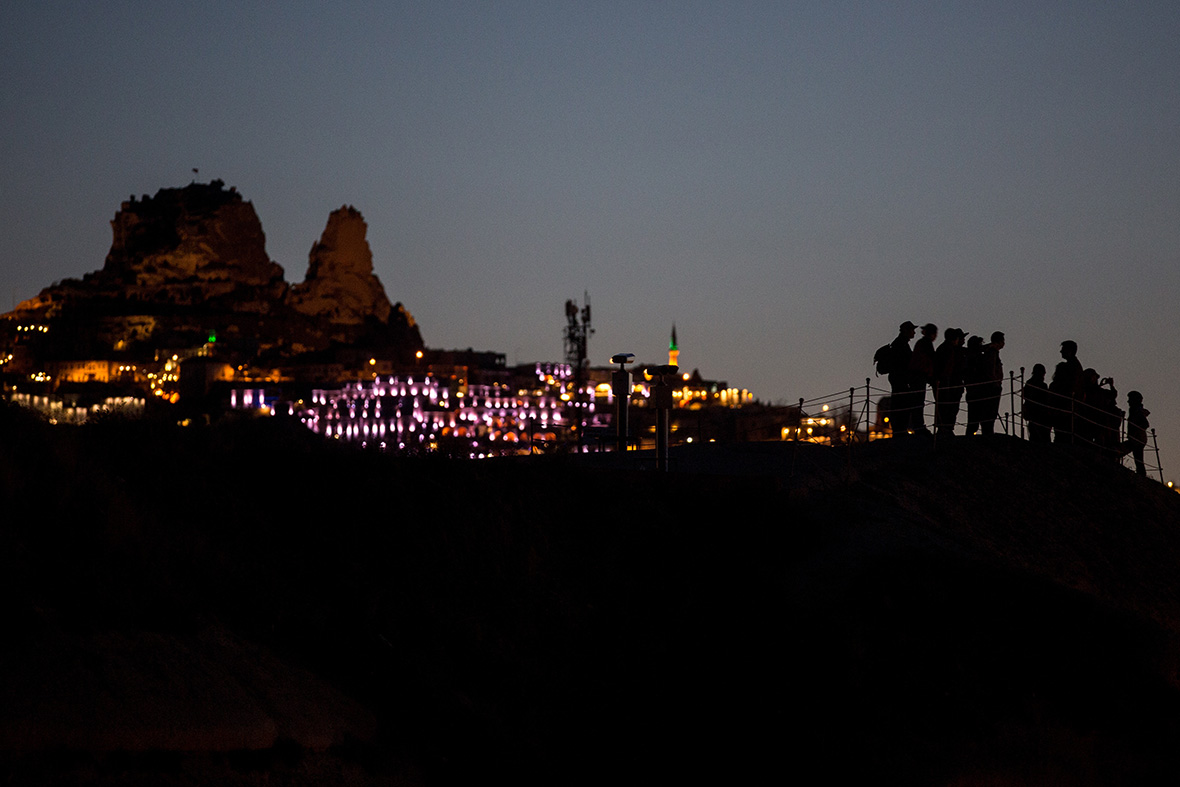
Tourists view the sunset from a lookout point in Nevsehir, Turkey
Chris McGrath/ Getty Images
Tourists ride hot air balloon near the town of Göreme in Nevsehir, Turkey
Chris McGrath/ Getty Images
Tourists view rock dwellings at the famous Göreme open air museum in Nevsehir, Turkey
Chris McGrath/ Getty Images
Tourists ride hot air balloon near the town of Göreme in Nevsehir, Turkey
Chris McGrath/ Getty Images
Tourists ride hot air balloon near the town of Göreme in Nevsehir, Turkey
Chris McGrath/ Getty Images
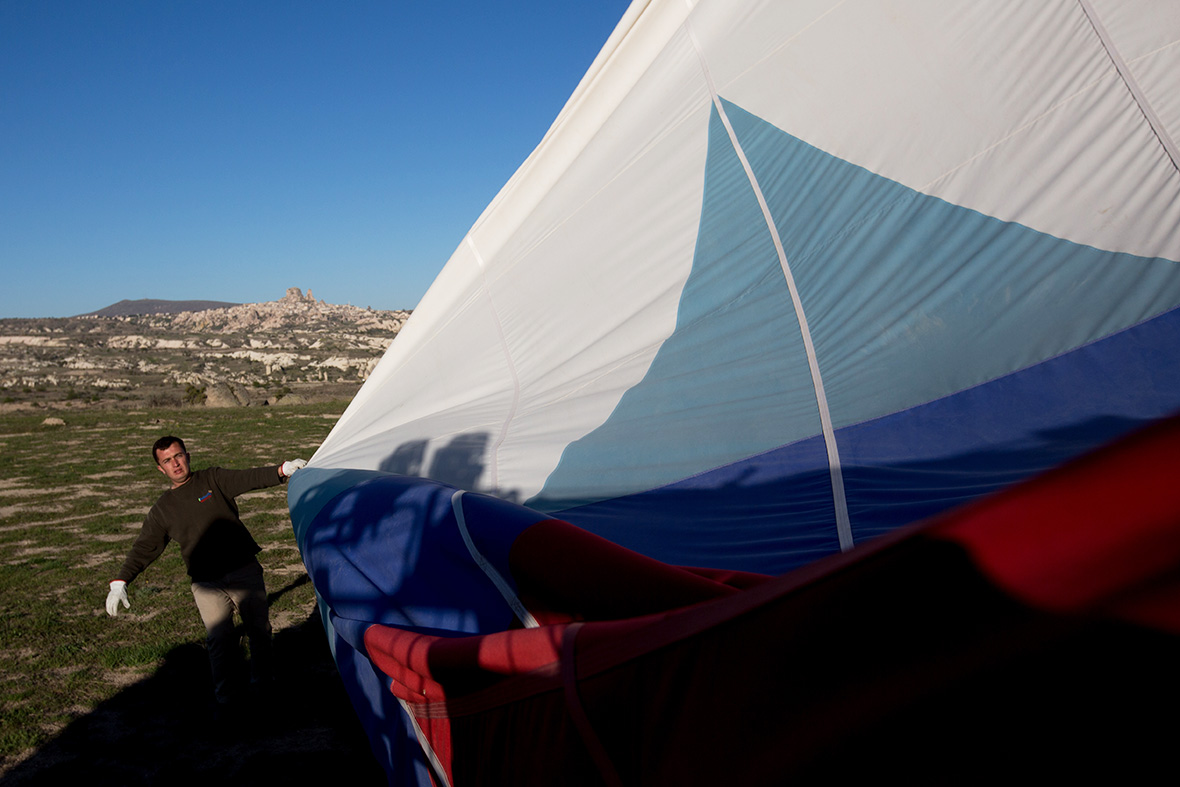
Tour operators pack up a hot air balloon after a tourist flight in Nevsehir, Turkey
Chris McGrath/ Getty Images
Tourists ride hot air balloon near the town of Göreme in Nevsehir, Turkey
Chris McGrath/ Getty Images
Tourists take photographs from a sunset lookout point in Nevsehir, Turkey
Chris McGrath/ Getty Images
Tourists ride hot air balloon near the town of Göreme in Nevsehir, Turkey
Chris McGrath/ Getty Images
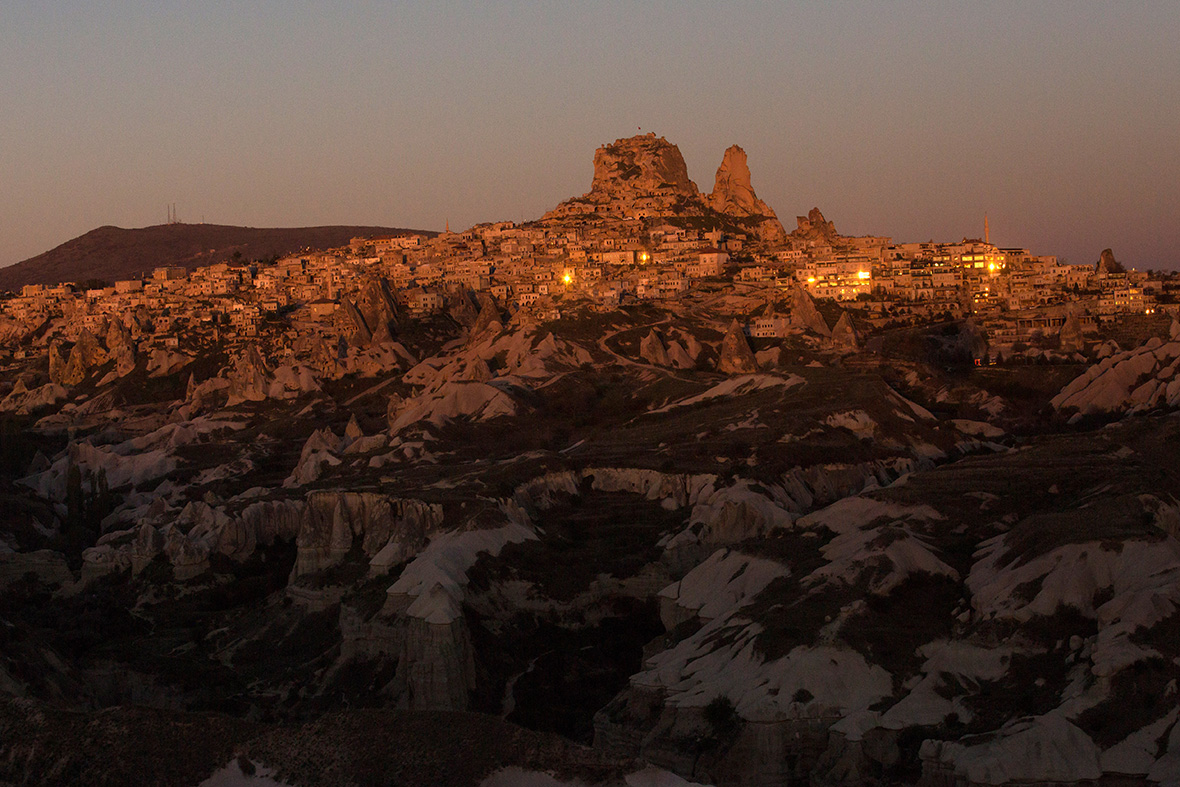
Morning sunlight illuminates the town of Uchisar in Nevsehir, Turkey
Chris McGrath/ Getty Images

Geezwild

Contact Form

Name

Email *

Message *

Powered by Blogger.
Javascript DisablePlease Enable Javascript To See All Widget