Articles by "Information"

5-6 minutes We've heard of self isolation, but what is "social distancing?"
Man working on notebook, with a fresh cup of tea or coffee. Home work concept.
Photo: 123RF
Earlier this week the Prime Minister Jacinda Ardern announced public gatherings of over 500 people should not go ahead.
All travellers arriving in New Zealand must now self-isolate for 14 days. The only people exempt from the self-isolation rule are people from South Pacific island nations with no confirmed Covid-19 cases.​
Now, experts are encouraging people to practice voluntary "social distancing".
RNZ spoke to Public Health epidemiologist Patricia Priest, about social distancing and why we should be doing it.

Who should be doing it?

It should really be called physical distancing, Priest says.
This means separating people physically, not emotionally. So staying at least a metre from people and at least two from anybody who has symptoms.
"In saying that it's not home detention, it's not saying that you have to lock yourself in a room, but it's saying, yes, stay away from crowded areas. Try and keep some distance from other people," Priest says.
Everybody should be distancing, to avoid getting infected by anybody else or infecting anybody else.
"So there's no one group that needs to be doing social distancing, I think people who are concerned that they're at higher risk of severe disease, might want to practice some more, sort of more extreme versions by being really careful about when and where they go out."
  • If you have symptoms of the coronavirus, call the NZ Covid-19 Healthline on 0800 358 5453 (+64 9 358 5453 for international SIMs)

Can I still socialise?

Yes, you just need to be creative.
The key is to not crowd together in closed in spaces, outside areas are a good option.
"There's lots of ways that we can use the internet to be creative about socialising. But we need to be getting used to staying a metre away from other people."

Ways to distance in public areas

The rule of thumb is to stay a metre away from others, wherever possible.
When it comes to the supermarket Priest says, keep it simple.
"Try and go to the supermarket when it's likely not to be too busy. We might want to buy maybe a week's worth of groceries at a time, rather than a day's worth, if you're using a grocery cart to get your groceries when you leave a supermarket, make sure you clean your hands before as you're likely to be touching your face."
Restaurants are tricky, but it is still possible.
It all depends on how the tables are set up, one metre apart is the goal.
"Under those circumstances it would seem reasonable to still go but there aren't many restaurants I think who would currently be set up in that way. So I guess it's about checking with the restaurant, how far you'd be sitting in from other people."

Visits from family and friends

Firstly, anyone with symptoms should not be visiting, after that it is "a judgement call".
"I would suggest, maybe trying to meet with friends somewhere outside where it's easier to stay away from each other rather than perhaps meeting a whole lot of friends in a small lunch room where you're inevitably going to be close to each other."

Children

Schools and kindergartens have not been shut, so playgrounds are "probably fine".
As long as they are not too crowded and you are cleaning their hands - a lot.
"I think that it's probably okay to take children to playgrounds, if you're cautious about the distance they're able to maintain from other kids and keeping their hands clean when they've been touching playground equipment."

Elderly

Many elderly are isolating themselves due to the virus. Priest says we need to make sure they are not unduly isolated.
"We need to be making sure that we've thought about the old people in our lives or the people who are living alone in our lives and those who maybe are our neighbours, it may be through, you know, standing a metre away from them at the front door and having a chat taking a food parcel and leaving it at the door."

How long, should we be distancing for?

For the foreseeable, Priest says.
"We've seen dramatic effects in China of very, very extreme social distancing, so that they're now having very few new cases each day. What we're not sure about is how things will look when they start to ease off on their restrictions but we're really kind of needing to look at how things go globally before we have anything to go off."
Join Geezgo for free. Use Geezgo's end-to-end encrypted Chat with your Closenets (friends, relatives, colleague etc) in personalized ways.>>

Woman sneezing into handkerchief.
ABC Health & Wellbeing By Emma Elsworthy and health reporter Olivia Willis With measures ramping up to control the spread of coronavirus, increasing numbers of people are being required to self-isolate in Australia.

Key points:

  • Self-isolation or quarantine is crucial to stop the rapid spread of coronavirus and enforceable by hefty fines
  • You must stay home as much as possible but a short walk with a mask each day is fine
  • If you're travelling home from the airport, personal transport is recommended
You need to self-isolate in your home (or a hotel) if you think you have been in contact with a person infected with COVID-19, or if you arrived from overseas after March 15, even if you're showing no symptoms.
That's because it can take up to two weeks for symptoms of COVID-19 to appear — although most commonly they show after five days.
Self-isolation is not the same as social distancing, which just involves avoiding large crowds (but still going to work or school) and minimising physical contact.

If required to self-isolate, you need to stay at home to reduce the risk of transmission. No public places like work, school, childcare or university, and no public gatherings.
Police have the power to force people to comply with self-isolation, with fines of up to $63,000 for people who flout the rules.
Elsewhere, self-isolation has helped curb the increase of coronavirus transmission, with cases steadying in places like China and South Korea.

How to self isolate?

The goal of self-isolation is to put as much distance between you and other people as possible.
Only people who usually live in your household should be in the home, so it's important you don't have visitors during the isolation period. If you are in a hotel, you should avoid contact with other guests or staff.
If you're self-isolating but feeling well, there is no need to wear a surgical mask at home.
However, if you must leave the house, such as for a medical appointment, wear a mask if you have one to protect others.
Where possible, ask friends, family or neighbours who are not in isolation to pick up food and necessities for you, and leave them at your front door.
To minimise the spread of germs (especially if you live with others), you should regularly clean frequently-touched surfaces (like door knobs) and wash your hands — frequently and thoroughly.

Can I share a bed with my partner?

While you're in self-isolation, health authorities also advise against sleeping in the same bed as your partner.
People living with you are not required to be isolated as well, unless they also meet one of the isolation criteria (outlined above).
However, if you develop symptoms and are suspected to have COVID-19, they will be classified as close contacts and will then need to be isolated like you were.

What if I'm suspected or confirmed to have COVID-19?

It's important to monitor for symptoms including fever, cough, sore throat, tiredness and shortness of breath.
If you develop symptoms during the isolation period, you should arrange to see your doctor for an assessment.

Most searched questions on social isolation, past 48 hours in Australia

  1. What does self isolation mean?
  2. How does self isolation work?
  3. How is self isolation enforced?
  4. How to self isolate.
  5. Will Australia go into isolation?
  6. What are the rules of self isolation?
  7. Who pays for self isolation?
  8. Is self isolation sick leave?
  9. Will Australia go into lockdown?
  10. Will I get paid for self isolation?
Source: Google Trends
(Remember, you need to telephone your local health clinic or hospital before you arrive, to tell them your travel history or that you have been in contact with a potential case of coronavirus.)
If you're suspected or confirmed to have COVID-19, you may be required to self-isolate at home (rather than hospital) if you're well enough.
In this case, you should wear a mask while you're inside your home when other people are present.
Other people living in the home should consider staying elsewhere. If that's not possible, you should stay in a different room from them and be separated as much as you can.
Use a separate bathroom, if you're lucky enough to have one, and wear a surgical mask when you're in communal areas like the lounge room or kitchen.

How do I get home from the airport when I self-isolate?

You should wear a mask on the trip home from the airport, whether you are showing symptoms of coronavirus or not.
It's recommended that you use personal transport, such as a car, to minimise exposure to others.
If you need to use public transport, taxis or ride-share services, it's important to avoid direct contact with other passengers (and drivers), and to practice good personal hygiene, in addition to wearing a face mask.
If you are showing symptoms of the virus and have not been tested, you should call your doctor or the National Coronavirus Helpline on 1800 020 080.

Can I go outside while in self-isolation?

Try not to leave the house — but a walk around the block with a mask is relatively low-risk and can be a welcome relief once a day.
If you live in a private house, it is safe for you to go outside into your garden or courtyard.
If you live in an apartment or flat and have access to a common garden, balcony or courtyard, wear a surgical mask while you're out there.

What do I do while I stay home?

It's important that you look after your mental health during this time, including maintaining a normal routine as much as possible.
Exercise each day is advisable, and can be done in the privacy of your room using YouTube exercise tutorials or by walking around your home or garden.
Reach out to friends and family using the telephone or social media to stay connected and relieve loneliness.

What are the rules of self isolation and how is it enforced?

So far most people asked to self-isolate have been willing to comply and there are yet to be any reports of people facing criminal charges for refusing to do so.
However, the police do have the option to impose some hefty penalties for those who repeatedly refuse.
In New South Wales, breaching an order to isolate carries a maximum penalty of $11,000 and six months' imprisonment.
In Queensland, you can be fined up to $13,345 and face other penalties, while in South Australia, the maximum penalty for failing to comply is $25,000.
In Western Australia, those ignoring a public health order face imprisonment of 12 months or a fine of $50,000; in Tasmania the maximum fine is $8,400.
The Commonwealth also has the power to issue a "human biosecurity control order" under the Biosecurity Act.
If such an order is imposed, individuals who fail to comply face penalties of about $63,000, five years in prison, or both.
Join Geezgo for free. Use Geezgo's end-to-end encrypted Chat with your Closenets (friends, relatives, colleague etc) in personalized ways.>>

The share market boards show a steep fall for Australian shares on February 28, 2020.
By business reporter David Taylor Something extraordinary happened this week.
The securities market regulator, ASIC, stepped in and imposed controls on the share market to ensure it remains "fair and orderly".
Why? Well, because last Friday saw the highest number of stocks ever traded on the Australian Securities Exchange.

It's easy enough to buy and sell shares. Now that trading is online, buying or selling shares literally involves a couple of clicks of the mouse — assuming you already have an account with a licensed stockbroker.
The problem is every single transaction needs to be processed and settled. That involves both human and computerised intervention.
The problem last Friday was that the settlement system was reaching the limits of what it could process.
Staff at the ASX literally had to work over the weekend to make sure trading could resume at 10:00am on Monday.
To avoid the entire market being forced onto the sidelines, ASIC told the financial firms using high-frequency robotic trading machines to dial down those machines, by 25 per cent.
This example gives you a sense of the strain the share market is under, as investors try to get a handle on how the economy is tracking.

Fear and panic

The sheer volume of trading is also indicative of the level of fear in the market.
The chart below shows the movements of Wall Street's VIX Index or "fear gauge".
Earlier this week it rose to 78 — a level not seen since the global financial crisis.
It's a tradeable index on the Chicago Board Options Exchange that represents market participants' expectations of 30-day forward-looking volatility (think huge market swings up and down).
That's a fancy way of saying it's a financial markets weather forecast — predicting storm clouds as well as lightning and thunder ahead. Scary stuff.
Its current level shows the stock markets are anticipating a global recession and a US recession.
That's bad enough, but it is not currently forecasting the economic climate will get worse than that — as it did after the 1929 stock market crash.

What the market is saying about the Australian economy

So, if the stock market is "pricing in" a global recession, what are movements on the ASX saying about our economy?
Essentially the same thing.
From peak to trough, the All Ordinaries Index and the ASX200 have fallen roughly 25-30 per cent.
That's the same kind of market damage consistent with an economic recession.
But the market doesn't move down all in one hit — it has up days and down days.
The volatility we've seen on the market last week and this week, say stockbrokers, is set to continue.
Each day, it's entirely possible we will see market moves anywhere between 3 and 10 per cent — depending on the news flow.

Share market is pointing the way

And that's the crucial point.
This is a health crisis, which has produced the beginnings of an economic and financial crisis.
We're not there yet — a financial crisis, that is — but investors are trying to work out when that might happen.
Tuesday's market resurgence is a classic example of market participants taking heart from news of a possible "cure" for coronavirus and then hunting around for stocks or securities that look "cheap" (have been heavily sold in recent weeks) now.
Given the extraordinary amount of government and central banks stimulus that has been pumped into the world economy in recent weeks, if there's even a whiff that the pandemic can be contained soon, the financial foundation has been set for an almighty rally in stock prices.
That said, the central problem still facing financial markets — that the coronavirus pandemic has the potential to cause both a financial crisis and a serious global recession — remains.

What to look for

AMP Capital's head of investment strategy, Shane Oliver, has the responsibility of looking after billions of dollars worth of client funds.
This is his central focus right now.
"The increasing number of COVID-19 cases globally and spreading lockdowns will continue to dominate in the week ahead as investors attempt to assess how long it will take to be contained and how bad the hit to economic activity will be," he said.
The new metric for global financial markets is looking at the increase in the number of COVID-19 cases.
Each day that goes by without evidence that containment is on the way, is another day the economic outlook deteriorates.
However, big financial institutions, with billions of dollars on the line, are studying the numbers carefully and looking deeply into both government and central bank responses.
Their market activity (buying and selling of shares), on a daily basis, is a window into how they see this health crisis ultimately affecting the economy, our job security and hip pockets.
It's one gauge you can follow to understand the extent of this health crisis.
Join Geezgo for free. Use Geezgo's end-to-end encrypted Chat with your Closenets (friends, relatives, colleague etc) in personalized ways.>>

By Sophie Scott and  Penny Timms and Loretta Florance
Professor Katherine Kedzierska puts on gloves in the lab. Photo: Katherine Kedzierska's team analysed the blood of one of Australia's first coronavirus patients to find out how the immune system responded. (ABC News: Loretta Florance)
Understanding how an enemy works is the first step towards defeating it.

Key points:

  • Researchers found the body's immune system fights coronavirus in the same way as the flu
  • The findings will help scientists develop an effective vaccine
  • It could also help identify new treatments

That is why scientists have been scrambling to find out what coronavirus does to the body.
Now for the first time, researchers at the Peter Doherty Institute for Infection and Immunity understand how humans fight off the virus.
Laboratory head Katherine Kedzierska found people's immune system responded to coronavirus in the same way we try to fight the flu.
"The immune cell populations we have seen emerging before patients recover are the same cells that we see in influenza," she said.
Very little is known about how coronavirus acts, as it's so new.
In this new research, scientists have taken the blood samples of one of Australia's first patients diagnosed with coronavirus and identified the antibodies recruited by the body to fight the illness.
"It's the first paper that shows the body can give immunity and fight back and recover," researcher Carolien van de Sandt said.
"Because this is a new virus, we didn't know how the body would respond."
The scientists are hopeful their findings help in the race for an effective vaccine.
"This information will allow us to evaluate any vaccine candidate as in an ideal world the vaccine should mimic our body's immune response," Professor Kedzierska said.

Why was Australia first to analyse the body's response?

The Victorian researchers took blood samples from a woman in her 40s, one of the first patients diagnosed with coronavirus in Australia.
She had been in Wuhan in China and was admitted to a Melbourne hospital with symptoms including lethargy, sore throat, dry cough and a fever.
Tests revealed she had COVID-19.Doctors took four blood samples before and after her recovery."We found in this patient at three days, we could see emergence of immune cells in the blood," Professor Kedzierska said.
"Based on our experience with patients with influenza, we could predict recovery and that's exactly what happened in COVID-19."
The Doherty Institute's infectious disease specialist Irani Thevarajan has been planning for a situation like this for years.
"We've been sitting here knowing that different disease outbreaks will happen, and that when they do happen, we want to be able to respond really quickly," Dr Thevarajan said.
She heads up a "research preparedness platform", which has enabled researchers and major Victorian hospitals to work together from the arrival of the first patient.
"It's been set up so that everything from start to end — patient identification to sample analysis and storage — the framework is there ready to go," she said.
"You can imagine there's some ethical consideration when taking samples from patients and information from patients, so the ethical framework was there as well."
With all the logistics fast-tracked, she said the researchers were uniquely placed to get straight to work in a way they never have before.
"Sometimes the delay could have been months … it wouldn't have been from patient to research in four weeks."

Does getting coronavirus give you immunity?

Getting the body to turn on the immune system to fight off a disease like coronavirus is important.
With SARS in 2003, more people died because they could not mount a good immune response.
"Our study is an important step in understanding how our body recovers from a mild to moderate infection of COVID-19," Professor Kedzierska said.
Eight out of 10 people who contract coronavirus will have mild to moderate symptoms.
Using the new research, the scientists are hoping to use markers in the blood to screen patients to see if they are likely to develop more serious symptoms.
"Then you could say upfront, this would be a severe case, or this will probably be a milder case," Dr van de Sandt said.
"Then you could alter their care to what the patient might need."
Dr Carolien Van de Sandt examines the blood samples of Coronavirus patients. Photo: Carolien Van de Sandt's research could help medical teams work out how severely different patients would react to the virus. (ABC News: Loretta Florance)

But it is too early to tell whether getting COVID-19 once gives you immunity from getting it again.
"We know we can generate immune responses to the virus," Professor Kedzierska said.
"The next question is whether that immune response gives people immunity for weeks or months or years so we are protected."
Professor Kedzierska said scientists would only know this after checking in with patients in the coming months.
But the findings could help doctors find effective new treatments.
Professor Katherine Kedzierska and Dr Carolien Van de Sandt in protective gear. Photo: Professor Kedzierska and Dr van de Sandt say their paper, published in Nature, is an exciting development for scientists trying to understand coronavirus. (ABC News: Loretta Florance)

"Understanding what's lacking or different in people with severe or fatal COVID-19 disease could lead to new therapeutics," Professor Kedzierska said.
Scientists will now map the immune system of a bigger group of patients including those with more severe symptoms.
"We are very curious to see what happens in those patients and see what part of the immune response is not getting activated," Dr van de Sandt said.
Their paper has now been published in Nature Medicine, giving researchers around the world the chance to apply their techniques to the blood samples of others.
"For the scientific community, it's very exciting to have this," Dr van de Sandt said.
Join Geezgo for free. Use Geezgo's end-to-end encrypted Chat with your Closenets (friends, relatives, colleague etc) in personalized ways.>>

By Conor Duffy and Sophie Scott In anxious days, with a microscopic enemy tearing across the globe, parents across Australia are rightly wondering: should I send my child to school?A student sits with his back turned to the camera facing the front of a classroom with other students in the background.
The urge to protect our children makes it a natural concern, so given the urgent calls to enforce stricter social distancing measures, the answer may surprise many.
Governments have had pressure from parents to follow the lead of 30 countries with school closures, including France, where classrooms will shut as of this school week.
"I would say to all parents that I understand that this is a worrying time, but they should be heartened by the fact that we have the best medical experts in the world here in Australia, and we are working closely with them and acting upon their advice," federal Education Minister Dan Tehan said.
Well-placed sources within the sector say mass school closures are unlikely to happen in Australia soon, and that schools could be one of the last institutions to face mass closures.
The exceptions are exclusive boarding school Geelong Grammar — which is ending term one this week — and Launceston's Scotch Oakburn College, which has moved to online learning.
In a letter to parents, Geelong Grammar principal Rebecca Cody cited the school's unique position, hosting students from 16 countries as well as every Australian state and territory.
"We deem this to be a timely judgment with a highly precautionary emphasis," she said in a written statement.

If social distancing is key, why not close schools?

One reason is that, at this stage, school-aged children seem to be the cohort least affected by the virus. The reasons for that are not yet known.
Data from countries that have closed schools to slow the spread of COVID-19 shows it's not the panacea some think.
According to modelling from the US Centres for Disease Control and Prevention (CDC), there's no evidence that Hong Kong — which closed schools — was more successful in containing the virus than Singapore, which didn't.

What if kids are 'super spreaders'?

Virologist Ian MacKay from the University of Queensland said making the decision whether to send kids to school was indeed challenging.
"If we were really serious about flattening the curve [of spread of the virus] we would have to think about closing schools," he said.
"But we have to balance that against all the social disruption that would cause, including taking people out of various jobs so parents could look after small children at home."
Professor MacKay said experts simply don't know yet if children who appear to be healthy are in fact carrying and spreading the virus.
"We know children get the virus, but are they creating a major part of the transmission chain, or are they having low viral loads and not passing the virus on?" he said.
"We need to find that out so we can have a better understanding of the role that schools play in transmitting the virus."
If a student or teacher tests positive to coronavirus, temporary closures will continue, to allow for disinfecting and contact tracing.
What's unequivocal is that the best thing parents can do is ensure children wash their hands for 20 seconds with soap and water, and observe good hygiene.
Easier said than done? This cartoon may help when you explain to your little ones why they should sing the alphabet twice while they wash their hands.

School closures could be dangerous

The other advice experts are urging us to consider is that it could actually be more dangerous to close schools than to keep them open.
"The advice from medical experts is that not having students at school could actually lead to a greater risk of the virus spreading," Mr Tehan said.
According to the CDC, that's because unsupervised children might engage in social mixing without adults keeping track of who is meeting who.
"Longer closures may result in more students congregating outside of school [eg other students' homes, shopping malls], which will increase risk to older adults or those with comorbidities," it warns.
Robert Booy, from the Centre for Research Excellence in Population Health, said a review of scientific literature of school closures and epidemics found closing schools had an "equivocal benefit" on stopping transmission.
"If you take kids out of school, they then mix with adults and other kids in the park and that may do as much harm as good," Professor Booy said.
Without school, of course, children still need to be cared for and that may mean grandparents are called on for extra babysitting duties.
Older carers are among the most susceptible to suffering serious symptoms and are also among those most likely to die.
Professor Booy said if children are at all unwell, their grandparents should not be the people caring for them.
"If possible, one parent working from home or alternative care would be better," he said.

How else could schooling change?

Education ministers are actively considering extending the two-week Easter holidays to three weeks.
That would allow social distancing to continue but with a degree of planning and with less disruption than an immediate long-term mass closure.
It would also allow time and breathing space to assess and implement additional hygiene measures on campuses.
It will likely be considered for the two-week winter break too.
"That will be dependent on the medical advice that the government is given but obviously schools and government are planning contingencies so we have them in place if the medical advice says that we need to look at such things," Mr Tehan said.
More schools may also move to cancel large gatherings like assemblies and change long-established school routines.
Other options to slow the spread of the virus could include closing playgrounds, stopping non-essential gatherings at schools, staggering lunch breaks, changing the timetable to a three or four-day week, and rotating secondary school teachers between classrooms rather than having scores of students changing classrooms.
"These measures can make a difference and there are very high costs of lengthy school closures," Professor Booy said.
The public, private and catholic sectors at this stage are united in their plans to keep classes running, although all are making preparations for remote teaching.

Closing schools could impact the medical workforce

Closing schools across the board could also impact the ability of the health workforce to provide medical care, when it's most needed.
"If you have a school where a significant number of [parents are] health workers and they have to take time off work to look after their kids, then the intensive care units could end up under a lot more stress," Professor Booy said.
Health authorities across the world are grappling with how to manage school closures and still allow the health workforce to function.
Mr Tehan said that is a key reason schools are remaining open for now.
"It's also so we don't have any impacts on workforce, in particular, on our medical workforce, at this stage," he said.

What would likely trigger mass closures?

The newly formed National Cabinet will review schools again on Friday.
If the outbreak begins to climb steeply, it could change its advice.
Mr Tehan said the decision will be made by experts rather than politicians.
"They are the ones that have the expertise when it comes to pandemic planning and it is their advice that both the Federal Government and state and territory governments are listening too," he said.
Australian authorities believe coronavirus will pose a threat for at least six months.
School closures would be an extreme social distancing measure and part of the arsenal held in reserve.
"All contingencies have been planned for and Australia has been preparing now since the end of January and [has] put in place contingencies and we will continue to do that," Mr Tehan said.
School closures are currently being deployed as part of wider lockdowns across Europe, which is the new epicentre of the virus.
About 30 countries have implemented national school closures, affecting 400 million children, and a further 20 countries have enforced localised closures.
Belgium, France and Switzerland are the latest countries to close schools and despite being hit hard by COVID-19, most German states have opted to keep classes running.
The Republic of Ireland closed schools before its neighbours in Northern Ireland. Northern Ireland is now warning its closures may be as long as 16 weeks.

What about childcare?

Essentially, that's up to you. If you're able to work from home, experts say it would greatly assist Australia's social distancing efforts.
It would also help minimise contact and therefore the spread of the virus for adults, rather than young children.
There is also evidence early childhood learning at childcare and pre-school can help children achieve better results when they start primary school.
Parents should note that childcare centres are unlikely to offer a fee break, unless parents forfeit the child's spot altogether.
Join Geezgo for free. Use Geezgo's end-to-end encrypted Chat with your Closenets (friends, relatives, colleague etc) in personalized ways.>>

By Sophie Meixner
A woman on a computer Photo: Employment law applies whether the employee works in the office or at home. (Supplied: Unsplash)
More and more employees in Australia are being encouraged or directed to work from home in the wake of the coronavirus outbreak.Communications giant Telstra has told its office-based employees to work from home until at least the end of March, while other companies are busy developing contingency plans for employees to work from home in the future.
But what if you injure yourself while working at home, or don't have the proper equipment to do your job safely?
We spoke with two experts in employment law and industrial relations about employees' rights and employers' obligations when office-based workers worked from home.

What if I hurt myself while working at home?

Robin Price, a lecturer in employment relations at Central Queensland University, said employers have the ultimate responsibility for ensuring a safe work environment, wherever that work is carried out.
"If you're an employee and you're working for someone, they have a duty of care for your health and safety," she said.
This includes ensuring your home workspace has a safe way to evacuate during a fire, as well as being equipped with smoke detectors and fire alarms.
Paul Harpur, from the University of Queensland Law School, said the most common issue to arise was when the employee was injured at home in the course of their employment.
"So [for example] when an employee falls down the steps answering the front door or slips over in the home office," he said.
"If the employee is working from home, in most cases the employer's workers' compensation insurance will cover that employee."
Dr Price said there were several issues employers had to ensure were compliant with health and safety duties.
A man sitting at his computer Photo: Employers may provide employees with work equipment, including a work laptop. (Supplied: Unsplash)

"Have you got an ergonomic chair, how good's your screen, if you sit there all day are you likely to have a repetitive stress injury?" she said.

How will my employer be able to tell if my home is safe?

Many employers will already have a working at home policy in place that outlines their method to verify the safety of employees' work environments.
Dr Price said the problem facing many companies — particularly smaller ones — was developing a work-at-home policy at short notice due to the fast-moving nature of the coronavirus outbreak.
She said the best option for companies may be to develop a 'self-check' policy for employees to verify to the company they were working in a safe environment.
"What most organisations are having to [implement] is a policy where people have to check their own workplace," she said.
"[Companies] are not going to be able to get someone to drop by to everyone's house and check it out [for compliance].
"I would imagine that for organisations that are doing this all at once, [self-checking is] probably going to be the only practicable way to do it.
"From an employer's perspective, if you can show that you have trained your employees on how to conduct their work safely, then that's a protection for you."
Professor Harpur said there were some easy ways employers could comply with obligations at short notice.
"With modern technology, an easy fix for employers here is to have the employee use Facetime, Skype or Zoom to show them [their] workspace and how they will move around in it," he said.
"If it is not safe, and often we work in non-ideal home workspaces, then employers should not let employees work in that space."

What if I don't have the right equipment at home?

Professor Harpur said if employers wanted to ensure workers were using proper equipment, they could loan or supply employees with office furniture.
"Employers could find a way to let employees salary sacrifice purchasing office furniture or provide staff old furniture that is being disposed of," he said.
"Or considering the timeframe confronting employers now, perhaps let employees take an office chair from work to their home to use during the pandemic on the understanding it will be returned after the crisis is over."
Professor Harpur said it was advisable for employers to provide workers with a work laptop with the company's anti-viral software built in.
"Employers should ensure that employees' digital environment is secure," he said.
"This is easily done when an employee uses a work laptop with security systems built into it."

Giving working at home a try may have some upsides

Dr Price said both employees and employers may discover surprising benefits to working from home.
"I think most jobs can be done from home — a very large percentage," she said.
"But we've not necessarily had to think about or be creative about, how we deliver all of the services that we do.
"Most of the research shows that people actually are more productive when they're working at home.
"It takes a couple of hours out of your day, so you get your commute time back, and you're far more relaxed."
Join Geezgo for free. Use Geezgo's end-to-end encrypted Chat with your Closenets (friends, relatives, colleague etc) in personalized ways.>>

7-9 minutes
Quarantines, travel bans, lockdowns and self-isolation; we seem to be living in a smaller, closer, tighter world.
But countries are not really designed to be run remotely. The rules of Parliament include no options for MPs voting remotely. So what would happen if there was a domestic lock-down and politicians couldn't easily get to Wellington to help run the country?
Parliament House and the Beehive wreathed in heavy mist during winter 2019
Parliamentary ghost town Photo: © VNP / Phil Smith
Broadly speaking there are three groups that sometimes get called the government, but they’re all different, and the situation would affect them all differently. 

Pick a government, any government

#1: The board of governors
The boss of them all is Parliament (all the MPs together). Parliament doesn’t actually do any real hands-on running of the country, and they are definitely not the Government. They are the ‘board of governors’, sitting in the background, watching things and asking tough questions, complaining, and changing laws to help achieve the proper Government’s plans (but arguing about it a lot first).
Don’t tell the MPs but mostly the country can happily muddle along without Parliament - but only for a while. Which is when it all gets difficult. More on that later.
#2: The Government with a capital G
The ‘capital G’ Government are the real government. They are the Ministers; the group of 30 or so MPs that Parliament chose from its own ranks and that the Governor General empowered to run the country. We call them the Cabinet but a few of the junior ministers aren’t inside the cabinet (but are still part of government). This is the proper government.
#3: The government’s brains and hands
The ministries and departments, agencies are all the extension of government; as are the hospitals, the police, the teachers, and all of the various arms of state that actually make things work in the country.
The backroom staff in ministries are largely based in Wellington, but the coal face workers (running health, education, work and income, housing etc) are scattered around the country, so travel bans don’t really impinge on them hugely. Sickness obviously would affect their functioning though.
The Beehive reflected in a Ministry building
The ministries are in some ways a reflection of government, in this case the literal reflection is in the new Ministry of Defence building.   Photo: © VNP / Phil Smith

The practicalities of governing in a lock-down

The Cabinet meet on Mondays in a special room at the very top of the Beehive. I can’t describe it for you, I’ve never been there. But the room is not magic and the Cabinet don’t actually have to be in it to wield power.
Meeting together is not even compulsory, it’s just an efficient way to keep everyone informed and running in the same direction (especially when there are coalition partners).
The power is actually vested individually in the various ministers and in the Prime Minister (according to their individual warrants), and obviously with the Governor General.
According to the Cabinet Manual cabinet is the “central decision-making body of executive government”, but it is “established by convention, not law.”
So, if necessary, the Cabinet could run the country from Auckland, or Rakiura, or a scattering of nice baches and cribs on the coast. They could all be at home, self-isolating in their Jim-Jams and still govern quite effectively.
Sure, running the country might be easier with everyone in the same room, but who knows, the Prime Minister may think otherwise.
In reality cabinet ministers spend so much of their time slogging in their Wellington offices that a travel ban would probably catch them all in the capital anyway.
To summarise, most aspects of running the country can be decided by the ministers and put into effect by the backroom staff and worker bees without anyone needing to get on a plane (and with some still in bed). And without Parliament getting involved.
And that works fine until the government runs out of money. Then they need Parliament. Government spends the money but Parliament supplies it.
Copies of the Budget 2019 documents on the table in the middle of the debating chamber.
Copies of the Budget 2019 documents on the table in the middle of the debating chamber. Photo: VNP / Daniela Maoate-Cox

The cash trap

As the ultimate boss Parliament is in charge of the purse strings.
The Minister of Finance decides where to spend it but he needs Parliament to approve his plan and to provide the cheques.
Here’s where it gets slightly tricky. Only Parliament can approve the cash, but unlike cabinet Parliament has to be in Wellington to do things. MPs can't phone in their votes to the Speaker of Clerk and toddle off back to bed.
A few MPs are allowed to be away and have their votes counted, but only a few. If more than 25% of the 120 MPs are out of the building their votes don’t count.
There are four ways around this rule though:
  • Parliament can change its own rules via a sessional order. A rule change could increase the number of  MPs allowed to be absent and still have their votes count. Say move it to 80% and only 24 MPs would need to be present and could vote on behalf of all of their party brethren.
  • Bills could pass with very few votes, (say 8 votes for and 7 votes against). This is within the rules. The House can pass laws with only two MPs in the chamber so long as they are a minister and a speaker. There’s no requirement for anyone else to be there. On paper, just two MPs are capable of providing the Government with money, or passing laws or a budget. 
  • Declare an emergency. If a National Emergency is declared the 75% present rule is ignored. The Government running out of money would be a literal national emergency.
  • Have everyone agree. Counted votes don’t even have to occur if no MP disagrees with a proposal. Yes they do all agree sometimes. 
Some of those plans work better if pre-prepared, but it’s not essential.
As Speaker Mallard noted “Parliament could wait until [travel] bans were in place before instituting a rule change so long as the parties agreed. So you could pass a new rule without voting, to allow fewer MPs to vote.”
National MP Brett Hudson in the House
National MP Brett Hudson in the House Photo: © VNP / Phil Smith

Which tactic is likely?

Which option is more likely if MPs are stuck at home and it becomes necessary to get things through parliament?
You might think the first option feels more democratic or representational, it may also be more likely and could be agreed beforehand by the powerful cross-party Business Committee.
Probably the Government would agree with the Opposition that Parliament could operate on reduced numbers so long as it only passes necessary legislation.
But the Speaker, Trevor Mallard told RNZ's The House that Parliament also needs to continue with its oversight function.
“I think the main purpose of having the Parliament sitting will be to pass… any emergency legislation that’s needed, that flows out of the Coronavirus.” said Mr Mallard, “But probably, more importantly, to provide an opportunity for the Opposition to ask questions and to hold the Government to account for doing the things which are necessary. I think totally shutting down the Parliament and not providing that opportunity would be a mistake.”
So expect Question Time to continue in some form, even if there are only a handful of MPs in the debating chamber.
Let's hope it doesn't come to that.
Chair of the Officers of Parliament Committee and Speaker of the House Trevor Mallard listens to petitioner Martin Matthews
Chair of the Officers of Parliament Committee and Speaker of the House Trevor Mallard listens to petitioner Martin Matthews Photo: VNP / Daniela Maoate-Cox
Join Geezgo for free. Use Geezgo's end-to-end encrypted Chat with your Closenets (friends, relatives, colleague etc) in personalized ways.>>

Sue Dunlevy You may transmit COVID-19 before you show symptoms of the virus, several new studies have found prompting experts to question containment policies.
Two studies from Germany and Japan, published in recent days, have raised questions about Health Department advice that require only those showing symptoms to self-isolate.
The findings add weight to the gathering calls for mass public events to be cancelled in an attempt to contain the virus.
They come as one expert called for the flu vaccine to be made available free for everybody this year.
Researchers in Germany studied nine patients, all admitted to the same Munich hospital, and found people who contract the virus emit high amounts of virus very early on in their infection.
This helps to explain the rapid and efficient way in which the virus has spread around the world.
The study, by scientists in Berlin and Munich, is one of the first outside China to look at clinical data from patients who have been diagnosed with COVID-19, and one of the first to try to map when people infected with the virus can infect others.
“Together, these findings suggest a more efficient transmission of (COVID-19) than (the 2003 SARS virus) through active pharyngeal viral shedding at a time when symptoms are still mild and typical of upper respiratory tract infection,” the research, which has not been peer reviewed, found.
In the 2003 SARS, it took seven to 10 days after onset until peak concentrations the viruses RNA were reached but in COVID-19 peak concentrations were reached before day five, and were more than 1000 times higher, the study published in medRxiv found.
Another study in Japan at Hokkaido University found the time from the onset of symptoms of COVID-19 to symptom onset in patients infected by that person was just four days.
Other studies have shown it takes five to six days for symptoms of the virus to appear and “This suggests that a substantial proportion of secondary transmission may occur prior to illness onset,” the authors wrote.
On March 2 Chief Medical Officer Professor Brendan Murphy was pressed about this issue.
He said “we do believe that there are some people whose symptoms are so mild that they may be almost unaware that they’re infected, particularly just as they become infectious. But, all of the evidence suggests that people are most infectious when they’re symptomatic.”
“So, that’s still the most important piece of advice, to isolate when you’re symptomatic.”
Meanwhile influenza expert Professor Paul Van Buynder, former head of the Immunisation Coalition, wants flu vaccines made free for everybody.
Coronavirus is expected to peak at the same time as our traditional flu season which already puts major stress on the public hospital system.
Making the vaccine free would encourage people to get it, he said.
There is no vaccine for coronavirus but we can prevent the flu using a vaccine, he said.
“There are a lot of things we could be doping, making the flu vaccine free for everyone is one example,” he said.
However, the current head of the Immunisation Coalition Robert Booy did not support making the vaccine free for everyone.
It is already free for the over 65s, pregnant women, children under five, those with chronic illnesses and indigenous Australians, he said.
The bigger problem was getting more than 50 per cent of those who were eligible for a free flu shot to go and get it, he said.
Flu vaccines for the general population should be available in pharmacies now and he encouraged people to get one.
The free flu vaccine will be brought forward from mid to early April because of coronavirus, he said.
The government has ordered over 10 million doses for this year.
Join Geezgo for free. Use Geezgo's end-to-end encrypted Chat with your Closenets (friends, relatives, colleague etc) in personalized ways.>>

Abigail Ng
3-4 minutes

In the depths of the financial crisis of 2008 and 2009, international leaders banded together, held emergency meetings and pushed out stimulus to buttress the world economy, said a former Australian treasurer. 
“Those sets of decisions meant that the global financial crisis, which became the Great Recession, didn’t turn into the Great Depression,” said Wayne Swan, who was Australia’s treasurer from 2007 to 2013.
The “big difference” between the handling of that crisis and the current coronavirus outbreak, said Swan, is that there was global coordination back then.
“What’s missing here with this health crisis, which is going to have profound economic effects as well, is that sort of determination for coordination,” he told CNBC’s Matthew Taylor on Friday.
Instead, there has been an “isolationist” approach, particularly in the United States, he said. “What is really absent is that sort of coordination and political leadership.”
The world has scrambled to deal with the coronavirus pandemic that first began in China last year. It has since infected more than 125,000 globally and killed at least 4,600.
Besides China, countries such as Italy, Iran and South Korea have been hit hard by the virus as well.
Arnab Das of Invesco agreed that world leaders need to do better in addressing the evolving situation.
He pointed to U.S. President Donald Trump’s travel ban on 26 European countries and comments by European Central Bank President Christine Lagarde as “unhelpful” examples. Lagarde said she wasn’t here to “close spreads” in the bond market, but later appeared to walk back from that statement.
The travel ban signals that leadership is there, “but it’s kind of closing things down,” said Das, a global market strategist at Invesco.
He added that cooperation and coordination are “needed most to solve this problem in the quickest possible way.”
Swan, who was also a former deputy prime minister of Australia, said he worries that there won’t be “public faith” to support policy measures, unless there is seen to be “some degree of coordination” among the larger economies.

Faith in public policy

It’s crucial that government leaders have the trust of their people, said Swan.
“We have seen a number of stimulus packages ... and they’re really important. The construction and shape of those is important,” he said, describing fiscal policy as “absolutely critical” to deal with the effects of the crisis given that monetary authorities don’t have much power left.
“But unless people have confidence that the authorities, that their leaders are in control, (the packages) won’t be anywhere near as effective as they should be in terms of their economic outcomes.”
A survey by Freelancer Limited found that 41.6% of more than 19,000 respondents were not satisfied with their government’s response to the virus outbreak. Additionally, 41.4% said their most trusted source of information was the internet. Health officials and the government were chosen by 30.3% and 22.5% of respondents each.
While the world is not in as dire straits as in 2008 and 2009, “we’re starting to enter that territory unless governments around the world get a grip ... on targeted fiscal policy,” Swan said.
“If we’re not careful, we’ll be there pretty quickly.”
– Silvia Amaro contributed to this report.
Join Geezgo for free. Use Geezgo's end-to-end encrypted Chat with your Closenets (friends, relatives, colleague etc) in personalized ways.>>


It can revoke access to the Play Store across all of the OEM's products, mobile or otherwise

By Cal Jeffrey
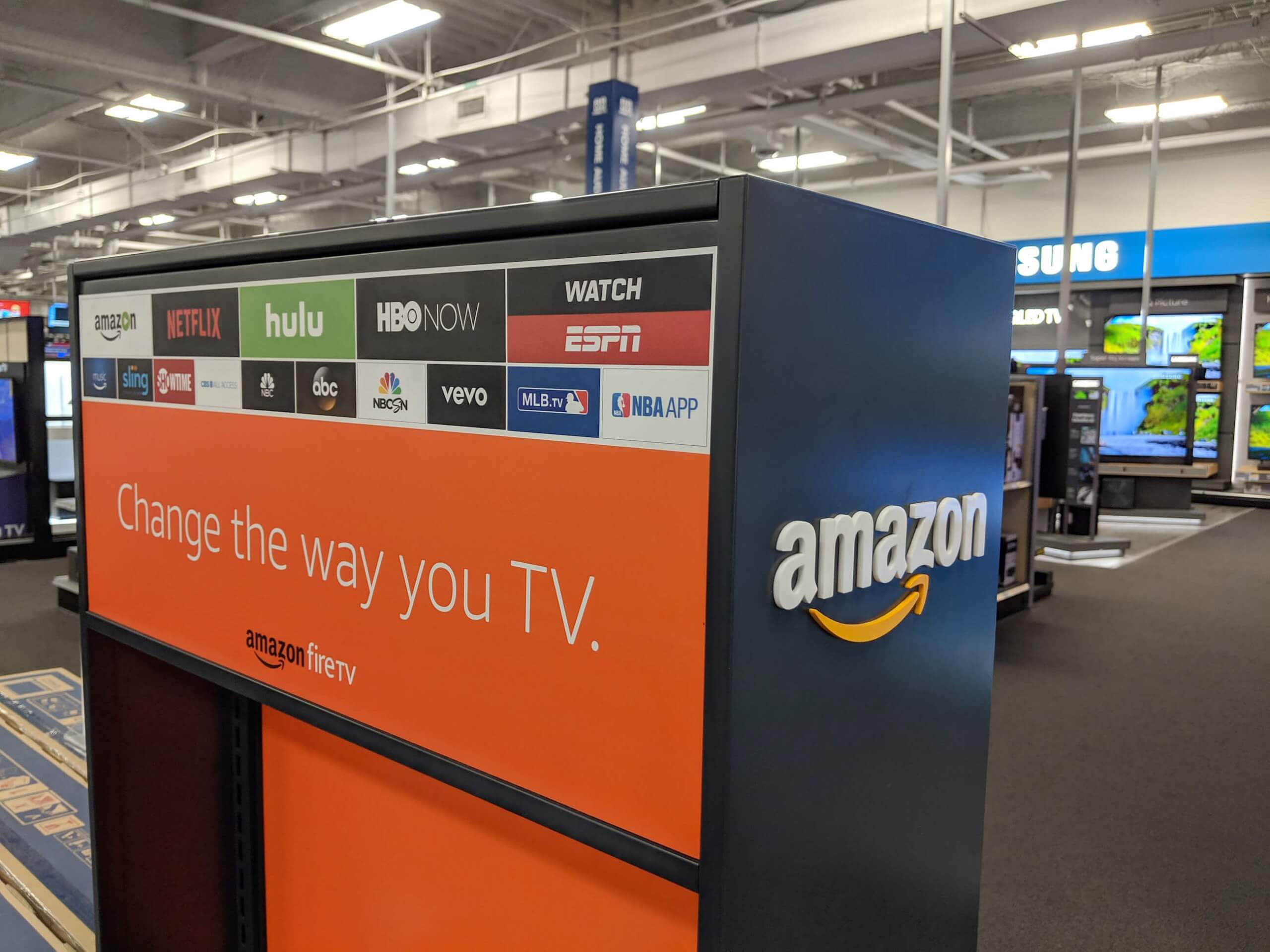
A hot potato: In a move that seems far-reaching even for Google, it has been alleged that the company can revoke its Android license across all of a manufacturer's devices if just one of then runs a forked version of Android. It has reportedly used this leverage to keep its thumb on Amazon's attempts to gain a foothold in the smart TV market with its Fire TV platform.
According to a report from tech blog Protocol, Google has been using its Android licensing agreement to stifle competition from Amazon. Sources say that the current licensing agreement for the Android TV operating system prevents manufacturers from using "forked versions" such as Amazon's Fire TV.
What's more, if the OEM breaks the agreement, Google can revoke the Android license of any device the manufacturer produces. In other words, if Samsung made a smart TV using Amazon Fire, Google could not only disallow the use of the Play Store and Google apps on the televisions but on Samsung's phones as well.
"They cannot do Android TV and Fire TV simultaneously," said a senior insider from an unnamed "major TV manufacturer. "It basically blocked Amazon."
Considering that Google has partnerships with about 60 percent of the top smart-TV market and over 140 cable providers worldwide, this is a big deal. Google has faced flack from mobile regulators over such agreements in the past, but this is the first time it has come to light that it is pinching off smart-TV competition.
Protocol reached out to Google, but the search giant declined to comment on the matter. Likewise, officials with Amazon's Fire TV division refused to discuss the subject.

The section of Google's Android agreement that is raising the issue is referred to as the "Android Compatibility Commitment," formerly known as the "Anti-Fragmentation Agreement." It is a confidential set of rules that makers of Android devices agree to in order to gain access to the Google Play Store.
The policies are to ensure that one Android app will work properly on any device. While developers are allowed to tweak Android's open-source operating system, they must still abide by the compatibility guidelines. However, forked versions are not allowed. These are platforms like Fire TV that are not compatible with the "Google-sanctioned" version of Android.
The strange thing is that manufacturers who have products in different sectors have to comply across the board. In other words, if they have a compliant version of Android for mobile devices, they cannot put a noncompliant version like Fire TV on their televisions.
"You cannot manufacture any of those noncompliant devices," said the anonymous source. "It's completely unique [from other agreements in the industry]."
This is not the first time that Google's compatibility policies have raised eyebrows. In 2016, EU regulators launched an antitrust investigation alleging that the company used the agreement to prevent OEMs wishing to pre-install Google apps from selling devices running forked versions of Android. It ultimately issued a fine in 2018 of €4.34 billion ($5.06 billion), which Google has appealed.
No regulatory actions have occurred regarding the use of this policy in the smart TV sector, but until now, it has been more or less an open secret among manufacturers. We'll have to see if the FTC or other antitrust officials take action.
Join Geezgo for free. Use Geezgo's end-to-end encrypted Chat with your Closenets (friends, relatives, colleague etc) in personalized ways.>>

5-6 minutes Amid the coronavirus outbreak, we're all being told to avoid touching our face to stop the spread of the virus.
But it's much easier said than done. In California a health official was videoed licking her finger straight after emploring the public to not touch their face.
So why do we touch our faces and is it easy to break the habit? We put those questions to behavioural psychologist Dr Sarah Cowie from the University of Auckland.
Why do we touch our face?
There are lot of reasons why we do it. The most obvious one is that we have an itch we need to scratch. But also, we seem to touch our faces more when we feel anxious or when we are concentrating on something or trying to keep our attention on a task. There's a school of though that says this face touching might have a social function that might show that you are sort of self-aware. There's also a school of thought that says this could be some sort of leftover behaviour from primate grooming that's just kind of come through evolution. So nobody knows quite why we touch our face for these reasons, but there are definitely some environmental triggers that tend to occur before we are likely to touch our face.
What are those triggers? 
There are three main triggers. One of those is that when people are concentrating on something, and particularly when you're trying to keep your attention focused on a task, often we find people touch their faces at that kind of point. When you're feeling a little bit anxious, that's also another situation where people tend to be touching their faces. And then for very practical reasons, if you're itching or need to adjust your lipstick or whatever. That one is probably a little bit more conscious but again, a lot of the time we'll just brush hair out of the way or itch your brow without as much as a thought.
How do we break the habit?
It's a little difficult, because the thing with habits is that very often we don't realise we're doing them, so they are actions that occur without a conscious thought. And it turns out that we probably touch our face somewhere more than 23 times an hour. And if you think about all the time your remember touching your face, you might think that's not possible, I don't touch my face that much. But people touch their face a lot. Of course, it becomes worse when you are thinking about it and trying not to touch it. So habits are tricky things to break, particularly when you have a long history of engaging in those habits.
When I think about not touching my face, it's like it becomes more itchy? It's like it wants me to touch it, is that natural? 
It certainly seems like it is. The thing is to try and shift the focus from not doing it to being more aware of those environmental triggers that are likely to make you want to touch your face. So rather than going through and saying 'okay, today I am not going to touch my face', shift focus and think, well can I be a little bit more aware of my surroundings and what I'm going through, and then I can recognise when I'm likely to be touching my face and hopefully redirect that behaviour.
  How can we encourage children to not touch their face?
So part of it is recognising some of those behaviours are not behaviours anybody is consciously aware of doing. Trying to make sure your environment isn't overly stressful, but also just using the normal kinds of techniques and approaches you would use for any sort of behaviour with your children or indeed anybody around you. For example, incompatible behaviours, so getting children to do something else with their hands so they can't touch be touching their face. Having things like stress balls, or even encouraging people to put their hands in their pockets or play a game with your hands. Obviously it's not possible in all sorts of situation, but it's a good starting point. So, if you're encouraging any sort of behaviour, rather than just saying 'don't do that', or explaining not to do it, reward when it doesn't happen, reward when you're doing something else. So, just some of the strategies you'd use for beating other behaviour.
Should we all buy fidget spinners and stress balls?
There are whole bunch of really strange things coming out to help, like you can get a wristband that vibrates when it seems like you're moving your hands towards your face, or there is an app that tracks your movements and tells you off when it seems as if you are tracking towards your face. Some of those are towards making you aware of the situations where you're likely to be touching your face. but the other thing is stress balls and fidget and spinners and anything that you can do with your hands - take up knitting - but something that's incompatible with touching your face.
Join Geezgo for free. Use Geezgo's end-to-end encrypted Chat with your Closenets (friends, relatives, colleague etc) in personalized ways.>>

Arjun Kharpal

GP: Tim Cook China-US-Apple
Apple CEO Tim Cook attends the Economic Summit held for the China Development Forum in Beijing on March 23, 2019.
Laurent Fievet | AFP | Getty Images
Apple got off to a great start in 2020.
Chief Executive Tim Cook lauded the company’s “blockbuster quarter” for the three months that ended in December 2019, in which the company posted market beating earnings and revenue. The iPhone 11 series appeared to be doing well, especially in China, one of the company’s most critical markets.
On Jan. 29, a day after its earnings, Apple shares hit an intra-day high of $327.85, even after it gave wider-than-usual guidance for its March quarter. Investors felt content.
At that point, the number of coronavirus cases in China stood at over 7,000 versus more than 80,000 on Monday. 
In early February, analysts reiterated their buy ratings on Apple’s stock and strong price targets. While acknowledging the outbreak of the coronavirus, they felt Apple could withstand it.
“Overall, we see the coronavirus impact on AAPL as a dynamic that continues to gain in importance to the company, though we size the present impact to be relatively minimal, financially,” Deutsche Bank said in a note on Feb. 2, referring to Apple’s stock code on the Nasdaq.
Then the reality of its impact sank in. 

Apple’s reliance on China

On Feb. 17, Apple said it did not expect to meet the revenue guidance for the March quarter of $63 billion to $67 billion. China was mostly to blame.
The coronavirus forced the annual Lunar New Year holiday to be extended. That meant Apple stores and the factories that make iPhones, run by Foxconn, remained shut for longer. Production wasn’t happening and demand had waned.
“We are experiencing a slower return to normal conditions than we had anticipated,” Apple warned.
Even now, Taiwan’s Foxconn, the main company that assembles iPhones in China, is not at full capacity and not all of Apple’s retail stores in mainland China have opened.
China accounts for nearly 15% of sales for the company but crucially, it is at the heart of iPhone production which will affect supply globally.
The bad news kept rolling in. On Monday, official Chinese government figures showed Apple shipped fewer than 500,000 iPhones in February, a 60% year-on-year decline.
“These are doomsday type of iPhone units and overall smartphone sales which are not surprising given the essential lockdown that most of China saw during the month of February with stores closed and the supply chain under massive pressure due to the coronavirus outbreak in the country,” Daniel Ives, analyst at Wedbush Securities, said in a note on Monday.
On top of that, there are concerns that Apple may not be able to launch new products on time, and that may include a rumored 5G-capable iPhone.

Shares slammed 

Since the record intra-day high, Apple shares have fallen nearly 19% that’s wiped off billions of dollars in value, even as the broader equity markets saw a violent sell-off.
According to a Reuters poll, analysts are still predicting that Apple could potentially hit new record highs this year after a big rally in 2019. In fact, the current average 12-month price target on Apple’s stock is $333.57. If realized, it would represent a 25% rise from Monday’s closing price. It would also be a new record high for the stock.
Given that the $333.57 figure is a 12-month price target, analysts say it could even be reached in 2021.
Getting there will be a lot harder than it seemed earlier in the year, however, particularly as the coronavirus spread has gone global. UBS warned in a note last week that demand impact is “likely to expand beyond China.”
“We had moved some demand from March into June but given the broader impact, we now think the demand impact could continue into Jun,” analysts at the investment bank said.
UBS lowered its June quarter iPhone unit sales by an estimated 2 million, to 38 million units. It also reduced its earnings and revenue estimates for Apple for the fiscal year ending September 2020.
But analysts still feel that the coronavirus is a near-term issue for Apple and that its long-term growth story remains intact.
Ives said the weak demand from China in the March quarter is a “shock event” that will be “short lived” with “normalized iPhone demand trends” to resume in the second half of the year around the world. The Wedbush analyst said the iPhone’s huge install base, pent-up upgrade demand, growing services business such as Apple music, and a potential new 5G iPhone, will be catalysts for the company.
“With markets seeing an avalanche of selling pressuring triggering circuit breakers, we encourage investors to take a deep breath and focus on the tech winners for the next 5-10 years including Apple front and center,” Ives said.
Join Geezgo for free. Use Geezgo's end-to-end encrypted Chat with your Closenets (friends, relatives, colleague etc) in personalized ways.>>

4 minutesHere’s what you need to know about the coronavirus:
A woman wearing a protective face mask, following an outbreak of the coronavirus disease (COVID-19) is seen at a restaurant in Aizu-Wakamatsu, Japan, March 8, 2020. REUTERS/Athit Perawongmetha
The spread
There are now more than 107,000 coronavirus cases and more than 3,600 deaths across the world, according to a Reuters tally of government announcements.
Italy ordered a virtual lockdown across a swathe of its wealthy north on Sunday, including the financial capital Milan, in a drastic attempt to try to contain the outbreak there.
The death toll in Italy has risen by 133 to 366, the Civil Protection Agency said on Sunday, by far the largest daily rise since the contagion came to light last month.
Britain recorded its largest daily rise in cases. Germany’s health minister called on organizers of large public events to cancel them and urged members of the public to stay at home as cases there topped 900.
Iran, one of the other worst hit countries outside China, said 194 people had died from coronavirus and 6,566 were now infected.
Meanwhile, the mayor of Daegu, the city hardest hit by South Korea’s outbreak expressed cautious hope on Sunday that the numbers of new cases may be dropping, after the rate of increase slowed to its lowest in 10 days.
Argentina recorded Latin America’s first death from the coronavirus. Bangladesh, Maldives, Bulgaria and Moldova reported their first cases.
Another sign of economic damage
The economic bad news continues: a trade report showed China’s exports contracted sharply in the first two months of the year, and imports slowed, as the health crisis caused massive disruptions to business operations, global supply chains and economic activity.
Keep calm and work from home
The European Central Bank has told most of its over 3500 staff to work from home on Monday to test how it could cope with a shutdown - one of a slew of institutions and companies urging staff to avoid the office and curb travel plans.
Cruise control
U.S. passengers on the cruise ship Grand Princess, which had been barred from docking in California because of suspected cases of the coronavirus on board, will be sent for testing to at least four quarantine centers, Georgia Governor Brian Kemp said on Sunday.
Sports without fans
The Bahrain Formula One Grand Prix will go ahead on March 22 but without fans cheering on the drivers, in a first for the sport. The Chinese Grand Prix in Shanghai scheduled for April 19 has already been postponed.
Britain has called a meeting with its sports authorities and broadcasters on Monday to discuss how other events could be staged without fans present if the outbreak escalates.
What about walking the dog?
Moscow’s healthcare department said it was OK for residents in self-isolation to walk their dog, but only while wearing a face mask and at time when there are the fewest people in the streets. The advice was handed out after authorities threatened prison terms of up to five years for people failing to self-isolate for two weeks after visiting countries hit hard by the outbreak.
For an interactive graphic of the spread, open tmsnrt.rs/3aIRuz7 in an external browser.
See a selection of curated coronavirus coverage here: here
Join Geezgo for free. Use Geezgo's end-to-end encrypted Chat with your Closenets (friends, relatives, colleague etc) in personalized ways.>>

Riya Bhattacharjee,Hugh Son,Chris Eudaily


JPMorgan said Thursday that CEO Jamie Dimon is recuperating after having emergency heart surgery to repair an acute aortic dissection.
Co-presidents Daniel Pinto and Gordon Smith sent a memo to employees and shareholders which said Dimon underwent successful emergency heart surgery and was alert and doing well:
“We want to let you know that Jamie experienced an acute aortic dissection this morning. He underwent successful emergency heart surgery to repair the dissection. The good news is that it was caught early and the surgery was successful. He is awake, alert and recovering well.”
CNBC’s Wilfred Frost reported Dimon woke up with chest pains Thursday morning and went to the hospital.
Pinto and Smith will be jointly leading the company as Dimon, 63, recuperates, the memo said.
“As Co-Presidents and Chief Operating Officers, we have been working hand-in-hand with Jamie and the Board over the past two years to help lead our company,” Pinto and Smith said in the memo.
An aortic dissection occurs when the inner layer of the large blood vessel branching off the heart tears, according to the Mayo Clinic, which says the condition can be fatal.
The bank’s lead director Lee Raymond said in the memo that the board had been “fully briefed on these developments and has asked Daniel and Gordon to lead the company during this period.”
Raymond added that the company has “exceptional leaders across our businesses and functions – led by our outstanding CEO and Co-Presidents. Our company will move forward together with confidence as we continue to serve our customers, clients, communities and shareholders.”
Dimon presented at the company’s annual investor day in late February.
“Just last week, the firm hosted our Investor Day, where we provided comprehensive updates on our strategy and priorities going forward. We will continue to execute on all of these plans,” Pinto and Smith said in their statement. “We have also been deeply involved in all of the critical firmwide functions.”
When Pinto and Smith became co-presidents two years ago, it was with the tacit acknowledgement that should Dimon be unable to perform as CEO, the company had two trusted leaders at the ready. At the time, Dimon had announced that he would serve as CEO for approximately five more years.
This is not the first health scare for Dimon. He was diagnosed with throat cancer in 2014, and while he underwent eight weeks of chemotherapy, Dimon still led the New York-based bank. He recovered completely.
Dimon has led JPMorgan since 2006, making him the longest-tenured of CEOs among the U.S. megabanks. He’s also been his industry’s top spokesman, opining on matters from regulation to politics and the economy.
That’s probably because under Dimon, JPMorgan has outperformed his peers. Compared to his competitors, he exercised restraint in the run-up to the housing bubble, and that left JPMorgan in a superior position as it ended.
He snapped up Bear Stearns and the banking operations of Washington Mutual during the 2008 financial crisis, and JPMorgan emerged to eventually become the biggest U.S. bank by assets. Later, JPMorgan would become the most valuable bank in the world by market capitalization.
In the process, the bank became a top player in all things financial, from credit cards and checking accounts on Main Street to institutional trading and mergers on Wall Street. And JPMorgan became a CEO training ground: Dimon’s deputies have gone on to lead banks including Wells Fargo, Barclays and Standard Chartered.
Read the full statement from Pinto and Smith here:
Message from Daniel Pinto and Gordon Smith
Dear Colleagues, Shareholders and Clients –

 We want to let you know that Jamie experienced an acute aortic dissection this morning. He underwent successful emergency heart surgery to repair the dissection. The good news is that it was caught early and the surgery was successful. He is awake, alert and recovering well. 
 Our Lead Director, Lee Raymond, said today, “Our Board has been fully briefed on these developments and has asked Daniel and Gordon to lead the company during this period, as Jamie recuperates. We have exceptional leaders across our businesses and functions – led by our outstanding CEO and Co-Presidents. Our company will move forward together with confidence as we continue to serve our customers, clients, communities and shareholders.”
 As Co-Presidents and Chief Operating Officers, we have been working hand-in-hand with Jamie and the Board over the past two years to help lead our company. This is in addition to directly running the firm’s Corporate & Investment Bank and Consumer & Community Banking businesses, which represent the majority of the firm’s businesses. We have also been deeply involved in all of the critical firmwide functions. 
 Just last week, the firm hosted our Investor Day, where we provided comprehensive updates on our strategy and priorities going forward. We will continue to execute on all of these plans.
 As we always have done, this is a time for all of us to stay focused on our important responsibilities. We know you all join us in wishing Jamie our very best and a smooth and speedy recovery.
Join Geezgo for free. Use Geezgo's end-to-end encrypted Chat with your Closenets (friends, relatives, colleague etc) in personalized ways.>>

Geezwild

Contact Form

Name

Email *

Message *

Powered by Blogger.
Javascript DisablePlease Enable Javascript To See All Widget