Articles by "EDUCATIONS"


Types, cuts, care, and more, explained by Top Chef winner Kristen Kish.

By Alyssa Bailey 

Photo: Stephania Stanley

"I picked up my first knife when I was five," Kristen Kish says, casually twirling a freshly sharpened chef's knife as if it couldn’t chop off a finger. "I pulled it out of my parent’s knife block, and I just did stuff. It came very naturally to me."
Kish is Top Chef’s season 10 winner and a former chef de cuisine at Boston’s Menton (she’s also one of the faces of Rembrandt’s latest #BeColorful campaign). And while she "didn’t really have to learn" how to handle knives, she swears those not so naturally endowed can be pros too with a little knowledge (be it through YouTube videos or a class) plus practice, practice, practice. She recommends learning with something that won’t cut you like a butter knife, adding "the closer your hand is to the blade, the smaller the chances you’re going to cut yourself. I know it sounds odd, but it’s true!"
Here, Kish shares her knife essentials, including what kind to buy and when to replace them (spoiler: never if you take care of them.) She also teaches ELLE.comtwo basic cuts and a couple quick knife hacks that will forever change the way you handle your produce.
What to Buy:
Filleting a pepper with a slicer. Photo: Stephania Stanley

Kish has three main knives she goes to: A petty knife that doubles as her paring knife, a chef’s knife ("about 7 inches or so in length. And this is good because, you know, most average size vegetables, it’s going to cover the length of cutting them in half"); and a slicer for filleting fish and dicing fine herbs. Pay $100 to $120 for them, a "middle of the road [price range] as opposed to getting something for like, $20, and you go to cut something and it cracks in half."
Kish likes Japanese knives for their thinner blade. "The only downfall that a lot of home cooks that I’ve talked to find in them is when it comes to the winter and harder vegetables, their knives dull a little bit quicker and then they don’t know how to sharpen them back, but they’re much more delicate."
How to Take Care of Them:
Sharpening a knife. Photo: Stephania Stanley
The knives "should last you forever if you take care of them," Kish notes. "Don’t put them in the dishwasher (with the jetting water and dish detergent, it can mess up the angle of the blade), don’t soak them in soap (since soap is acidic and can eat away at the metal), dry them off, sharpen them when they need to be sharpened, and just put the care into it." You should sharpen knives more in the winter "as you get into the squashes' [tougher skins]."
Sharpen knives with a wet stone, not the honing rod in your knife set. "A lot of home cooks think this sharpens your knife, really, once you get past the ability to hone your knife, you’re just gonna dull it even further."
A wet stone with a middle-of-the-road grit number (between 1000 and 1400) is best. Soak the stone for 10 minutes—"until all the bubbles dissipate"—and then find a 12-15 degree angle. "Apply the same amount of pressure, keep the same angle while moving your knife back and forth using the entire stone so you don’t get divots in [it.]"
Essential Cuts:
These two cuts are simple and are great go-tos for most dishes.
The Roll Cut:
Photo: Stephania Stanley
"[Use] a 45-degree angle for this specific cut. I always start at the skinny end of the carrot, about an inch in—make that first cut. Then you’re gonna roll a quarter turn away from you, and do the same angle, same distance apart. And you just keep doing that all the way up the carrot. Think 'rolling.' Roll and cut, roll and cut."
Best for…stews. "Cutting them evenly and in large enough pieces like this will ensure that they just don’t disintegrate into whatever you’re making."
The Juilenne:
Photo: Stephania Stanley
“A julienne is the most standard type of cut. It’s technically one cut—you’re just taking the natural shape of a vegetable and just cutting it into strips. What I like to do when I’m julienning something, especially something like a bell pepper, is take it and then kind of flatten it out. Take off this inner part, because this is all watery and fillet it. It looks cleaner."
Best for…stir frys. "Something that cooks relatively quick because I cut them so small. You can mess around with the different sizes and shapes."
Cutting Hacks:
Maximize safety and efficiency with these food-based tips.
Stabilize round fruit and then remember the cut hierarchy: planks to sticks to cubes. Photo: Stephania Stanley
For round fruits and vegetables: "When you have something that rolls, that can get a little dangerous." Cut off an end to create a flat surface "so then you have something stable. When you dice, it’s always important to go into planks. From planks, you do sticks or batons. And then from your baton, you can go into a cube."
A hand towel acts as an important safety barrier. Photo: Stephania Stanley
For squashes: Find the point that feels most stable and cut through the squash using a towel. "It’s very important. If your hand does slide, you have something there to protect it. The key is not to go just straight down." Treat it like a see-saw, Kish says.
A suprême cut. Photo: Stephania Stanley
For citrus: To avoid seeds, "cut off-center and [go] around. What you’re doing is exposing that first layer of seeds, so now you’re not digging two layers of seeds in." Do a suprême cut by peeling the citrus and then "find[ing] the membrane, go on either side. Then you don’t have any of that pith, which can get a little bitter."
Fine mincing garlic. Photo: Stephania Stanley
For garlic: "Treat it like an onion. You cut in and then down and then across. Now you have these little squares of garlic." The cut’s a bit difficult so if you’re a novice, Kish suggests investing in a good microplane and grating it. (Just cutting garlic creates large pieces that won’t "melt into whatever you’re doing.")

By flickpoint 

Movie maker is windows software. It helps to make a video with background music and sound. There are various step to create video for publish your. It is very easy process. There are many points to consider before start making video such as things about your topic, choose images in single folder. Which music file will use as background music, save in same folder.
Use windows 8 operating system.
  1. Going to search option
  2. Wright movie maker
  3. Click on movie maker software
  4. Click on add image button
  5. Select all and open
  6. Use animation according to your choice
  7. Use image effect and image rotating style
  8. Click on add music button and insert music
  9. Project same as a movie
  10. Select configuration and save

How to Make Image video via movie maker

 Stephen A. Powell, eHow contributor


Starting an online radio show on your own can require costly materials such as microphones, headphones, a station website and server space. However, you can eliminate all of these costs and materials by creating your own online radio show for free by signing up with BlogTalkRadio.com or a comparable platform.
ADVERTISEMENT
Instructions
1.            Visit BlogTalkRadio.com. Click the link marked “Start your free talk show” at the top of the home page.
2.            Fill out the registration page that loads onto your screen. Check the box marked “I want to host my own show.” Submit the registration information.
3.            Click the link marked “My BlogTalkRadio” that now appears at the top of the BlogTalkRadio.com home page when you are logged in. Edit your account information to name your show and provide other profile information.
4.            Return to the “My BlogTalkRadio” and click the link marked “Add/Edit an episode.” Schedule the first episode of your free online radio show.
5.            Open your online switchboard from the “My switchboard” link in “My BlogTalkRadio.” Use the switchboard to field calls and play audio files during your scheduled online radio show’s broadcast. 


2014-10-28-humph.jpg
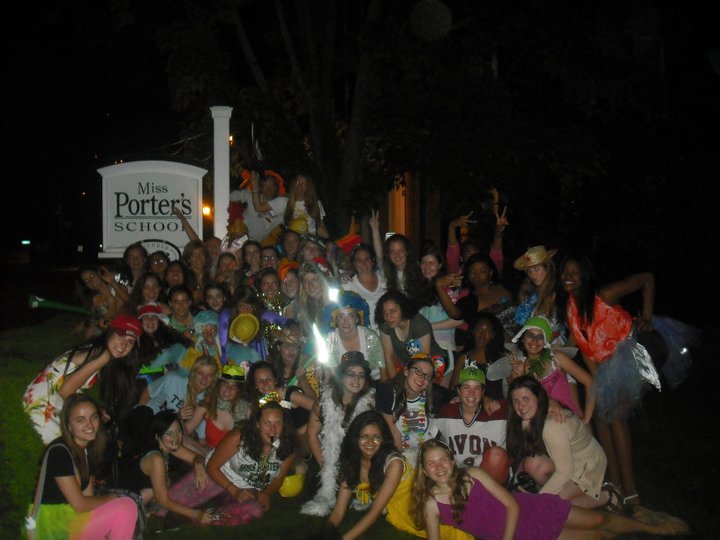
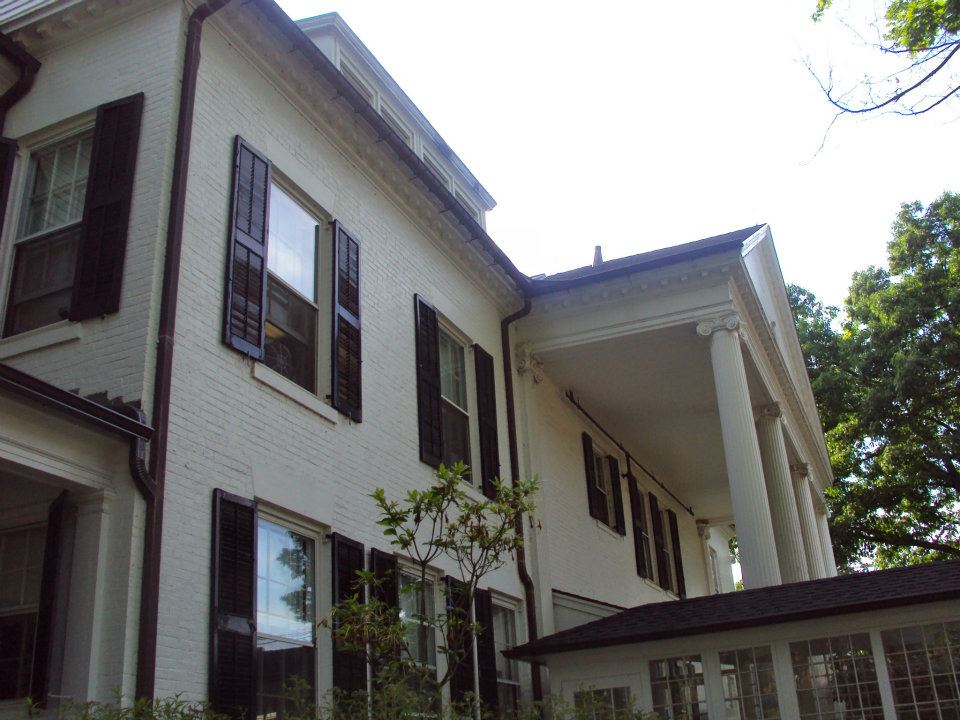
As a child, I was an avid reader of Harry Potter. Beyond the magic and adventure, I loved that the characters lived at school away from home, but boarding school was never in the plans for me. I was the oldest of four children born to a single mother in Western Massachusetts. My parents never stepped foot on a college campus, and I certainly had no trust fund waiting for me. Still, as the independent 13 year old I was, I spent my eighth grade year applying to various northeastern boarding schools in search of an academic challenge. In July of 2008, I received a full Oprah Winfrey Scholarship to Miss Porter's School for girls in Farmington, CT making my attendance a financial reality.
Now that I am more than two years removed from my Porter's graduation date I have truly come to appreciate the experience. I became fluent in a second language and encountered calculus; I even pursued my love of horseback riding to the Varsity level. The list of skills I learned in the classroom has been recorded on my transcripts and SAT scores. Nevertheless, I would say that while I gained a world-class education, some of the most important lessons I learned can't be quantitatively assessed.
1. Attitude of gratitude

I knew that I was incredibly lucky in many ways, but I had no idea just how distanced I was from the concept. Then one day my Junior English teacher started our Monday morning class with a challenge: we all had to come up with something from the weekend for which we were each individually thankful.

A few of us exchanged panicked looks at the thought of straying from our analysis of The Scarlet Letter and divulging unprepared thoughts. Nevertheless, the class gradually began revealing what had made a positive impact on the previous few days. I will never forget how impactful we found the little things: dinner with a friends' family, catching up on sleep, or winning a field hockey game.

2. It is pretty much impossible to have a milkshake delivered to you

There's nothing quite like a hormonal teenage girl's late night craving for a chocolate milkshake. It's one of those crazed urges you can't predict. I have even seen girls try, unsuccessfully, to bribe pizza delivery men to bring them one.

Sometimes you don't get what you want, but you survive. You don't get into the college you thought was perfect for you or you completely forget what Nixon did on your AP US History final, but in the end it rarely matters.

3. Old-fashioned values have a place in the modern world

Founded in 1843, my high school was older than my college. While much of the finishing school aspects have faded with time there is still a great love of tradition. The head of the (one-person) Ethics Department made a point to reintroduce his students to many dying arts. Time hasn't changed the fact that hand written thank you notes will always trump e-mails, a good firm handshake is the best introduction, and it is best to stand when there is a new addition to your dinner table.

Despite his nearly undecipherable scrawls on the chalkboard, we all got the message. Yes, we were all strong independent young women. But there is a lot to be said for showing respect and making human connections just like they did in the good ole days.

4. Love is real, but not uniform

Most people do not live away from home until college. My friends and I, however, left home at the age of 14. With that independence came the opportunity to decide for ourselves what mattered most. For the first time in our lives we were able to decide our friends and activities with minimal parental input. Thanks to Porter's far reaching reputation we were exposed to girls with all kinds of personalities and backgrounds. My friends became my sisters over the years and I experienced unconditional love for the first time outside of my family.
Now that I'm in college seeing teenage romances makes me feel vaguely nauseated. However, I would go so far as to say that there were some among us who truly experienced their first loves whilst in boarding school. Over the years we learned to discern love from infatuation, as we learned more about ourselves and how other people worked. These first loves weren't perfect (what first love is?), but I believe that knowing what real love feels like changes you forever.

5. Teachers are humans too

There has never been a more academically encouraging experience than making personal connections with my teachers. I've babysat for my Geometry teacher, and participated in a class vs. English teacher prank war. I not only studied to better myself, but to make my teachers proud. I admired the accomplishments of these men and women, and their ability to inspire their students. When I return to visit during the Spring term it is often the adults of my high school career I most look forward to seeing.

6. Don't invade Russia in the winter

My history teachers are probably not going to like it when I say that this was the most memorable lesson. Napoleon's ambitions got the best of him with this one, when he waged a two front war that ended in his defeat. I'm personally still learning this lesson as I try to balance my ambitious nature with academic and familial obligations.
I've invaded my own Russia in winter, and it ended poorly. Just don't do it.

7. One decision can change your life

There is no way I could have known just how much boarding school would change the course of my life. We were given the tools to succeed in whatever way suited us best. For the first time in my life I was taught how to lead, rather than follow. I cannot begin to explain how much Porter's gave me the gift of agency in my life. I can, however, say just how thankful I am to the special place that continues to educate girls and graduate women.
2014-10-28-565054_4681457119860_2006828501_n.jpg
For Raegan Chekas - Thank you for your humor and understanding. I couldn't have asked for a better second mother in Farmington.

October 28 at 12:01 AM

U.S. News & World Report put Princeton atop its list of the nation’s best universities last month. On Tuesday, the magazine declared Harvard best in the world — one of nine U.S. and three British universities listed ahead of the Ivy League school in New Jersey.
How can one U.S. university lead the national rankings as another one leads the world?
The answer is that U.S. News is introducing a new way to rank global universities, through analysis of the schools’ research prowess. Critics are likely to call the new global ranking as faulty as its domestic cousin. Both use subjective formulas. Both rely on data, such as reputational surveys, that prompt major debate within academia.
But rankings have become ingrained in recent years in higher education as students and faculty crisscross the country and the world. Before U.S. News jumped into global analysis, similar ranking efforts had arisen in the United Kingdom and Asia.
“When you have a marketplace, you need information in order for markets to function well,” said Ben Wildavsky, a former U.S. News education editor who is now director of higher-education studies at the Rockefeller Institute of Government, a unit of the State University of New York. Rankings, he said, are imperfect but “perform a useful function. They’re not going to go away. The challenge is to make them better.”
U.S. News rankings
For its global analysis, U.S. News drew on data from Thomson Reuters InCites on various aspects of university research. Among them: global and regional reputations, scholarly publications, citations and impact, international collaboration, and awards of doctoral degrees.
Omitted from this formula are factors such as undergraduate admissions selectivity, graduation rates, alumni donations and some other measures typically included in the domestic ranking. That was by design. Uniform data to compare global universities, particularly the undergraduate experience, is scarce.
“This is about faculty productivity and prestige,” U.S. News Editor Brian Kelly said of the global ranking in a telephone interview Monday. “It is meaningful for certain things and not necessarily meaningful for other things. We get that. This is about big muscular research universities doing what research universities claim is their mission.”
U.S. News distributed the rankings to journalists Monday on condition that they not call universities for comment in advance of the release.
The list attempts to define the world’s 500 top schools from 49 countries. The United States dominates, with 134 schools listed, including eight of the top 10. The other two in the top 10 are the venerable British universities of Oxford and Cambridge. Germany has 42 schools on the list, followed by the United Kingdom with 38 and China with 27. (Hong Kong, a special administrative region of the People’s Republic of China, had an additional five.)
The global rankings offer a counterpoint to the U.S. News domestic list, with a formula that gives far greater recognition to strengths of certain public universities with high research profiles. The University of California at Berkeley, arguably the nation’s most prestigious public institution, ranks 20th on the domestic list but third on the global version. The University of California at Los Angeles ranks 23rd domestically but eighth globally.
The University of Maryland at College Park ranks 51st globally. That is higher than its domestic ranking — 62nd.
The University of Virginia did not place in the global top 100. It was ranked 102nd. Domestically, U-Va. is tied with UCLA at 23rd.
Here are research universities from the District of Columbia, Maryland and Virginia that U.S. News listed among the global top 500: Johns Hopkins, 11th; University of Maryland at Baltimore, 158th; Virginia Tech, 248th; Georgetown, 258th; George Washington, 281st; Virginia Commonwealth, 314th; and George Mason, 401st.


“You always hurt the one you love.” A memorable line from a classic love song. The fact of the matter is, though, that it is probably true in more ways than one. Sometimes hurting another person is inevitable; however, often times we will actually hurt ourselves even more by not loving ourselves in the right way.
What does that mean? You have to take care of yourself first.
A relationship with another person is not going to make you happy if you aren’t already happy. If you get stressed easily or frustrated quickly over the simplest things, that means you have not developed the tools to cope well with uneven situations. So… if you can’t accomplish that when you are by yourself, how are you going to do itin conjunction with another person?
Take care of yourself first. Be happy with you. Maybe that means taking a class on stress management. It could mean seeing a professional to help you deal with those little frustrations that hold you back from enjoying your life.
Figure out you. Then consider joining up with a partner.
The truth is, people who exude self-confidence and seem happy are more attractive to others. To help you get to that place of self-love, here are some suggestions.
Take care of your mind and body. Eat right. Food should be seen as a necessity, not a reward or punishment. Google “super foods” and find out about everyday foods that are good for your mind and body. For example, did you know carrots are great for your eyesight?
Exercise, or at the minimum stay active. Again, it’s about fueling your mind and your body. Just 10 minutes of some kind of activity in the morning can get your blood flowing and get your day off to a good start. This is about you feeling good and feeling alive and ready to take on the world. And that joy will attract others, no doubt!
Have some quiet time. Sometimes your body and brain need a moment to refuel. Smell the roses. Take a deep breath and suck in some good air and sunshine!
• Stay connected. Don’t neglect friends and family, especially those who tend to support you, listen to you when you need an ear and encourage you. You need that feeling of belonging and that knowledge that there are people who’ve got your back.
Be thankful. Take the time to revel in the joy of an accomplishment, big or small. Give credit where credit is due. That can be so freeing… to acknowledge the little things as well as the big things. It will make you feel good!
Don’t let negative thoughts or emotions linger. It’s OK to acknowledge them, but then you must let them go. You can do that by taking a walk, calling someone who always seems to make you laugh… in other words, flip the script.
Finally, last but definitely not least: have fun. Sure you should work hard, but you also need to play hard. Treat yourself to a funny movie, sing in the shower… do things that make you smile and laugh. People will wonder, “Why is this person so happy all the time?” And guess what? People will want to be around you.
Exude positive energy. Love yourself!
Indeed, happiness is contagious!

To be unmarried and pregnant meant deep trouble.

By Kate Manning


Photo: Courtesy of Smithsonian Magazine
Writing a novel—'My Notorious Life'—about an orphan girl on the streets of New York in the 19th century, I came across the fascinating lost history of a “females physician,” who practiced for decades. Her name was Ann Lohman, alias “Madame Restell,” and she was known as “the wickedest woman in New York.”  Why was she considered so wicked? Because she advertised and sold medicines that might cause miscarriage. If they didn’t, Madame would perform an abortion. Restell’s story was a wild one— of vast riches, sensational trials, riots, and the plight of many desperate women who used her services. This history was so compelling to me that my orphan girl protagonist grows up to share Madame’s profession, and my novel borrows details of Restell’s rip-roaring life. I came away believing that, far from being ‘wicked,’ Restell was an early pioneer of reproductive rights. My research led me to trial transcripts, old medical textbooks, newspaper headlines, and the advertisements that drew scores of women to Madame’s offices, women like Maria Bodine.
In 1844 Maria Bodine, a 26-year-old unmarried servant girl, found herself pregnant by her boss, Joseph Cook. He sent Maria to see the infamous Madame Restell, whose advertised services included the sale of “Female Pills: an infallible regulator of ****** [menses]. They must not be used when ********[pregnant].” The many ads like this claimed the medicines would alleviate menstrual symptoms but were understood to mean that they’d end an unwanted pregnancy. The concoctions were made variously of tansy oil, pennyroyal, rue, ergot, perhaps opium, and had dangerous side effects (damage internal organs, seizures, death) but in correct doses were sometimes effective in causing miscarriage. If not, Madame promised “safe and immediate removal of all irregularities in females, with or without medicine, from whatever cause, at one visit.” These ads were perhaps the first publicly available information women had about the possibility of family planning.
Related: "I Had an Abortion"

In the 1800s, unmarried pregnant girls like Maria were in deep trouble. Religious ideas about sin held that a woman’s “virtue” was ruined if she had sex outside of marriage. Thus disgraced, a woman had few options if her “seducer” refused to marry her. Often she was banished, forced to live apart from family and community. This was an era when birth control was not widely available or reliable. Women could not vote, own property, or control their own money. (They could also be committed to an insane asylum on the say-so of a man[1]). Countless ‘fallen’ women—who’d been raped, or jilted by their lovers—had to resort to prostitution to make ends meet. Prostitutes lived an average of about four years, falling victim to violence and venereal disease. As for surrendering a child for adoption, in the mid-1800s, there were 30,000 homeless children[2] living on New York streets, and no reliable foster care or orphan asylums. Maria Bodine was in dire straits. Could Madame help her?
Restell suggested Maria board with her and have the baby, for, in addition to offering birth control information and devices like the “female syringe,” Restell delivered babies, and helped place infants for adoption. But Maria could not afford boarding fees and Mr. Cook would not support a child. She chose to have an abortion. As with childbirth, there was no anesthesia in those days stronger than a shot of whiskey. “I was in great agony all the night,” Maria later testified. “Madame slept with me. In the morning...I took a great flooding. [Madame] told me to have patience, and I would call her mother for it.” When it was over, Restell brought her tea and crackers, gave her a dollar for travel and a kiss, before sending her on her way.[3]
Related: Three Unwanted Pregnancies Later, I'm Still Not Sorry
Abortion in the early 1800s was considered a misdemeanor until “quickening,” the time when a woman felt a fetus’ movements. But it was difficult to prove that a woman had terminated a pregnancy, and women were not lining up to confess. The only reason there is a record of Maria’s experience is because she felt unwell, went to a (male) doctor, and was made to accuse her ‘seducer’ Joseph Cook, and Madame, who were both arrested. Cook denied he knew Maria, claimed he was a victim of extortion, and was never prosecuted. But Restell’s resulting trial sparked headlines, riveting the city.[4]
Photo: Courtesy of Smithsonian Magazine
In court, the lawyers, judge, jury, and journalists were all men. Maria was viciously cross-examined on the witness stand. Restell’s lawyers, to defend their client, said Maria was not to be trusted, for “as regards women, when they part with their chastity...no reliance can be placed in her that loses it.” Maria was called a “foul, corrupt, loathsome, guilty a thing as ever polluted God’s blessed earth by her pestilential presence.” Listening to this invective, Maria collapsed in the courtroom.
Restell, who the papers called “a hag of misery,” (and worse) was sentenced to a year in jail, guilty of misdemeanor. Yet after her release, Restell  continued to practice. The wealthiest women in the city flocked to her offices. In her long career, despite other arrests, Restell was never proved to have injured a woman, an indication that she was a skilled practitioner. She earned so much money from selling medicines and helping her female patients, she built a mansion on Fifth Avenue. But in 1878, she was arrested again, entrapped by Anthony Comstock, a religious “anti-vice” crusader who posed as a husband seeking help for his wife—he said she might die if she had another child. The 1873 “Comstock Laws” had made it illegal to possess any birth control information or devices, and had outlawed abortion. In addition, male doctors were forcing women out of the practice of midwifery. Comstock was rumored to boast he had driven 15 people to suicide. One of them was Restell. Facing another sensational trial, Restell killed herself the morning she was due in court. Noting the date, April 1st, many believed she had faked suicide, and would one day spill the secrets of all the wealthy, powerful men whose wives, daughters, sisters, and mistresses who had used her services for decades. (When I read that, the plot of My Notorious Life fell right into my lap.)
By some estimates[5], one in five pregnancies ended in abortion in the 1800s. It was perhaps the most common form of birth control, and while dangerous, many women survived it. Childbirth was dangerous, too, and maternal mortality rates were high. But it was scandal and death by abortion, often carried out by unskilled practitioners, that brought sensational headlines and led to changes in the laws. In 1854, the papers were riveted by the story of 22-year-old Cordelia Grant, who’d accused her guardian, George Shackford, of impregnating her five times, each time insisting she have abortions. He'd promise to marry her, then abandon her. In 1871, Alice Bowlsby, an unmarried woman, was found dead of an abortion, stuffed in a trunk in a railway station. The abortionist was arrested, and Bowlsby’s lover killed himself, unwilling to endure the shame a trial would bring.
Still, for the most part, it was not single women who were having abortions, but married mothers wishing to limit the size of their families. “I am 30 years old and have 11 children... kidney and heart disease, wrote one mother to Margaret Sanger, who founded Planned Parenthood in 1921.[4] “Can you please help me. I have miss a few weeks and don’t know how to bring myself around. I have cryed my self sick... The doctor won’t do anything for me... Doctors are men and have not had a baby so they have no pitty...”(sic)
Related: Meet the Woman Ending the Silence that Fuels Abortion Stigma
For most of history, women have resorted to abortion—the first known reference is in the Ebers Papyrus, an Egyptian medical text from about 1500 B.C.[6] The procedure was usually done alone and in secret, perhaps with the help of a friend or midwife. Women used probes—whalebone or turkey feather—and poisons like lye, and turpentine,[7] willing to risk injury, death, arrest, and shame to limit their family size. One woman, an actress, purportedly wrote a letter to Madame Restell in 1840, [6] saying: “It was a lucky star for me under which you were born. God bless you, dear Madam.” A newspaper printed it as an example of Restell’s wickedness. But in our times, we might interpret this letter as a rare example of a woman’s voice, expressing gratitude for the choice to bear a child or not.  As George Ellington wrote in his 1869 book The Women of New York, “The practice of producing abortions is indulged in by women of nearly all classes of society.”[8] The difference between then and now is that abortion is legal, and one of the safest medical procedures.
Kate Manning is the author of My Notorious Life, a novel based loosely on the life of Ann Lohman.
***
    [1] See “Women & Madness” Phyllis Chesler. And: Most famous example of woman committed on say-so of husband.
[2] Inst. for Children, Poverty, Homelessness
[3] Clifford Browder, The Wickedest woman in New York p. 84
[4] “The Wonderful Trial of Caroline Ann Lohman” trial transcript
[5] It is estimated that the abortion rate jumped from one abortion in every 25-35 live births during 1800-1830 to one in every 5-6 live births by 1850. These figures may be a bit high (evidence is still sketchy), but are indicative of a trend. — Timothy Crumrin
[6] History of Contraception, Malcolm Potts and Martha Campbell
[7] Leeches, Lye and Spanish Fly, New York Times
[8] George Elington, The Women of New York, p. 410


by: Brian Wasko

I don’t know what to write about!
Every writing teacher is familiar with that complaint, so  here’s a list of writing prompts designed to give students something to write about.
They all require some self-reflection, maybe a little soul-searching. I imagine these would be effective for journal writing, but there’s lots of creative writing potential here.
I don’t claim that all of these are original, by the way. Some are oldies but goodies.

Self-Reflection Writing Prompts

  1. What would you do if you had $100 to spend today? What if you had $10,000? How about a $1 million? What does this say about you?
  2. What’s one thing you’d change about your appearance if you could? What’s one character trait you’d change?
  3. Take a reader through your idea of a perfect day.
  4. If you were King of the World for a single day, what would you do?
  5. If a magic genie gave you one wish (with the rule that you can’t wish for more wishes!), what would you wish for?
  6. What’s your idea of the perfect job?
  7. If your life had a soundtrack, like a movie, what songs would you include? Why?
  8. If you could instantly be the best in the world at anything, what would you choose?
  9. If you could change places with anyone for a single day, who would you pick and why?
  10. What are the top five qualities you would look for in a spouse?
  11. If your house was on fire and you could only save three possessions, what would you take?
  12. If you were stranded on a deserted island and could only have three books, what books would you choose and why?
  13. If you knew you had only year to live, what would you do? What if you only had one day? One hour?
  14. What would you attempt to do if you were guaranteed not to fail?
  15. If you could go back in time two or three years, what advice would you give yourself?
  16. What is your mission in life?
  17. If you could go back and relive one day of your life, which day would it be and why?
  18. Describe your alter ego — someone who is your exact opposite.
  19. If you could be any superhero, who would you be and why?
  20. If you could get the answer to any question, what would you ask?

Use these 170 reflective journal writing prompts to learn more about yourself, your values and the world around you. Increasing your self knowledge raises your self esteem. Get started now with these powerful writing prompts.

"One of the marks of an intelligent person is to be able to distinguish what is worth doing and what isn't and to be able to set priorities." Anne Wilson Schaef         

165
These reflective journal writing prompts will give your life clarity and focus. With them, setting priorities will be easier. With more effective decision making skills, your life will be more balanced and stress free.

Most of these reflective journal writing prompts begin with, "What?" "How?" “Why?” and “If?” Other prompts ask about your wishes and dreams. Finally you'll find general reflective journal writing prompts.  

The prompts will stimulate your imagination, increase awareness of your beliefs and boost your critical thinking skills. Answer these reflective journal writing prompts with as much thought as you can. The richer your answer, the richer the rewards!


Reflective Journal Writing Prompts Beginning With “What?


1. What does "holds water” mean to you?
2. What does "copy cat,” mean to you?
3. Would be your ideal birthday present, and why?
4. What would it be like to be in a tornado?
5. What do you think the world will be like in 10 years? Twenty? Fifty?
6. What do you think people say to each other when you're not around?
7. What is your opinion about ghosts?
8. What is your opinion of someone who has bad manners?
9. What do you think about when you can't fall asleep?
10. What do you think courage means?
11. What things do you think are beautiful?
12. What is your opinion of 3D movies?
13. What is the best way to treat busybodies?
14. What is your idea of perfect happiness?
15. Which living person do you most despise?
16. What is the quality you like most in a woman? What is the quality you like most in a man?
17. What things are better than going to school? Why? 18. What makes a good neighbor?
19. What rituals do you have or hold?
20. What do you think is the greatest invention? Why? 

Use these reflective journal writing prompts for setting goals .      


165
1. What is your idea of a boring evening?
2. What is something you are optimistic about?
3. What is something you are pessimistic about?
4. What is your favorite song and why?
5. What would happen if there were no television? Why would this be good? bad?
6. What would you do if you saw a friend cheating—report it, confront the friend, nothing—and why?
7. What is your interpretation of one of your recent dreams?
8. What seemed unusual on your morning commute today?
9. What's your favorite charitable cause and why?
10. What if trash became more valuable than money?
11. What do you think should be done to keep people who are under the influence of alcohol off the road?
12. What do you like most about yourself?
13. What do you like to do in your free time?
14. What kind of animal would you like to be and why?
15. What kind of trophy would you like to win?
16. What TV or movie star would you like to invite to your birthday party?
17. What does "Clothes make the person" mean to you?
18. What does "Have your cake and eat it too" mean to you?
19. What does "The early bird gets the worm" mean to you?
20. What do we mean when we say, "The grass is always greener on the other side of the fence"?

There’s no need to respond to all these questions. The large number of these reflective journal writing prompts gives you many options for your journal. By choosing the prompts you really like, you will feel more engaged with your answers.                                      

Use these reflective journal writing prompts to boost your emotional intelligence.                                            

1. What is your most invaluable possession and why?
2. What is your greatest fear?
3. What historical figure do you most identify with?
4. What living person do you most admire?
5. What trait do you most deplore in yourself?
6. What is your greatest extravagance?
7. What is your favorite journey?
8. What do you consider your most overrated virtue?
9. What do you dislike most about your appearance?
10. What words do you most overuse?
11. What or who is the greatest love of your life?
12. What is your current state of mind?
13. What do you consider your greatest achievement?
14. What’s the finest education?
15. What’s your motto? How would you like to be remembered?
16. What is the most courageous thing you have ever done?
17. What is one of your life goals?
18. What is your most invaluable possession and why?
19. What is something about yourself that you dislike?
20. What was your New Years Resolution this year?

165

Add these reflective journal writing prompts to your speeches and conversation.                                             

1. What does "You can't take it with you" mean?
2. What do we mean when we say, "You can catch more flies with honey than with vinegar"?
3. What do we mean when we say, "Hitch your wagon to a star"?
4. What does "still waters run deep" mean to you?
5. What does "There are two sides to every coin" mean to you? 6. What are you afraid of? Why?
7. What are junk foods?
8. What are some nutritious foods that you like?
9. What are some rules you have to follow at home?
10. What are some examples of prejudice?
11. What is more important to you, appearance or personality?
12. What is something that makes you melancholy?
13. What makes you feel safe?
14. What makes you laugh?
15. What would you invent to make life better?
16. What kind of TV commercial would you like to make? Describe it.
17. What kind of pet would you most like to have—monkey, snake, goat—why?
18. What kind of program do you enjoy most on TV—detective shows, comedies, game shows—and why?
19. What advice would you give a new student?
20. What advice would you give to someone who stole something but now feels guilty?
21. What would you put in a time capsule to be opened by the next generation?
22. What is the proudest moment of your life?
23. What do you feel is your greatest success?
24. What is the best decision you have ever made in your life?
25. What kind of art is your favorite? Why?
26. What is an experience that you would consider a miracle?

Reflective Journal Writing Prompts Beginning With “If?
These 20 reflective journal writing prompts beginning with "if" will help develop your right brain creative thinking skills as well as deepen your ability to reflect.

The more you practice thinking, the more active your brain muscle will become and the more confident you will feel.


1. If all my wishes came true, I would … .
2. If somebody makes a mess, who cleans it up?
3. If someone gains, someone else loses. How much does this expression reflect life? How much does it come up short? How might your attitudes have been different during events in your past if this expression were true?
4. If you could take home any animal from the zoo, which would it be, and what would you do with it?
5. If you could have been someone in history, who would you have been?
6. If you could only take 3 people with you on a trip around the world, who would you take and why?
7. If you could give any gift in the world, what would you give and to whom?
8. If you could live anywhere in the world, where would it be?
9. If you received any sum of money as a gift, what would you do with it?
10. If you had to describe yourself as a color, which would you choose?

165

More Reflective Journal Writing Prompts Beginning With “If?”                                           

1. If you could do whatever you wanted to right now, what would you do?
2. If you were principal of your school, what changes would you make?
3. If you were a mouse in your house in the evening, what would you see your family doing?
4. If you were lost in the woods and it got dark, what would you do?
5. If it were your job to decide what shows to show or not show on TV., what shows would you choose? Which ones would you eliminate and why?
6. If there were no rules, what would happen in your city? The world?
7. What do you think people say to each other when you're not around?
8. If you owned a store, what would you do to discourage people from stealing from you?
9. If you could participate in an Olympic event, which one would you choose and why?
10. If you could break the Guinness Book of Records it would be for?

Reflective Journal Writing Prompts Beginning With “Why?”

1. Why would we say that someone is "bananas"?
2. Why do you think ability to focus is an important quality?
3. Why does the ocean have a tide?
4. Why is important to have good manners?
5. Why do you think some people smoke/drink?
6. Why is exercise important to someone your age?
7. Why have men and women usually only done certain types of work?
8. Why should or shouldn't a man stay home to care for the house and children while his wife goes to work?
9. Why do you think some people take advantage of others?
10. Why would we say that someone is "passing the buck"?
11. Why do some people choose to dress differently?
12. Why do people drive on parkways and park on driveways? 

165

Reflective Journal Writing Prompts on Things You Wish For

1. I wish I had a million. Then I would … .
2. I wish I had one … . Because … .
3. I wish I could be like…. This person is special because …
4. I wish to be a …. when I grow up. Then I will … .
5. I wish there were a law that said … . This would be a good law because … .
6. I wish I could forget the time I … . Because … .
7. I wish trees could … . Because … .
8. I wish I could see … . Because … .
9. I wish I could learn… . Because … .
10. I wish I didn't have to eat because … .
11. I wish everyone would learn to … . Then everyone would … .
12. I wish I never … .
13. wish I had one more chance to … . Then I would … .
14. I wish there was an electric … .
15. I wish I had enough money to … .
16. I wish everyone loved … .
17. I wish all children would … .
18. I wish everyone had … .
19. I wish I could touch … .
20. I wish animals could…… If they could, then … .
21. I wish I looked like…. Because … .
22. I wish there were no more … .
23. I wish I didn't have to … .
24. I wish I could go to … .
25. I wish I could hear … .
26. I wish I could give … .

General Reflective Journal Writing Prompts

When you look at an elderly person's hands what do you see?
2. Which disease known to humankind do you hate the most? Explain why.
3. Explain why we say, "Dead as a door nail".
4. How did you meet your first boyfriend or girlfriend? 5. Describe your typical day, from wake to sleep.
6. Conversely, which superhero do you find to be the most overrated and why?
7. You have one hour to come up with the most interesting television show you can and describe/pitch it.
8. Where would you want to live if Earth was uninhabitable?
9. Describe the ocean to a person who is blind.
10. Complete this sentence: Love is… .

165

More General Reflective Journal Writing Prompts

1. Could writing a children's book really affect a child for the rest of their life?
2. Just a spoonful of what makes the medicine go down?
3. In your imagination, what will the world be like in 50 years?
4. How do you think eating junk food affects you?
5. Describe a time when you felt vengeful.
6. Explain why we say, "Dead as a door nail".
7. Do you think there is too much fighting on TV. Why or why not?
8. Do you think it is necessary to have alcohol at a party in order to have a good time?
9. Is there something that you memorized long ago and still remember?
10. Which way does the toilet paper roll go? Over or under?

More General Reflective Journal Writing Prompts 


165
1. Who are your favorite writers?
2. Who is your favorite fictional hero?
3. Describe one of your oldest photographs.
4. Talk about a characteristic you admire in others.
5. Write your life mission statement.
6. Has religion played a role in your life? How?
7. Describe a time you helped someone.
8. Describe something you do well.
9. Describe your home. Which is your favorite room? Why?
10. Where do you see yourself in 5 years?
11. Which talent would you most like to have?
12. If you could choose what to come back as, what would it be?
13. How loyal are you?
14. How would you like to die?
To deal with the large number of reflective journal writing prompts, just scan each section to choose the ones you want. More options will give you more valuable results.

Enjoy these reflective journal writing prompts. With them you will deepen your self- knowledge, stimulate your thinking and develop your self esteem. Have fun on the journey! 


Go from Reflective Journal Writing Prompts to Journal Writing Prompts
Go to Self Esteem Home Page

Geezwild

Contact Form

Name

Email *

Message *

Powered by Blogger.
Javascript DisablePlease Enable Javascript To See All Widget