Articles by "Asia Pacific"

3-4 minutes Police in Papua New Guinea's Enga province say the Porgera area is "under control" after a massacre that left nine people dead last week.
Papua New Guinea police
Papua New Guinea police Photo: RNZ / Johnny Blades
A group from neighbouring Hela province were reportedly killed by tribal enemies from the same province in Enga's Porgera district.
Enga's police commander, Epenes Nili, said the killings were "payback" for a brutal massacre of 18 women and children last July in Hela.
"These two tribes from Hela province, they were looking for their own enemies in my province, which is another province. It's a payback killing that is taking place in Porgera.
"I've instructed my men to take control of the township. But the situation is... although it is tense, it is under control."
Nili said the public services, schools and the major gold mine at Porgera were back operating as normal.
However, police are still unable to confirm a reported killing of a group of worshippers in a remote part of Enga province.
Last week, PNG police headquarters in Port Moresby said unconfirmed reports indicated as many as five Seventh Day Adventists had been killed in Paiela.
The incident is understood to have occurred on 2 March, and was not related until last week's massacre of nine people in the same dictrict, Porgera.
 Nili said while details were scarce, the church group appeared to have been walking as part of a religious crusade.
"They walked through a jungle track, and that jungle track, that is where there was a battle or there was fighting in that area. And they may have gone through a battlefield or something.
"Maybe two of those Christians were killed. So that report is unconfirmed because that has not been reported to police."
The Engan police chief said the group that carried out the killing in Porgera had evidently escaped out of the province, and he was hopeful that hela police may be able to caputure them.
However, warlords and their tribal followers often out-number and out-gun PNG's poorly-resourced police forces in the Highlands.
"I'm not really impressed with this kind of fight that is taking place, like a guerilla type" Mr Nili said.
"So I really condemn this and I don't like the idea of people from another province going into another province and committing crimes."
Meanwhile, police reinforcements have been deployed to the Highlands region in the wake of several mass killings in recent weeks.
Join Geezgo for free. Use Geezgo's end-to-end encrypted Chat with your Closenets (friends, relatives, colleague etc) in personalized ways.>>


2-3 minutes Former prime minister Datuk Seri Najib Razak’s (pic) 1Malaysia Development Berhad (1MDB) trial scheduled for Tuesday (March 10) at the High Court here was vacated to make way for the ongoing SRC International Sdn Bhd hearing.
This followed an application by the defence led by lawyer Tan Sri Muhammad Shafee Abdullah to vacate the scheduled continuation of the 1MDB proceedings because the SRC International trial, which also involves Najib, has not finished yet.
"The SRC International case is now in the final stage of defence and the defence is expected to close its case today or tomorrow (Wednesday),” said Muhammad Shafee during case management before Judge Collin Lawrence Sequerah.
Deputy public prosecutor Ahmad Akram Gharib, who represented the prosecution, did not object to the application.
Meanwhile, deputy public prosecutor Mohamad Mustapa P. Kunyalam, when contacted, said Judge Sequerah ordered that if the SRC International case could be completed today, the 1MDB trial would resume tomorrow.
"But if the SRC case could not be finished today, the 1MDB trial will resume on Thursday,” he said.
The other dates for the 1MDB trial remain as set by Judge Sequerah earlier, that is March 11-13, 19-20, 23-27, 30-31, the whole of April, May 4 and all working days of June to October, including Fridays.
When the 1MDB hearing resumes, Muhammad Shafee is expected to continue cross-examining ninth prosecution witness, former 1MDB chief executive officer Shahrol Azral Ibrahim Halmi.
Najib, 67, faces four charges of abusing his position to obtain gratification totalling RM2.3 billion in 1MDB funds and 21 counts of money laundering involving the same money.
In the SRC International case, Najib is making his defence on seven charges of misappropriating RM42mil in SRC International funds, comprising three counts of criminal breach of trust, three counts of money laundering and one count of abuse of power in relation to the SRC funds. - Bernama
Join Geezgo for free. Use Geezgo's end-to-end encrypted Chat with your Closenets (friends, relatives, colleague etc) in personalized ways.>>

3 minutes
Dutch King Willem-Alexander apologized on Tuesday for the “excessive violence” inflicted on Indonesia during his country’s colonial rule, the monarchy’s first such admission of regret to the Southeast Asian nation.
The Netherland's King Willem-Alexander and Indonesia's President Joko Widodo talk to the media during their meeting at Bogor Palace, near Jakarta, Indonesia, March 10, 2020. Antara Foto/SigidKurniawan via REUTERS
The apology addressed the violence by Dutch forces during the period from Indonesia’s declaration of independence in 1945 until 1949, when the Netherlands recognized it as an independent nation.
“I would like to express my regret and apologize for excessive violence on the part of the Dutch in those years,” King Willem-Alexander said at the presidential palace in Bogor during a visit to Indonesia.
“I do so in the full realization that the pain and sorrow of the families affected continue to be felt today,” he said in his speech, a copy of which was posted on the website of the Royal House of the Netherlands.
The Dutch government has previously apologized to Indonesia and paid some damages to survivors for violence carried out during colonial rule.
In 2011, Tjeerd de Zwaan, then the Dutch ambassador, apologized for killings in 1947 in a village in the province of West Java. Two years later, de Zwaan also apologized for killings in 1947 on the island of Sulawesi.
Last year, a Dutch appeals court in the Hague ordered the hearing of a lawsuit by five Indonesians who hold the Netherlands responsible for the execution of their fathers by Dutch soldiers in 1947.
During the four-day trip, the king and his wife Queen Maxima are set to visit the ancient capital of Yogyakarta and the Sebangau National Park in Indonesia’s province of Central Kalimantan on Borneo, according to the royal website.
In his speech, the king also offered condolences for seven people killed when two boats collided in Central Kalimantan during preparations for the royal visit.
Indonesia has agreed on new partnerships with the Netherlands on women’s issues, peace, and security, as well as on the control of contagious diseases, President Joko Widodo said on Tuesday.
From 1800 to 1949, the archipelago was a colony of the Netherlands known as the Dutch East Indies, and an important source of wealth, thanks to the trade in spices, precious metals and minerals.
Join Geezgo for free. Use Geezgo's end-to-end encrypted Chat with your Closenets (friends, relatives, colleague etc) in personalized ways.>>

Fanny Potkin
Indonesian President Joko Widodo is weighing an audacious 2032 Olympics bid centered on the country’s not-yet-built new capital and is in early talks with SoftBank chief executive Masayoshi Son and other investors for support, sources said.
FILE PHOTO: Indonesia's President Joko Widodo attends an ASEAN leaders summit with United Nations Secretary-General Antonio Guterres, in Bangkok, Thailand November 3, 2019. REUTERS/Soe Zeya Tun
The world’s fourth-most-populous country unveiled in August plans to build a $34 billion “smart and green” new capital on the forested island of Borneo to replace the crowded, polluted megacity of Jakarta, which is slowly sinking into the sea.
According to the head of the Indonesia’s investment board (BKPM), the government is evaluating how to make the unnamed new capital its candidate city for the 2032 Olympics. It had already submitted a bid for Jakarta, and it is not clear whether the new plan would include any events there.
BKPM chief Bahlil Lahadalia told Reuters that the tentative plan had been presented to some investors.
Two people with knowledge of the matter told Reuters that top Indonesian officials had raised SoftBank’s possible backing of the Olympics plan with Son in Jakarta in late February. The people spoke on condition of anonymity as they are not authorized to speak to the media.
Widodo enlisted the SoftBank founder this year, along with former British Prime Minister Tony Blair and Abu Dhabi Crown Prince Sheikh Mohammed Bin Zayed al Nahyan, to act as advisers and help attract funding.
Son met with Widodo and Blair about the new capital on Feb. 28, and the discussion included sports facilities but not the Olympics, according to a presidential spokesman, who did not answer further questions.
According to the sources, Son is open to the Olympics proposal, which would see SoftBank provide assistance to the Games and SoftBank-backed Southeast Asian ride-hailing firm Grab act as a “mobility partner.”
Lahadalia told Reuters he was not aware of specific discussions with Son. Representatives for SoftBank and Grab declined to comment.
The International Olympic Committee (IOC) will select a host city by 2025.
Son told reporters in January he hopes to invest more in Indonesia, with current commitments including a $2 billion investment in Grab, Southeast Asia’s biggest ride-hailing firm, last July.
A separate source told Reuters that while Son was still assessing plans for the new capital, an investment announcement was likely to come in April and involve Grab.
Grab CEO Anthony Tan wrote on LinkedIn last week that he “was super stoked to have joined the (Feb. 28th) discussions on Indonesia’s new capital city” and was eager to work with SoftBank “to develop critical infrastructure for the new capital city.”
The Olympic Games, which place a heavy financial burden on host cities, face a challenging year as the coronavirus outbreak raises the prospect that the 2020 Tokyo Games could be canceled or postponed - something the IOC and Japan say won’t happen.
Join Geezgo for free. Use Geezgo's end-to-end encrypted Chat with your Closenets (friends, relatives, colleague etc) in personalized ways.>>

3 minutes
Some political leaders joined foreign envoys in Afghanistan in offering assurances of support for women’s rights on International Women’s Day, but the Taliban did not join in the global commemoration. Image result for Taliban declines to mark Women's Day in Afghanistan
Just over a week after the Islamist militant group and the United States signed a deal intended to end an 18-year-old war, many Afghan women are worried about what it will mean for their rights.
“We respect women, we congratulate our women - mothers, sisters, wives and relatives - but not under the name of 8th March, as Women’s Day, because it is not in Islam and Sharia,” Taliban spokesman Zabihullah Mujahid said.
The Taliban did not allow women to be educated or leave the house without a male relative when it ruled Afghanistan from 1996 to 2001, and forced them to cover their faces.
The group says it would now allow women to be educated and work. But many women worry that the deal reached last month with the United States does not include adequate safeguards of women’s rights.
They fear a U.S. troop withdrawal, the winding down of international engagement and re-emergence of the Taliban in politics will see progress for women since 2001 snuffed out.
“I think we women do not need the Taliban to congratulate us on Women’s Day... women used the day to show the Taliban that women will not go backwards,” said Fawzia Koofi, a politician and women’s rights activist.
The U.S. Embassy tweeted a photo of U.S. Special Envoy Zalmay Khalilzad meeting judges, many of them women. NATO posted a video of its civilian representative, Nicholas Kay, promising to support peace built on full respect for women’s rights.
European ambassadors wrote an opinion piece for popular media organization Tolo supporting women’s rights. Afghanistan’s first lady, Rula Ghani, said “no decision on peace will be taken without their presence and behind the curtains in the hope of a permanent peace in our beloved country.”
But Lina Rozbih, a Washington-based Afghan journalist, expressed the doubts of other when she tweeted in Dari.
“If (Taliban spokesmen) Suhail Shaheen or Zabihullah Mujahid, today on the occasion of Women’s Day, tweeted and congratulated Afghan women, we can keep hope that they are changed ... if not, they are the old Taliban,” she tweeted.
Join Geezgo for free. Use Geezgo's end-to-end encrypted Chat with your Closenets (friends, relatives, colleague etc) in personalized ways.>>

Asif Shahzad
Islamists pelted campaigners with stones, shoes and sticks as they marched through Pakistan’s capital on Sunday to mark International Women’s Day.
Women and men carry signs as they take part in an Aurat March, or Women's March in Lahore, Pakistan March 8, 2020. REUTERS/Mohsin Raza
Women and men joined the event in Islamabad, one of several rallies across the country, for what is known in Pakistan as the Aurat March, using the Urdu word for women.
Hundreds of men and women from the Red Mosque brigade, consisting of several local militant groups, and a Taliban allied religious party staged a rival rally just across from the women’s march venue, District Deputy Commissioner Hamza Shafqaat said.
Police official Mazhar Niazi said the officers blocked the Islamists as they tried to break through a cordon to attack the marchers.
A Reuters witness and Niazi said the Islamists threw stones, bricks, sticks and shoes at the marchers. Niazi said no one was injured.
He said a criminal case would be registered against the Islamists for violating the law and attempting to attack the women’s march.
The event organizers said some of those marching hit by stones and bricks were injured.
One of the organizers Ammar Rashid posted a photo on Twitter of a secular woman leader Ismat Shahjahan with a head injury.
Police said they were investigating the claim.
There has been an uproar in conservative circles over slogans used at the past two such events, including “My body, my choice”, “My body is not your battleground” and “Stop being menstrual phobic”.
Following last year’s event, organizers said they faced a backlash including murder and rape threats.
Ahead of this year’s event, organizers say posters and murals were vandalized, including one by the Islamists from the Red Mosque.
Marches in other cities across Pakistan were held peacefully amid tight security with a large participation from students, civil rights groups and other women’s organizations.
The marchers at some of these other events carried colorful placards and banners, chanted slogans to challenge patriarchy and misogyny in the mainly Muslim country where extremists see such movements a threat to the core values of society.
“You know, whatever they do, they can’t scare us. Their scare tactics aren’t going to work on us,” Anam Rathore, one of the organizers of the marches, told Reuters.
Earlier this month, a court had given permission for the country-wide event on condition that organizers and participants adhered to “decency and moral values”.
Join Geezgo for free. Use Geezgo's end-to-end encrypted Chat with your Closenets (friends, relatives, colleague etc) in personalized ways.>>

Eustance Huang
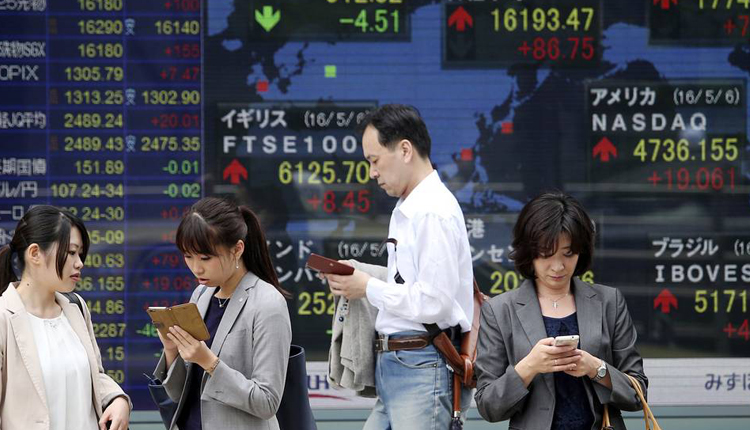
Stocks in Asia dropped on Friday as volatility continued to grip the markets amid investor concerns over the global coronavirus outbreak.Image result for Major Asian markets fall more than 2% to cap week of market gyrations
Japanese stocks were among the biggest losers regionally as the Nikkei 225 dropped 2.72% to close at 20,749.75, with shares of index heavyweight and conglomerate Softbank Group plunging 6.07%. The Topix index fell 2.92% to end its trading day at 1,471.46.
The Japanese yen, often seen as a safe-haven currency in times of economic uncertainty, traded at 105.93 per dollar after strengthening from lows above 108 earlier this week.
South Korea’s Kospi also shed 2.16% to close at 2,040.22. The Hang Seng index in Hong Kong slipped more than 2%, as of its final hour of trading.
Mainland Chinese stocks edged lower in afternoon trade, with the Shanghai composite down 1.21% to about 3,034.51 and the Shenzhen component shedding 1.1% to 11,582.82. The Shenzhen composite also slipped 0.74% to approximately 1,915.17.
Stocks in Australia also fell, with the S&P/ASX 200 dropping 2.81% to close at 6,216.20. Australia retail turnover in January fell 0.3% month-on-month on a seasonally adjusted basis, according to the country’s Bureau of Statistics (ABS).
The ABS said it expected the outbreak to “impact aggregate retail trade estimates in coming months,” though there was “no apparent impact on any of the aggregate level data” in the data release for January.
Overall, the MSCI Asia ex-Japan index tumbled 2.13%.
Mizuho Bank’s Vishnu Varathan wrote in a note that “there appears to be two strains of infections in the market.”
“One succumbs to the sheer fear of community spread, prospects of deep economic impact from sharp drop off in demand for travel and seizures in supply-chains,” said Varathan, who is head of economics and strategy at Mizuho. “The other is a strain that thrives on hopes of stimulus; be it frantic central bank rate cuts, the lull of liquidity infusions or more targeted fiscal offsets to provide pain relief.”
There appears to be two strains of infections in the market.
Vishnu Varathan
Head of Economics and Strategy, Mizuho Bank
“As the two strains cross-infect one another, markets will be strained to maintain valuations, and bigger concerns about strains on global health systems and supplies mount,” he said.
Shares of airlines in the region declined on Friday. Australia’s Qantas Airways dropped 7.1% while Japan’s ANA Holdings fell 3.76%. Over in South Korea, Korean Air Lines’ stock plummeted 5.58%. Hong Kong-listed shares of China Eastern Airlines also slipped 4.08%.
The moves came after and American Airlines saw their stocks plummet more than 13% each overnight. The International Air Transport Association, an industry trade group, forecast on Thursday that airlines could lose up to $113 billion in revenue this year — the most since the financial crisis — if the coronavirus continues to spread.
At least 95,270 globally have been infected by the coronavirus so far, while at least 3,280 lives have been taken worldwide, according to the latest figures from the World Health Organization.
TICKER COMPANY NAME PRICE CHANGE %CHANGE
NIKKEINikkei 225 IndexNIKKEI20749.75-579.37-2.72
HSIHang Seng IndexHSI26146.67-621.20-2.32
ASX 200S&P/ASX 200ASX 2006216.20-179.50-2.81
SHANGHAIShanghaiSHANGHAI3034.51-37.17-1.21
KOSPIKOSPI IndexKOSPI2040.22-45.04-2.16
CNBC 100CNBC 100 ASIA IDXCNBC 1008113.30-184.59-2.22
Overnight on Wall Street, the Dow Jones Industrial Average dropped 969.58 points to close at 26,121.28 while the S&P 500 fell 3.3% to end its trading day at 3,023.94. The Nasdaq Composite slipped 3.1% to close at 8,738.60.
Stocks stateside fell sharply as the benchmark 10-year Treasury yield fell to an all-time low below 0.9%. The 10-year Treasury yield was last at 0.8239%.
The U.S. dollar index, which tracks the greenback against a basket of its peers, was last at 96.559 after declining from levels above 97.3 yesterday.
The Australian dollar changed hands at $0.6615 after touching an earlier low of $0.6582.
— Leslie Josephs contributed to this report.
Join Geezgo for free. Use Geezgo's end-to-end encrypted Chat with your Closenets (friends, relatives, colleague etc) in personalized ways.>>

2-3 minutes
Tourists look towards Mount Merapi volcano as it erupts, at Cangkringan district in Sleman, Yogyakarta, Indonesia March 3, 2020 in this photo taken by Antara Foto. Antara Foto/Rizky Tulus/ via REUTERS
JAKARTA (Reuters) - Indonesia’s Mount Merapi volcano erupted on Tuesday morning, sending a 6-km (3.7 mile) column of ash into the air and triggering the closure of the airport in the nearby city of Solo on the densely populated Java island, authorities said.
The volcano, located near the cities of Yogyakarta and Solo, is one of Indonesia’s most active volcanoes and a series of eruptions in 2010 killed more than 350 people.
Indonesia’s Volcano Observatory Notice for Aviation issued a red alert and said the ash cloud was moving north.
The international airport in Solo had been temporarily shut since 9.25 a.m local time (02:25 GMT), Indonesia’s Directorate General of Civil Aviation (DGCA) said. Four flights had been affected.
The local disaster mitigation agency warned people to keep out of a 3-km exclusion zone around Merapi.
“Outside a 3-km radius it’s still safe,” Biwara Yuswantana, the head of Yogyakarta’s disaster mitigation agency, told Reuters. The city is located about 30 km from the volcano.
The latest eruption, part of a series that started in 2018, sent up a column of ash that affected several neighboring areas, the country’s Geological Disaster Technology Research and Development Centre said in a statement.
It said the eruption lasted almost eight minutes and warned of a risk of further eruptions due to continuing movements of magma. The 2,930-metre (9612.86 ft) volcano is a popular site for tourists and its fertile soil is also farmed.
Join Geezgo for free. Use Geezgo's end-to-end encrypted Chat with your Closenets (friends, relatives, colleague etc) in personalized ways.>>

Aradhana Aravindan
When a rare moment of panic buying shook Singapore’s highly ordered society over fears about the spread of coronavirus, it took a personal broadcast from the prime minister to bring calm.
FILE PHOTO: Tourists sit at a table at a largely empty Chinatown district as tourism takes a decline due to the coronavirus outbreak in Singapore February 21, 2020. Picture taken February 21, 2020. REUTERS/Edgar Su
As Lee Hsien Loong, a scion of Singapore’s founding family, prepares to step down after elections expected this year, the handling of the virus has become the defining test for a new generation of leaders.
    “How they handle a crisis, both the health and the economic crisis, will give confidence to Singaporeans on the ability of the 4G team to manage the country,” said Inderjit Singh, a former MP for the People’s Action Party (PAP) which has ruled Singapore since independence in 1965.
    4G refers to fourth generation, a term used to describe the group of ruling party politicians seen as future leaders.
While Lee’s PAP is expected to win an election which must be held by April 2021, even small shifts in its support can lead to policy changes that impact many international firms based in the Asian business hub.
After its worst ever result in 2011 - when it still secured 60% of the vote - the PAP accelerated foreign labor curbs amid unease among citizens about immigration levels and the impact on job prospects and property prices.
The PAP declined to comment.

TOUGHER TEST

Singapore’s battle with the disease is front-and-centre of voters’ minds with virus cases now over 100, analysts say, overshadowing issues such as immigration and living costs that had been expected to dominate the election before the city-state’s outbreak began in late January.
A poll last month by research firms Blackbox and Toluna showed 62% of Singaporeans were closely following virus news and information, more than in any of the eight other Asian places surveyed including Japan, South Korea and Hong Kong.
Singapore has won international praise for its virus containment efforts.
But analysts say managing the economic fallout, which could tip Singapore into recession following decade-low growth in 2019, will be a tougher task.
Finance Minister Heng Swee Keat - Lee’s would-be successor - last month budgeted for the biggest deficit in years with billions earmarked for managing the virus’ impact on firms and households.
“People may forget about how the government dealt with the public health aspect,” said Eugene Tan, a former nominated MP. Nominated MPs are appointed directly by the president and not affiliated to political parties.
Tan said any perception of economic mismanagement over the virus would be a bigger issue in an election he expects by year-end, and any “blunders” over Singapore’s response could hurt the ruling party well beyond that vote.
After 2018's historic government ousting in neighboring Malaysia, a vote that set off upheaval that has resurfaced in recent weeks, Lee said the party which he has led since 2004 did not have a "monopoly of power". reut.rs/2TgF4b4
Lee, 68, has said he plans to step down by the time he is 70.
The officials spearheading Singapore’s virus fight have faced some criticism for what they said was a “misunderstanding” when they raised the virus alert level which sparked the panic buying of essentials like rice and toilet paper last month.
Trade minister Chan Chun Sing - another seen as a future party leader - called the panic buying disgraceful and idiotic in comments from a closed-door business briefing reported by local media.
FILE PHOTO: A Chinese restaurant displays a sign that says 'disinfected' as businesses adapt to less footfall due to the coronavirus outbreak in Singapore February 21, 2020. Picture taken February 21, 2020. REUTERS/Edgar Su
Chong Ja Ian, political science professor at National University Singapore, said some people found Chan’s remarks “condescending” and others “frank and forthcoming”.
This “mixed response” to key individuals will also shape whether voters’ are satisfied with the 4G’s virus measures which is being “couched as a litmus test for them,” Chong said.
Join Geezgo for free. Use Geezgo's end-to-end encrypted Chat with your Closenets (friends, relatives, colleague etc) in personalized ways.>>

Rozanna Latiff
Hours after Malaysia’s change of leadership at the weekend, former prime minister Najib Razak posted a picture of himself smiling and giving a thumbs up on social media.
FILE PHOTO: An undated picture of Former Malaysian Prime Minister Najib Razak gesturing in an unknown location, obtained from social media. FACEBOOK / NAJIB RAZAK via REUTERS
It was tagged as a gesture of satisfaction with a restaurant meal, but many Malaysians saw it as a bigger sign of happiness from a man who was driven from office in 2018 and is now on trial for corruption over the multi-billion 1MDB fund scandal.
With the return of Najib’s party to power after a week of political turmoil, and therefore being in a position to influence policy, some Malaysians were questioning whether it will affect the handling of the high profile trials.
Mahathir Mohamad, who was ousted as prime minister in last week’s realignments, accused Najib and his party of engineering last week’s political crisis to help them avoid conviction.
“If Najib can be part of the government now, he can do all sorts of things to free himself,” the 94-year-old told a meeting with his party’s youth members on Sunday.
Cynthia Gabriel, director of the Kuala Lumpur-based anti-corruption watchdog C4 Center, said: “The worst case scenario is that these grand corruption trials will be dropped through judicial interference and more.”
Najib has said he hopes to continue to fight his case in court.
In his first message, new Prime Minister Muhyiddin Yassin said fighting corruption would be a priority for his government, whose biggest backer in parliament is Najib’s United Malays National Organisation (UMNO).
The prime minister made no specific mention of the trials.
Muhyiddin took over on Sunday from Mahathir, who had ousted UMNO in 2018 amid anger over the 1MDB scandal that stretched from Malaysia to the Middle East to Hollywood. Najib, his wife, UMNO’s leader and others were quickly put on trial for corruption.
The U.S. Department of Justice estimates $4.5 billion was misappropriated from Malaysia’s 1MDB sovereign fund between 2009 and 2014. U.S. and Malaysian authorities say over $1 billion stolen from 1MDB flowed into Najib’s personal banks accounts.
The case has also led to scrutiny of Goldman Sachs, which Malaysia has accused of misleading investors over bond sales totaling $6.5 billion that the bank helped raise for 1MDB. Three units of the bank have pleaded not guilty.
Najib is facing five trials, the first of which - involving seven charges linked to $10 million misappropriated from a 1MDB unit - is expected to reach a verdict within months.
He has consistently denied wrongdoing, saying he was misled by Malaysian financier Jho Low and other 1MDB officials.

MULTIPLE TRIALS

Among 10 others on trial for corruption are Najib’s wife Rosmah Mansor and UMNO party leader Ahmad Zahid Hamidi. Muhyiddin’s office did not respond to a request for comment on what would happen to the trials now.
Najib did not respond to requests for comment but told reporters on Monday that he hoped to continue fighting his case in court.
“We’ll go through the court process,” he said. “It’s the only credible way.”
A senior UMNO official echoed Najib’s sentiments, saying the new government should not interfere in the courts.
FILE PHOTO: Former Malaysian Prime Minister Najib Razak reacts during a break at Kuala Lumpur High Court in Kuala Lumpur, Malaysia, February 5, 2020. REUTERS/Lim Huey Teng
“If we interfere by withdrawing cases of those charged, the people would say the government does not respect the law and the judicial body is not independent; so, don’t mar that concept,” party secretary-general Annuar Musa told state news agency Bernama.
Although Najib was quick to post congratulations to Muhyiddin on social media, their relationship has been strained.
Muhyiddin was fired by Najib as his deputy in 2015 after questioning his handling of 1MDB. That led Muhyiddin to form the new party with Mahathir that brought them both back into office before it was torn apart in the recent political fighting.
Najib had not been directly involved in coalition talks even if he had tried to encourage Mahathir’s downfall from behind the scenes, said one source close to the new prime minister who did not want to be identified.
“Muhyiddin doesn’t want to deal with Najib,” the source said.
Muhyiddin pointedly emphasized “efforts to stamp out corruption” in his first public speech on Monday.
Despite his fall, Najib is an elected lawmaker and remains a senior figure within the UMNO party. He has a large popular base. His Facebook page has 3.9 million likes compared to 3.6 million for Mahathir’s and fewer than 1 million for Muhyiddin’s.
Workers at the Indian Muslim restaurant where Najib posted his selfie after Muhyiddin’s swearing-in said he had been in a particularly good mood on Sunday.
“No matter how busy with politics, don’t forget to eat first. Love yourself first,” Najib’s Facebook post said.
Join Geezgo for free. Use Geezgo's end-to-end encrypted Chat with your Closenets (friends, relatives, colleague etc) in personalized ways.>>

Gibran Naiyyar Peshimam
Any reservations Afghanistan has with Islamabad should be resolved bilaterally rather than involving the United States, Pakistan’s foreign minister said on Sunday, in reference to part of a joint U.S.-Afghan declaration on peace efforts.
Pakistan's Foreign Minister Shah Mehmood Qureshi gestures as he speaks during an interview with Reuters at the Ministry of Foreign Affairs (MoFA) office in Islamabad, Pakistan March 1, 2020. REUTERS/Saiyna Bashir
The declaration was announced on Saturday by Afghan President Ashraf Ghani, U.S. Defence Secretary Mark Esper and NATO Secretary-General Jens Stoltenberg at a ceremony to coincide with the signing in Doha of an agreement between the Taliban and the United States.
“The United States commits to facilitate discussions between Afghanistan and Pakistan to work out arrangements to ensure neither country’s security is threatened by actions from the territory of the other side,” one of the clauses of the declaration reads.
Pakistan bristled.
“They should talk directly to Pakistan. The U.S. is planning to withdraw and we will always remain neighbors,” Foreign Minister Shah Mehmood Qureshi told Reuters in an interview, referring to Washington’s intent to withdraw troops from Afghanistan.
“If I have an issue with Afghanistan, I will not ask Washington to play a role.”
Pakistan and Afghanistan have been at loggerheads for years. Kabul publicly blames Pakistan for harboring Taliban leaders after they were ousted from power Afghanistan in 2001, and allowing safe havens for attacks against international and Afghan forces.
Islamabad has denied these allegations and blames Afghanistan for giving anti-Pakistan militants refuge to plot attacks in Pakistan, which, in turn, Kabul denies.
“You know a trust deficit has existed and Pakistan has done its best to bridge that trust deficit,” Qureshi said, adding there are institutionalized mechanisms through which Afghanistan can raise “any issue under the sun” instead of turning to the United States.
He said that the U.S.-Taliban agreement in Doha would never have happened if Pakistan had not convinced everyone that there was no military solution to the 18-year conflict in Afghanistan.
The Doha agreement was signed by U.S. special envoy Zalmay Khalilzad and Taliban political chief Abdul Ghani Baradar.
Under it, Washington committed to a full withdrawal in 14 months, and to working with allied international forces to do the same – contingent on the Taliban keeping a pledge to renounce violence and sever ties with militant organizations threatening the Untied States and its allies.

FACILITATION ROLE

Qureshi said Pakistan had facilitated the accord by persuading both the Taliban and the United States to find a political settlement, adding that getting both sides to see this had not been easy.
“We convinced the Taliban to put forward an authoritative delegation that has the capacity to implement what they agree upon, and that wouldn’t have happened without Pakistan’s facilitation,” Qureshi said.
Taliban leader Abdul Ghani Baradar, who signed the Doha agreement on the militant group’s behalf on Saturday, was held in Pakistani custody for eight years after being captured in a joint raid with U.S. agents in 2010 in the Pakistani port city of Karachi where he was in hiding.
The arrest followed months of behind-the-scenes prodding by U.S. officials who saw inaction by Islamabad as a major threat to their Afghan war strategy.
Baradar was not handed over to Afghanistan or the United States and was released in 2018. After that he became the head of the Taliban’s negotiation team that held talks with the U.S. negotiators for over a year in Doha.
“That was another demonstration of facilitation,” Qureshi said, adding, “You required someone who who enjoyed the confidence of the leadership to engage (with the U.S.) that would make the talks possible.”
Pakistan's Foreign Minister Shah Mehmood Qureshi speaks during an interview with Reuters at the Ministry of Foreign Affairs (MoFA) office in Islamabad, Pakistan March 1, 2020. REUTERS/Saiyna Bashir
“He (Baradar) played a very positive role.”
Qureshi also said Pakistan played a part in pushing for the negotiation process to restart after U.S. President Donald Trump pulled the plug on negotiations in September last year.
In October 2019, while the Doha talks were off, Washington’s chief negotiator, special representative Zalmay Khalilzad, and the Taliban political delegation held talks in Islamabad in a meeting that was not publicly acknowledged.
Join Geezgo for free. Use Geezgo's end-to-end encrypted Chat with your Closenets (friends, relatives, colleague etc) in personalized ways.>>

Joseph Sipalan
Malaysia’s Muhyiddin Yassin, a Malay nationalist politician backed by the corruption-tarnished former ruling party, was sworn in as prime minister on Sunday after the king picked him to replace 94-year-old Mahathir Mohamad.
Malaysia's Prime Minister Designate and former interior minister Muhyiddin Yassin waves to reporters before his inauguration as the 8th prime minister, outside his residence in Kuala Lumpur, Malaysia, March 1, 2020. REUTERS/Lim Huey Teng
The swearing-in capped a week of turmoil that began with Mahathir’s resignation in an apparent bid to consolidate power, but ended with him sidelined and complaining of betrayal after decades dominating Malaysian politics.
Mahathir promised to seek a vote in parliament to challenge Muhyiddin’s support, but conceded he might not win.
Muhyiddin, 72, was sworn in at a palace ceremony in front of Malaysia’s king, Sultan Abdullah Sultan Ahmad Shah, and promised to fulfil his duties as prime minister.
The change in leadership comes less than two years after Mahathir joined old rival Anwar Ibrahim, 72, to defeat the ruling party of six decades, the United Malays National Organisation (UMNO), on an anti-corruption platform.
“This is a very strange thing,” said Mahathir. “This is the losers that will form the government,” he added, referring to the outcome of the 2018 election.
He said he had the support of 114 of parliament’s 222 members, but it was not guaranteed that they would all support him at a vote in a country of tangled political interests where horse-trading is commonplace.
Mathathir questioned whether a government involving the former ruling party would be as ready to pursue graft cases against its politicians. Those include former prime minister Najib Razak, who is now on trial for corruption.
A week of twists and turns in Malaysian politics began with Mahathir’s resignation, breaking his alliance with Anwar as he proposed a national unity government without party loyalties that would have given him greater authority.
But Anwar then launched his own bid to become prime minister while Muhyiddin built his alliance.

KING’S CHOICE

It was down to the king to decide who would have the best chance to form a government. Although Mahathir and Anwar said they had reunited on Saturday and now had majority support, the king announced Muhyiddin as the candidate.
About 200 protesters gathered in Kuala Lumpur late on Saturday to protest against the king’s decision. Police said they were investigating a Twitter post that encouraged people to join the protest, which they said was illegal.
Muhyiddin is from Mahathir’s Bersatu party, but had shown himself ready to work with UMNO - from which he had been sacked in 2016 after questioning former prime minister Najib’s handling of the 1MDB corruption scandal.
UMNO’s fortunes have risen since its 2018 defeat, with the Pakatan coalition of Mahathir and Anwar losing five by-elections in the face of criticism from some Malay voters that it could do more to favor the biggest ethnic group in a nation of 32 million.
UMNO, which Mahathir led from 1981 to 2003 during a previous stint as prime minister, supports Malay nationalism.
Slideshow (2 Images)
“I think Muhyiddin would lead a more overtly pro-ethnic Malay government characterized by social division, economic nationalism, and possibly less fiscal restraint,” said Peter Mumford of the Eurasia consultancy.
As well as personal relationships, politics in Malaysia is shaped by ethnic, religious and regional interests. Malaysia is more than half ethnic Malay, but has large ethnic Chinese, Indian and other minorities.
Join Geezgo for free. Use Geezgo's end-to-end encrypted Chat with your Closenets (friends, relatives, colleague etc) in personalized ways.>>

2-3 minutes
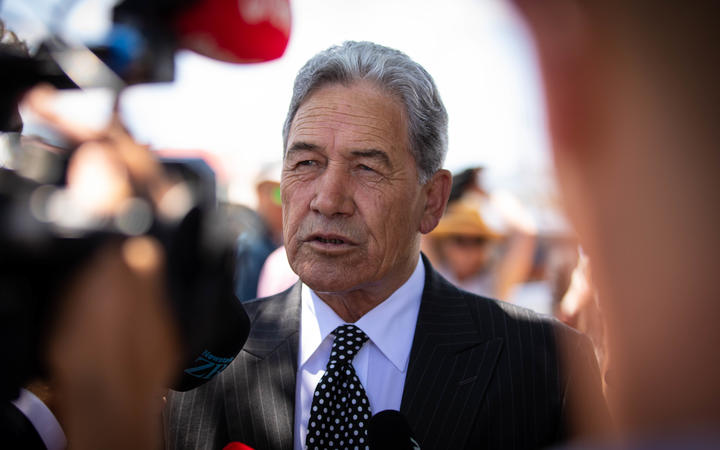
Foreign Minister Winston Peters says the US-Taliban peace agreement is a major step forward, as the government considers the implications for New Zealand troops.
Ratana Fri 24th January 2020.  Political parties are welcomed on to the marae.  Winston Peters outside the Temple at Ratana, waiting to be welcomed on to the marae.
Foreign Minister Winston Peters Photo: RNZ / Patrice Allen
The US and the Taliban signed the peace agreement today in an effort to end more than 18 years of conflict.
Minister of Foreign Affairs Winston Peters described the agreement as a major step forward and said it signalled the start of negotiations between the Taliban and the government of Afghanistan.
He said it may take some time before it was clear what would happen with New Zealand's troop deployment to Afghanistan.
Waikato University law professor Alexander Gillespie said the potential peace treaty was the same precedent as ending the Vietnam war, and a huge deal.
"It's great that we've got to this point so far. We have spent literally trillions of dollars, there have been hundreds of thousands of lives lost and all we've achieved after 18 years of fighting is that Taliban's agreed that Al Qaeda and similar groups like Islamic State will not be resident in Afghanistan anymore."
Prof Gillespie said it set a very clear road map for the more than 3800 Coalition troops in the area, including 10 soldiers from New Zealand.
"It's a two-step process, it's the Coalition troops will slowly be drawn down but in exchange there will be formal recognition of the Taliban, sanctions will be lifted, and they will start negotiations directly with the Afghanistan government."
He said the deal could lead to New Zealand's troops exiting, depending on the result of negotiations.
Join Geezgo for free. Use Geezgo's end-to-end encrypted Chat with your Closenets (friends, relatives, colleague etc) in personalized ways.>>

Abdul Qadir Sediqi
The United States signed a deal with Taliban insurgents on Saturday that could pave the way toward a full withdrawal of foreign soldiers from Afghanistan and represent a step toward ending the 18-year-war in the nation.
But while the agreement creates a path for the United States to gradually pull out of its longest war, many expect the talks to come between the Afghan sides may be much more complicated.
The deal was signed in the Qatari capital Doha by U.S. special envoy Zalmay Khalilzad and Taliban political chief Mullah Abdul Ghani Baradar, with U.S. Secretary of State Mike Pompeo on hand to witness the ceremony.
U.S. Defense Secretary Mark Esper called the accord a good step but just the beginning.
“Achieving lasting peace in Afghanistan will require patience and compromise among all parties,” said Esper, who met Afghan President Ashraf Ghani in Kabul where they announced a joint declaration in parallel to the U.S.-Taliban accord.
The United States said it is committed to reducing the number of its troops in Afghanistan to 8,600 — from the current 13,000 — within 135 days of signing the deal, and working with its allies to proportionally reduce the number of coalition forces in Afghanistan over that period, if the Taliban adhere to their commitments.
A full withdrawal of all U.S. and coalition forces would occur within 14 months of the deal getting signed, if the Taliban hold up their end of the deal, the joint statement said.
“We are working to finally end America’s longest war and bring our troops back home,” said U.S President Donald Trump in a White House statement.
The accord represents a chance to make good on a longstanding promise to get troops out, as he seeks re-election in November. But security experts have also called it a foreign policy gamble that would give the Taliban international legitimacy.
Ghani said he hoped the Doha deal paves the way towards lasting peace, telling a news conference in Kabul:
“The nation is looking forward to a full ceasefire.”
The Afghan government said it stood ready to negotiate and conclude a ceasefire with the Taliban, and it affirmed its support for the phased withdrawal of U.S. and coalition forces subject to the Taliban’s fulfillment of its commitments.
It also said that it remained committed to preventing militant groups from using its soil to threaten the security of the United States, its allies and other countries.
Image result for U.S. and Taliban sign troop withdrawal deal; now comes the hard part
Mullah Abdul Ghani Baradar, the leader of the Taliban delegation, signs an agreement with Zalmay Khalilzad, U.S. envoy for peace in Afghanistan, at a signing agreement ceremony between members of Afghanistan's Taliban and the U.S. in Doha, Qatar February 29, 2020. REUTERS/Ibraheem al Omari
Separately, NATO pledged to adjust the coalition troop levels in the first phase too, bringing down NATO’s numbers to about 12,000 from roughly 16,000 troops at present.
“We went in together in 2001, we are going to adjust (troop levels) together and when the time is right, we are going to leave together, but we are only going to leave when conditions are right,” NATO Secretary-General Jens Stoltenberg, who was in Kabul on Saturday, told reporters.

HOPE FOR AN END TO BLOODSHED

Hours before the deal, the Taliban ordered all its fighters in Afghanistan “to refrain from any kind of attack ... for the happiness of the nation.”
“The biggest thing is that we hope the U.S. remain committed to their promises during the negotiation and peace deal,” said Zabiullah Mujahid, a spokesman for the hardline Islamist group.
For millions of Afghans, the deal represents some hope for an end to years of bloodshed.
“Peace is extremely simple and my country deserves it. Today is the day when maybe we will see a positive change,” said Javed Hassan, 38, a school teacher living on the outskirts of Afghan capital, Kabul.
Hassan’s children were killed in a bomb blast carried out by the Taliban in 2018. Since then, he has been writing letters to world leaders urging them to end the Afghan war.

SERIOUS CHALLENGES

The war, which has killed tens of thousands of people, began when the United States launched attacks on Afghanistan just weeks after the Sept. 11, 2001, attacks on New York and Washington by the Afghanistan-based al Qaeda militant group.
Slideshow (18 Images)
Washington accused the Taliban of harboring al Qaeda and its leader Osama bin Laden, and with its allies ousted the group from power. But the Taliban has remained a potent force and currently controls about 40% of Afghan territory.
The next step will be for negotiators to work out an agreement for comprehensive ceasefire and the future governance of the country.
Officials and experts say this will pose serious challenges as the Afghan government has until now been sidelined.
Even before getting to talks with the Taliban, Afghanistan’s two main political rivals - Ghani and Chief Executive Abdullah Abdullah - must settle a dispute over which officials, opposition members and activists should negotiate with the insurgents.
Under the deal, the Taliban wants 5,000 fighters to be released from Afghan-run jails, but it is not clear whether the Afghan government will agree.
Afghan National Security Advisor Hamdullah Mohib said in an interview with Tolo news channel that the Afghan government made no commitment to release 5,000 prisoners by March 10, a date stipulated in the deal.
Mohib also said the deal lacked clarity about the Taliban’s ties with Pakistan.
Afghanistan routinely accuses neighboring Pakistan of supporting Taliban militants. Pakistan denies doing so and in turn accuses Afghanistan of supporting militants fighting the Pakistani government.
There are also questions about whether Taliban fighters loyal to hardline Islamist splinter groups will be willing to adhere to the reduction in violence agreement.
Join Geezgo for free. Use Geezgo's end-to-end encrypted Chat with your Closenets (friends, relatives, colleague etc) in personalized ways.>>

Steve Holland
U.S. President Donald Trump on Saturday said he would be personally meeting leaders of the Taliban in the near future and rejected criticism of a deal that the United States signed with the insurgents in Afghanistan.
He spoke hours after U.S. and Taliban representatives signed a deal that could pave the way toward a full withdrawal of foreign soldiers and move closer to ending the 18-year war in Afghanistan.
Trump said in a news conference at the White House that the agreement should allow the United States to draw down its troops in Afghanistan from 13,000 to 8,600. He held out the possibility of withdrawals beyond that number, but said the United States could quickly move forces back into the country if needed.
In later remarks at a conservative political conference in suburban Maryland, Trump said if the Taliban lives up to its commitments the war will “be over.”
“We can’t be the policeman for the world,” he said.
Trump has frequently expressed a desire to put a halt to “endless wars” and has said he has been personally struck by meeting wounded soldiers who are missing limbs on his visits to Walter Reed Medical Center.
The president came under sharp criticism for the deal from his former national security adviser, John Bolton, who said in a tweet that “signing this agreement with Taliban is an unacceptable risk to America’s civilian population.”
“This is an Obama-style deal. Legitimizing Taliban sends the wrong signal to ISIS and al Qaeda terrorists, and to America’s enemies generally,” he said, referring to former President Barack Obama, Trump’s Democratic predecessor.
Republican U.S. Representative Liz Cheney, daughter of former Vice President Dick Cheney, also complained about the deal and said the Trump administration should disclose how it plans to verify Taliban compliance.
“Today’s agreement with the Taliban includes concessions that could threaten the security of the United States,” she said.
Trump’s willingness to meet Taliban leaders at the presidential retreat in Camp David, Maryland, last year was a factor in Bolton’s exit from the White House. Taliban violence in Afghanistan prompted Trump to cancel that meeting.
Trump rejected the criticism from his former aide.
“Nobody should be criticizing this deal after 19 years. He had his chance, he didn’t do it,” Trump said of Bolton.
FILE PHOTO: U.S. President Donald Trump speaks during a news conference on the coronavirus outbreak at the White House in Washington, U.S., February 29, 2020. REUTERS/Joshua Roberts
Trump did not say where he would be meeting leaders of the group that has fought the American presence in Afghanistan since war broke out following the Sept. 11, 2001, attacks on the United States.
The U.S. president said Afghanistan’s neighbors should help maintain stability following the agreement.
Many expect the forthcoming talks between the Afghan sides to be more complicated than the initial deal. But Trump said he thought the negotiations would be successful because “everyone is tired of war.”
Join Geezgo for free. Use Geezgo's end-to-end encrypted Chat with your Closenets (friends, relatives, colleague etc) in personalized ways.>>

Abdul Qadir Sediqi
For mother-of-four Nasima, the prospect of lasting peace in Afghanistan is almost too good to be true.
Nasima (2nd L), 45, shares how lost her husband in the bomb blast, as she sits with her children in their home in Kabul, Afghanistan February 27, 2020. REUTERS/Abdul Qadir Sediqi
The 45-year-old, whose husband Nasir Ahmad was killed in a massive truck bomb in Kabul blamed on Taliban insurgents, is one of thousands of grieving relatives in the war-weary country who look upon a promised peace deal with skepticism as well as hope.
Afghanistan has been at war for decades. The Soviet invasion dominated the 1980s, civil war followed, the hardline Islamist Taliban movement held sway for a few years before being ousted in a U.S.-led assault, followed by 18 more years of conflict.
Tens of thousands of civilians, insurgents, Afghan security personnel and foreign troops have died, and loved ones will look on Saturday’s planned deal between the United States and the Taliban with mixed feelings.
“Anyone who can carry out such a brutal attack, how can I believe that they will let others live in peace?” Nasima asked, speaking in her Kabul apartment surrounded by her children.
But she would at least try to move on if the attacks really stopped.
“If they (the Taliban) are serious about getting together for real peace, I am ready to forgive the suffering they caused me and my family.”
The weekend agreement in Doha on an American troop withdrawal is connected to a wider push for reconciliation between the Taliban and the Afghan government, although major obstacles to lasting peace remain.
One is the lack of trust between sides who blame each other for the heavy toll of war.

HORROR IN ATTACK’S AFTERMATH

Nasima’s husband left home early one morning in late May, 2017, in search of work so that he could afford to bring home “iftar”, an evening meal served during the Muslim holy month of Ramadan. He had not found a job for a few days.
“A day before I had asked him about whether he found a job; he told me there were shops whose display windows needed cleaning for Ramadan and he was confident he’d find work if he got there early,” Nasima recalls.
At around 8:30 a.m., she heard a loud blast. Such was the intensity of the explosion that it shook the entire city.
The truck bomb was deadliest attack in Kabul in 18 years of war. No one has claimed responsibility for at least 150 people who were killed, including Nasir Ahmad.
Nasima’s memories of that day are harrowing, yet common among Afghans.
“At the hospitals I saw bodies covered with blood, charred. The wounded were screaming. There were boxes full of human body parts,” Nasima recalled.
Nasima has washed dishes and clothes for the last three years to support her children – two daughters, Naiema, 15, Sabzina, 13, and two sons, Waris, 10, and Arif, 7.
“I have lived my life and have had to suffer; but for my children I want peace,” she added.
Haji Malik, 47, a shopkeeper who lost his son during the Taliban insurgency in Pakitaka province, poses in Kunduz, Afghanistan February 27, 2020. REUTERS/Stringer

PAIN FOR PEACE

Families of Taliban fighters and security personnel have also faced loss.
Haji Malik, 47, a shopkeeper in the northern city of Kunduz, lost his son, 18-year-old Sarajuddin, a Taliban fighter killed in a clash with international and Afghan forces in Paktika province in 2016.
Sarajuddin ran away from home two years earlier to join the insurgents, and Malik remembered the intense pain he felt when he received word of his son’s death.
He never got to bury his him, he said, because the body was in such bad shape that he had to be interred before his father got there.
“This (the Doha agreement) is a chance for peace in Afghanistan, which has suffered through years of war,” Malik told Reuters. “But if peace is coming, it should be real peace ... not only for a few days.”
Habibullah Nazari, an officer in Afghanistan’s National Directorate of Security (NDS), which has been on the frontline of the fight against the Taliban, was killed in an attack by the militant group.
Nazari was preparing for a security mission along with six colleagues when a Taliban suicide bomber drove his explosive-laden vehicle into the NDS office in the western city of Herat.
He was the sole breadwinner for his family of 12, said his brother, Mohammad Gul, 23.
“Losing a family member is very painful, but I will have no complaint if peace, real peace, is restored,” said Gul. “I will believe my brother was martyred in the name of peace.”
Join Geezgo for free. Use Geezgo's end-to-end encrypted Chat with your Closenets (friends, relatives, colleague etc) in personalized ways.>>

Abdul Qadir Sediqi
Millions of Afghans are anticipating that America’s longest war fought in their country will end on Saturday as U.S. and Taliban negotiators are expected to sign a deal to allow a U.S. troop reduction and a permanent ceasefire.
Afghan men celebrate in anticipation of the U.S-Taliban agreement to allow a U.S. troop reduction and a permanent ceasefire, in Jalalabad, Afghanistan February 28, 2020. REUTERS/Parwiz
If the U.S-Taliban agreement gets signed, then Afghanistan, which has been at war since American bombings began in response to the Sept.11, 2001 attacks, will witness the potential end of violence that has claimed tens of thousands of lives.
“Peace is extremely simple and my country deserves it. Today is the day when maybe we will see a positive change,” said Javed Hassan, 38, a school teacher living on the outskirts of the capital, Kabul.
Hassan’s children were killed in a bomb blast carried out by the Taliban in 2018. Since then, he has been writing letters to world leaders urging them to end the Afghan war that has dominated the landscape of the land-locked country.
Saturday’s deal could be the first step towards resetting Afghanistan’s future as U.S. Secretary of State Mike Pompeo is set to witness the signing of the agreement on a withdrawal of American troops and prepare the ground for a political settlement between the warring sides.
In the Qatari capital of Doha, America’s top diplomat will stand with political leaders of the Taliban, Afghanistan’s former rulers who sheltered Osama bin Laden and his militant network until 2001 as he plotted and conducted the 9/11 attacks.
A statement from U.S President Donald Trump on Friday said Pompeo would be present for the signing of the deal that will pave way for U.S. troop numbers to drop to 8,600 from about 13,000 in the weeks following the deal.
Further reductions of western forces will hinge on the Taliban adhering to a “reduction in violence” pledge, a condition that will be assessed by the United States.
But prospects for war-torn Afghanistan’s future are uncertain. The agreement sets the stage for peace talks involving Afghan factions, which are likely to be complicated.
Under the deal, the Taliban wants 5,000 fighter to be released from Afghan-run jails, but it’s not clear whether the Afghan government will agree.
There are also questions about whether Taliban fighters loyal to hardline Islamist splinter groups will be willing to adhere to the reduction in violence agreement.
Some senior commanders of the Taliban who arrived in Doha for the signing ceremony said they will ensure that the U.S. and Afghan governments accept all the conditions laid down by the group that controls about 40% of Afghanistan, according to Afghan defense officials.
Sources in the Taliban earlier this month said they were prepared to launch a spring offensive and had recruited more than 6,000 fighters and suicide bombers if the agreement collapses.
Join Geezgo for free. Use Geezgo's end-to-end encrypted Chat with your Closenets (friends, relatives, colleague etc) in personalized ways.>>

Alexandra Alper
People wear masks as a preventive measure against the coronavirus outbreak, in Bangkok, Thailand February 7, 2020. REUTERS/Soe Zeya Tun
WASHINGTON (Reuters) - The United States has decided to postpone a meeting with leaders of Southeast Asian countries it had planned to host on March 14 due to worries about the coronavirus outbreak, two U.S. officials familiar with the matter said on Friday.
U.S. President Donald Trump had invited leaders of the 10-member Association of Southeast Asian Nations (ASEAN) to meet in Las Vegas after he did not attend a summit with the group in Bangkok in November.
“As the international community works together to defeat the novel coronavirus, the United States, in consultation with ASEAN partners, has made the difficult decision to postpone the ASEAN leaders meeting,” one of the sources, a senior administration official, told Reuters.
The official added that the United States values its relationships with ASEAN member nations and looks forward to future meetings.
The U.S. State Department did not immediately respond to a request for comment.
The decision comes amid growing fears that the virus will spread in the United States as countries report new infections, companies announce curbs on employees’ travel and global stock markets continue to plummet.
U.S. Secretary of State Mike Pompeo said on Monday preparations for the meeting were going ahead in spite of the coronavirus outbreak.
Join Geezgo for free. Use Geezgo's end-to-end encrypted Chat with your Closenets (friends, relatives, colleague etc) in personalized ways.>>

Humeyra Pamuk
U.S. Secretary of State Mike Pompeo will witness the signing of a U.S.-Taliban agreement on a withdrawal of American troops from Afghanistan, President Donald Trump said on Friday, heralding an agreement that could help his re-election campaign.
U.S. Secretary of State Mike Pompeo testifies before the House Foreign Affairs Committee hearing on “Trump administration policies on Iran, Iraq and use of force.” on Capitol Hill, in Washington, U.S. February 28, 2020. REUTERS/Carlos Barria
The deal, part of a wider push for Afghan reconciliation and an end to the longest U.S. war, faces many obstacles, including an election feud between Afghanistan’s two leading politicians. It is expected to be signed in Qatar’s capital Doha on Saturday.
The U.S.-Taliban agreement would begin a phased withdrawal of American and coalition forces. It would require the Taliban to initiate a formal dialogue with the Afghan government and other political and civil society groups on a permanent nationwide ceasefire and power sharing in postwar Afghanistan.
U.S. forces invaded the Southwest Asian country in 2001 to topple the Taliban rulers who provided a safe haven in which al Qaeda planned the Sept. 11, 2001, attacks on New York and the Pentagon that killed nearly 3,000 people.
Among the many obstacles to peace are resolving a dispute between Afghan President Ashraf Ghani and his main political rival, Chief Executive Abdullah Abdullah. Both have claimed victory in the disputed Sept. 28 presidential election.
There is also the undecided question of who will form the Afghan team that would negotiate with the Taliban on how to bring the insurgents into the political process and, ultimately, how to share power with the movement.
The agreement calls for a long-planned initial drawdown to 8,600 U.S. troops from some 13,000 but it ties further cuts to the Taliban keeping promises it may find challenging, such as cutting deep ties with al Qaeda and other militant groups.
“If the Taliban and the government of Afghanistan live up to these commitments, we will have a powerful path forward to end the war in Afghanistan and bring our troops home,” Trump said in a statement, saying Pompeo would “soon” witness the signing.
“We ... urge the Afghan people to seize this opportunity for peace and a new future for their country,” he added, without addressing when or where the signing would happen.
Earlier, Pompeo told U.S. lawmakers he had seen a “significant” reduction of violence in Afghanistan over the past six days.
If extended for a full week, the “Reduction in Violence” pact that took effect on Feb. 22 is expected to culminate in the signing of an agreement between top U.S. and Taliban negotiators on Saturday in Doha, the Taliban’s political headquarters.
Afghan officials met Taliban members in Qatar on Friday to discuss a prisoner swap plan.
Testifying before the House of Representatives’ Foreign Affairs Committee, Pompeo said Washington is watching to see whether neighboring Iran may seek to play a spoiler role in Afghanistan.
“We have seen just these last six days a significant reduction in violence in Afghanistan,” Pompeo said. He said there was a history of Iran “to act as a spoiler” inside Afghanistan.
Trump has made withdrawal of U.S. troops from Afghanistan a major foreign policy objective. An agreement with the Taliban to end the 18-year-old war could boost his re-election prospects.
The American troops are part of a U.S-led NATO mission that trains and aids Afghan forces and carries out counterterrorism operations to prop up the Kabul government and prevent an al Qaeda resurgence.
“When I ran for office, I promised the American people I would begin to bring our troops home, and seek to end this war,” Trump said in his statement. “We are making substantial progress on that promise.”
Join Geezgo for free. Use Geezgo's end-to-end encrypted Chat with your Closenets (friends, relatives, colleague etc) in personalized ways.>>

6-7 minutes
AFP / Brendan Smialowski US Secretary of State Mike Pompeo briefs journalists in Washington on February 25, 2020
The United States voiced optimism Tuesday about reaching an accord to end the war in Afghanistan as a partial truce held with the Taliban, warning rival leaders in the Kabul government not to scuttle the "enormous opportunity."
The United States plans to sign an agreement with the Taliban on Saturday in Qatar if the week-long truce holds. Four days in, the number of Taliban attacks has fallen dramatically.
"So far the reduction in violence is working -- imperfect, but it's working," Secretary of State Mike Pompeo told a news conference in Washington.
"We're on the cusp of an enormous, enormous political opportunity," he said.
The historic deal would see the US withdraw thousands of troops, winding down America's longest war which was launched after the September 11, 2001 attacks but has grown increasingly unpopular at home.
The Taliban would then open negotiations with the internationally recognized government in Kabul, which the Islamist militants have refused to recognize.
AFP/File / THOMAS WATKINS The deal would see the US withdraw thousands of troops, winding down America's longest war which was launched after the September 11, 2001 attacks
But the Afghan administration is in disarray, with President Ashraf Ghani last week declared the winner of a new term in elections but his chief rival, Abdullah Abdullah, rejecting the results and vowing to form his own government.
The United States has conspicuously not congratulated Ghani, in contrast to the European Union and the Kabul government's regional ally India.
In a statement Tuesday, the State Department said only that it "notes" the election announcement. It said Ghani had agreed to postpone his inauguration which was scheduled on Thursday.
- 'Enormous vested interest' -
POOL/AFP/File / Andrew CABALLERO-REYNOLDS Afghan President Ashraf Ghani, pictured (right) with Pompeo in February 2020, was declared the winner in disputed elections
Abdullah's spokesman, Fraidoon Khwazoon, told AFP that both Abdullah and Ghani were delaying swearing-in ceremonies planned for Thursday by two weeks.
Asked about the election, Pompeo said the US wanted to make sure the results were "free and fair and accurate" and warned against "any one small group" blocking the peace process.
"There are those with an enormous vested interest in the status quo," Pompeo said, characterizing the current situation as "bloodshed, tears, economic challenges."
"We want to make sure that... all the people who have an interest -- whether that's because of corruption of because of some ideological view -- cannot spoil what it is that the Afghan people so richly deserve," he said.
AFP / Sabrina BLANCHARD Afghanistan: the United States' longest war
Ghani, while saying he hopes for peace with the Taliban, was critical as diplomacy gathered steam last year, especially over the militants' refusal to recognize the Kabul government.
President Donald Trump has called the Afghan war a waste of blood and treasure and his administration has called the truce a test of whether the Taliban can make good on its promises.
The key US demand remains the same from 2001 -- that the Taliban not allow Afghan territory to be used by Al-Qaeda, or now Islamic State extremists, to plan international attacks.
AFP/File / Money SHARMA US President Donald Trump, pictured during his February 2020 India visit, has called the Afghan war a waste of blood and treasure
Pompeo rejected a question on whether a US withdrawal would jeopardize the rights of women, who under the Taliban's ultra-austere 1996-2001 regime were forbidden from education and forced to wear all-encompassing burqas in public.
"Our mission-set there has been much broader than that," Pompeo said.
He voiced confidence that "voices all across the Afghan political spectrum" including women "will go into the ultimate solution."
- Downturn in violence -
Trump, speaking to reporters on a visit to India, said the United States was "pretty close" to a deal as two days had gone by with "a minimum of violence."
He complained that US troops had turned into a "police force" rather than pursuing a military goal.
"We could win that easily if I wanted to kill millions of people. I don't want to kill millions of people, innocent people," Trump said.
AFP/File / THOMAS WATKINS General Scott Miller, the US and NATO forces commander in Afghanistan, pictured in June 2019 in west Kabul, sees the partial truce succeeding
US General Scott Miller, the commander of the NATO-led mission in Afghanistan, also saw the partial truce succeeding.
"We're seeing what we would call a downward trend in violence, which is great for the Afghan people. It's great for the country of Afghanistan," he said in a statement.
An Afghan security source told AFP that Taliban attacks had dropped from an average of 75 a day to about 15 since the truce began on February 22.
But underscoring the fragility of the situation, the interior ministry said five security personnel were killed in three attacks in rural areas Tuesday.
US forces also forces announced the deaths of four Islamic State members in two airstrikes in Kunar province.
More than 100,000 Afghan civilians have been killed or injured over the past decade, according to the United Nations.
AFP
Join Geezgo for free. Use Geezgo's end-to-end encrypted Chat with your Closenets (friends, relatives, colleague etc) in personalized ways.>>

Geezwild

Contact Form

Name

Email *

Message *

Powered by Blogger.
Javascript DisablePlease Enable Javascript To See All Widget