Indonesian Foreign Minister Retno Marsudi (left) greets Indonesian
sailors at the ministry office in Jakarta, after they were freed from by
Abu Sayyaf Islamic militants, May 2, 2016. Photo: Adek Berry/AFP/Getty Images
Indonesia, Malaysia and the Philippines agreed
on Thursday to conduct coordinated maritime patrols after a spate of
ship hijackings by Islamist militants in the southern Philippines.
Most of the piracy in the area is the work of
militants from the Abu Sayyaf group operating out of lawless Philippine
islands. Indonesia has warned that the problem could reach levels seen
off Somalia.
Indonesian port authorities in some areas have
stopped issuing permits to ships taking coal through the southern
Philippines because of the attacks.
"We will undertake coordinated patrols in the
maritime areas of our common concern," Indonesian Foreign Minister Retno
Marsudi said after a meeting of the countries' military chiefs and
foreign ministers in the Indonesian city of Yogyakarta.
The southern Philippines shares maritime
borders with Indonesia and Malaysia and they signed an agreement in 2002
to strengthen border security in response to increasing cross-border
attacks by militants of the Abu Sayyaf group, but they have yet to mount
coordinated naval patrols.
Coordinated patrols involve voyages by the different navies operating in their own territorial waters.
Indonesia last month called for joint maritime
patrols, which would involve ships from the three navies patrolling
together and crossing into each other's territorial waters. But the
Philippines said it wanted separate but coordinated patrols to identify
safe corridors where ships can travel.
Indonesia is the world's largest thermal coal exporter and supplies 70 percent of the Philippines' coal imports.
Abu Sayyaf militants have become notorious for
kidnapping over the past 15 years or so and have earned millions of
dollars in ransoms. They have acquired modern weapons, high-powered
boats and communications equipment.
Marsudi said the neighbors would also set up a hotline to improve cooperation and share intelligence.
"We share the urgent need to take action to
ensure our citizens feel protected in undertaking their activities in
the area," she said.
Procedures for the patrols in the Sulu and Celebes seas would be worked out at a follow-up meeting, she said.
Analysts say $40 billion worth of cargo passes
through those waters a year, including supertankers from the Indian
Ocean that cannot use the crowded Malacca Strait.
The militants, who killed a Canadian hostage
last month, and who hold more than a dozen foreigners, were in the past
linked to al Qaeda and have more recently voiced support for Islamic
State.
The United States advises the Philippine
military and has given about $200 million in communications and
surveillance equipment to the three countries' maritime forces over the
past decade.
The Pulitzer Prize for breaking news photography has been
jointly won by Reuters and The New York Times for images of the refugee
crisis in Europe and the Middle East.
The
Reuters photo coverage was led by Yannis Behrakis, chief photographer
for Greece and Cyprus, along with Alkis Konstantinidis, Alexandros
Avramidis, Stoyan Nenov, Michael Dalder, Bernadett Szabo and Srdjan
Zivulovic.
They captured a series of images of people crowded on flimsy dinghies and their first moments upon reaching European territory.
Some
showed families flailing away in the water cradling children or
collapsing on the beach. Other photographs showed the hardships faced
further along their epic journeys.
11
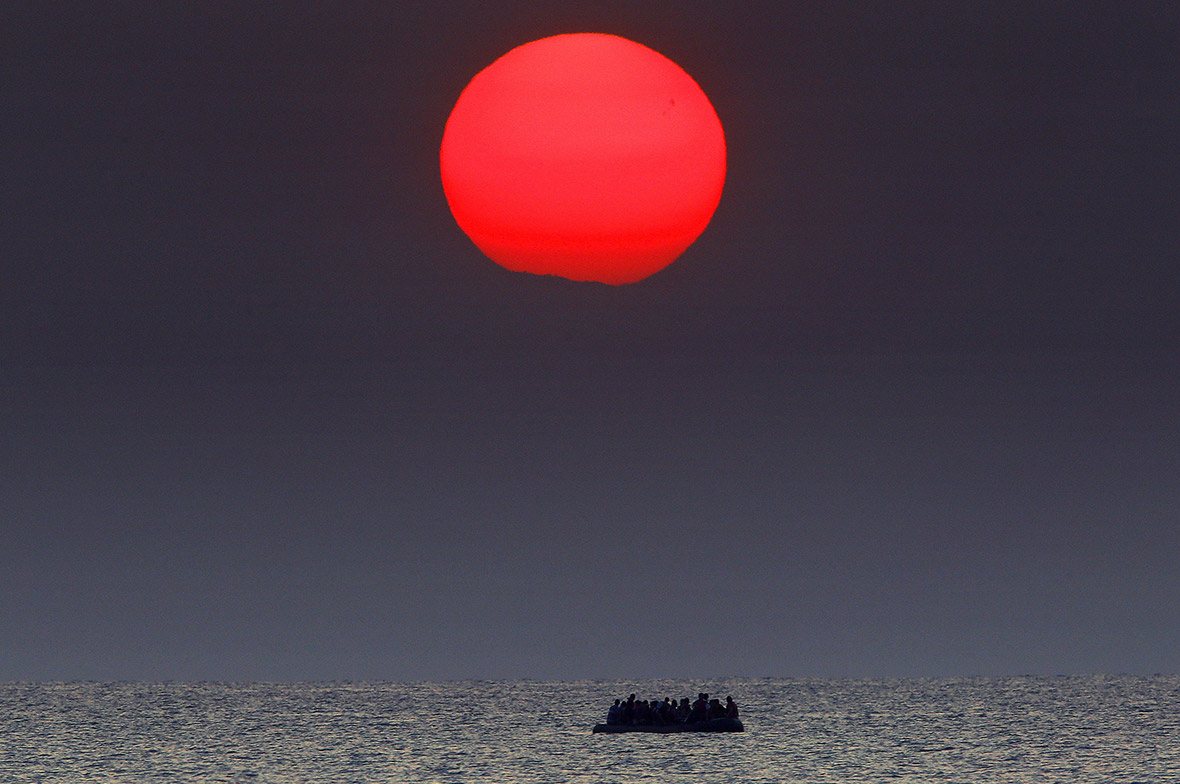
August 2015: A dinghy overcrowded with Syrian refugees drifts in the
Aegean sea between Turkey and Greece after its motor broke down off the
Greek island of Kos
Yannis Behrakis/Reuters
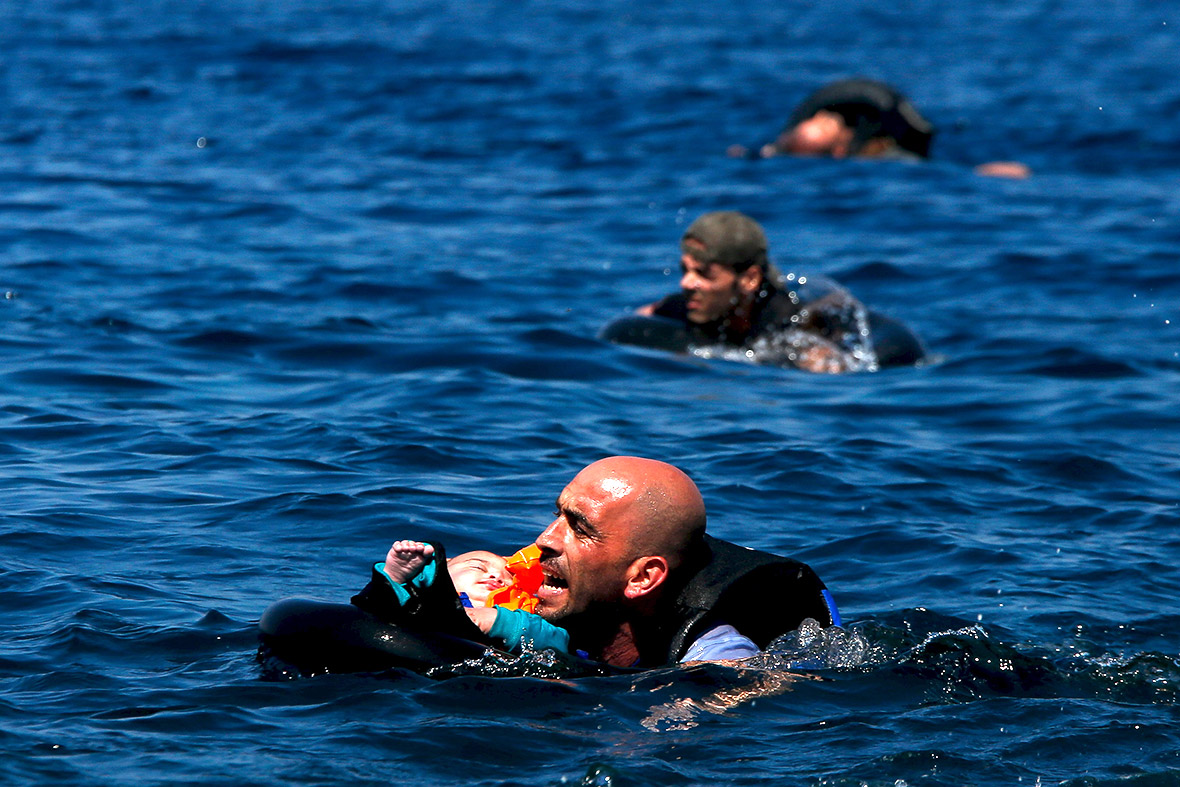
12 September 2015: A Syrian refugee holding a baby swims towards the Greek island of Lesbos
Alkis Konstantinidis/Reuters
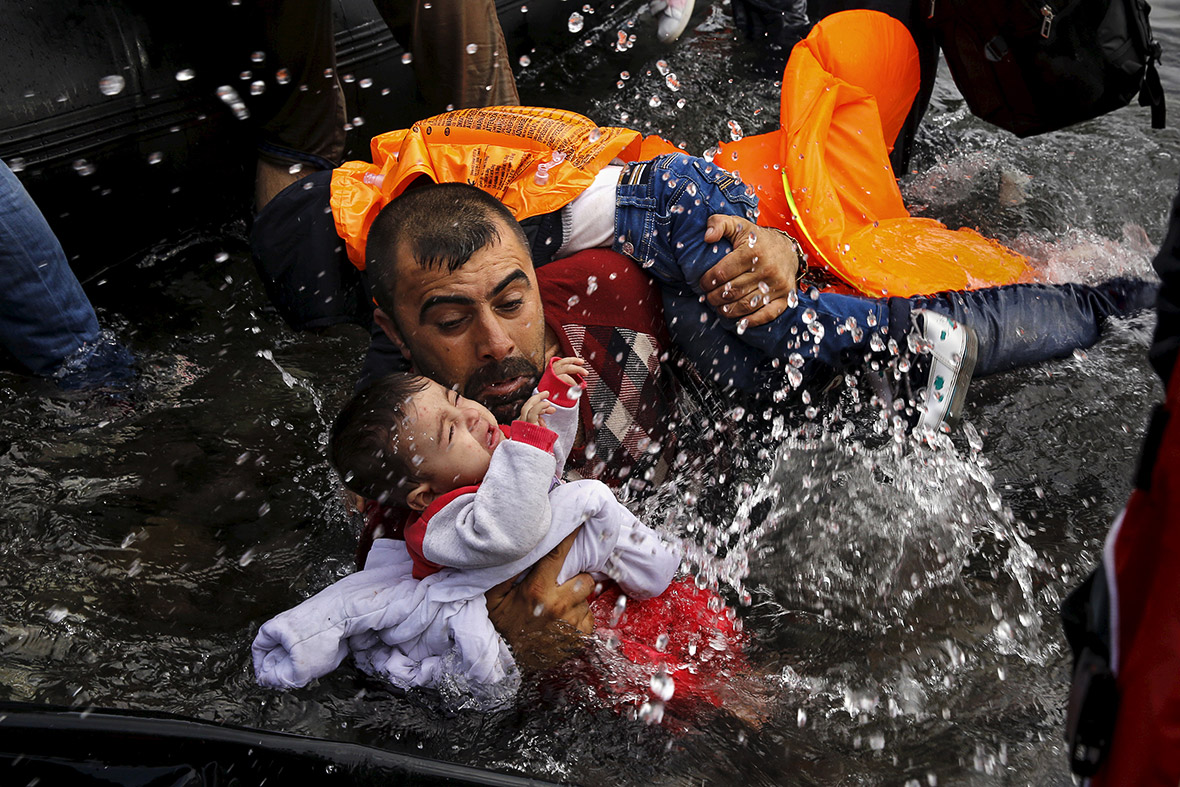
24
September 2015: A Syrian refugee holds onto his children as he
struggles to get off a dinghy on the Greek island of Lesbos, after
crossing from Turkey
Yannis Behrakis/Reuters
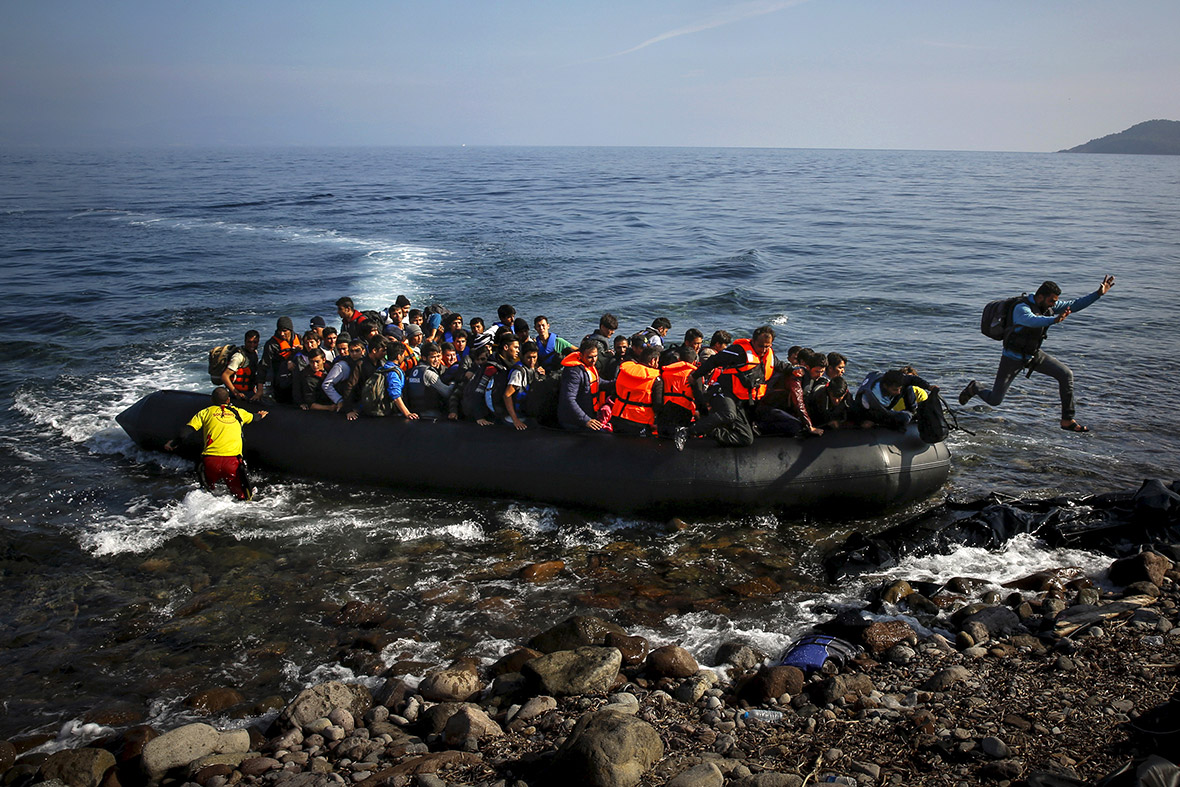
19 October 2015: An Afghan man jumps off an overcrowded raft onto a beach at the Greek island of Lesbos
Yannis Behrakis/Reuters
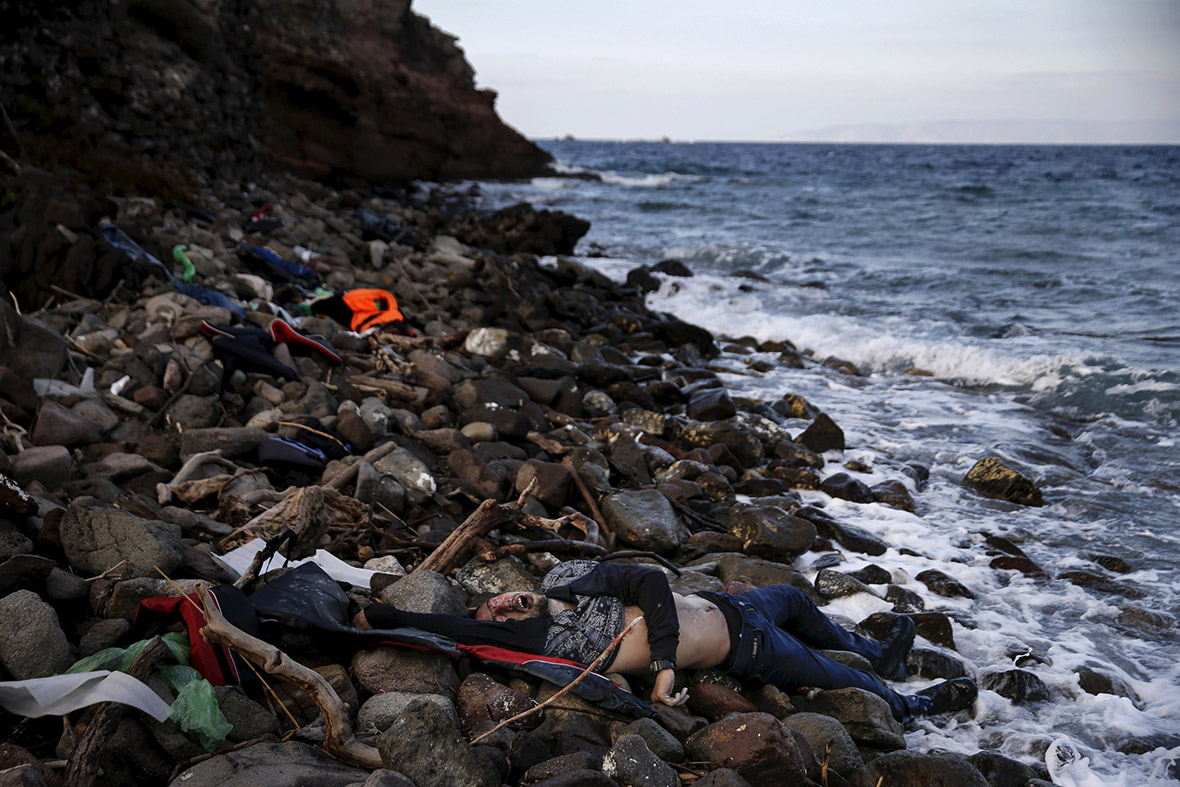
7 November 2015: The body of an unidentified man is seen on a beach after being washed ashore on the Greek island of Lesbos
Alkis Konstantinidis/Reuters
12
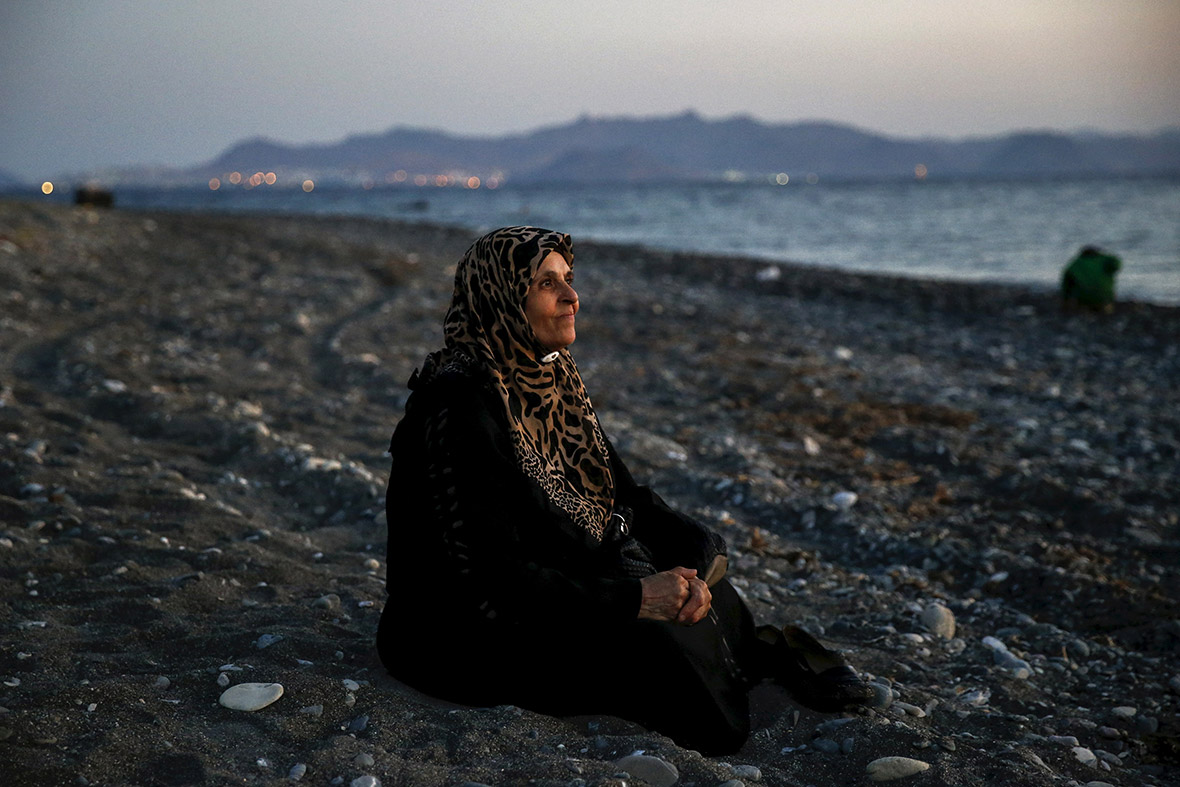
August 2015: Amoun, a blind 70-year-old Palestinian refugee who lived
in the town of Aleppo in Syria, rests on a beach on the Greek island of
Kos moments after arriving along with another 40 on a dinghy from Turkey
Yannis Behrakis/Reuters
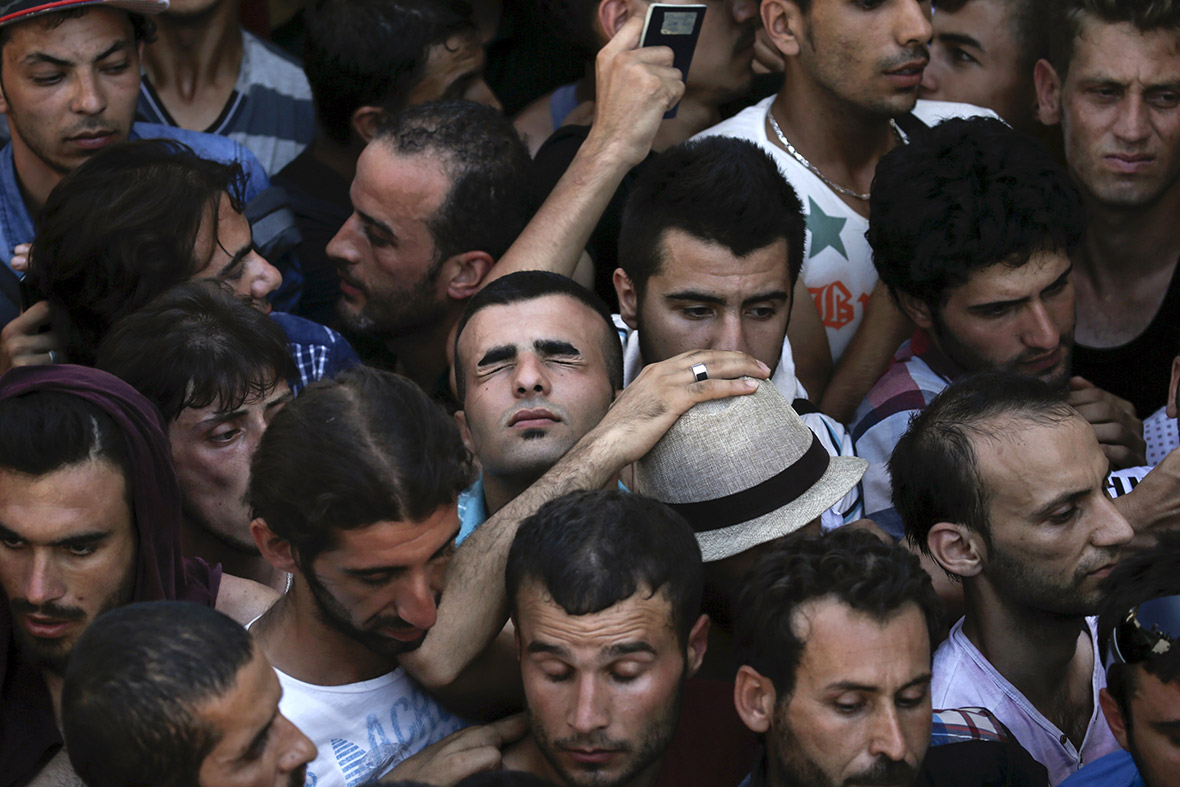
12
August 2015: A Syrian refugee tries to catch his breath as he stands in
a crowd waiting to be registered in a stadium on the Greek island of
Kos
Alkis Konstantinidis/Reuters
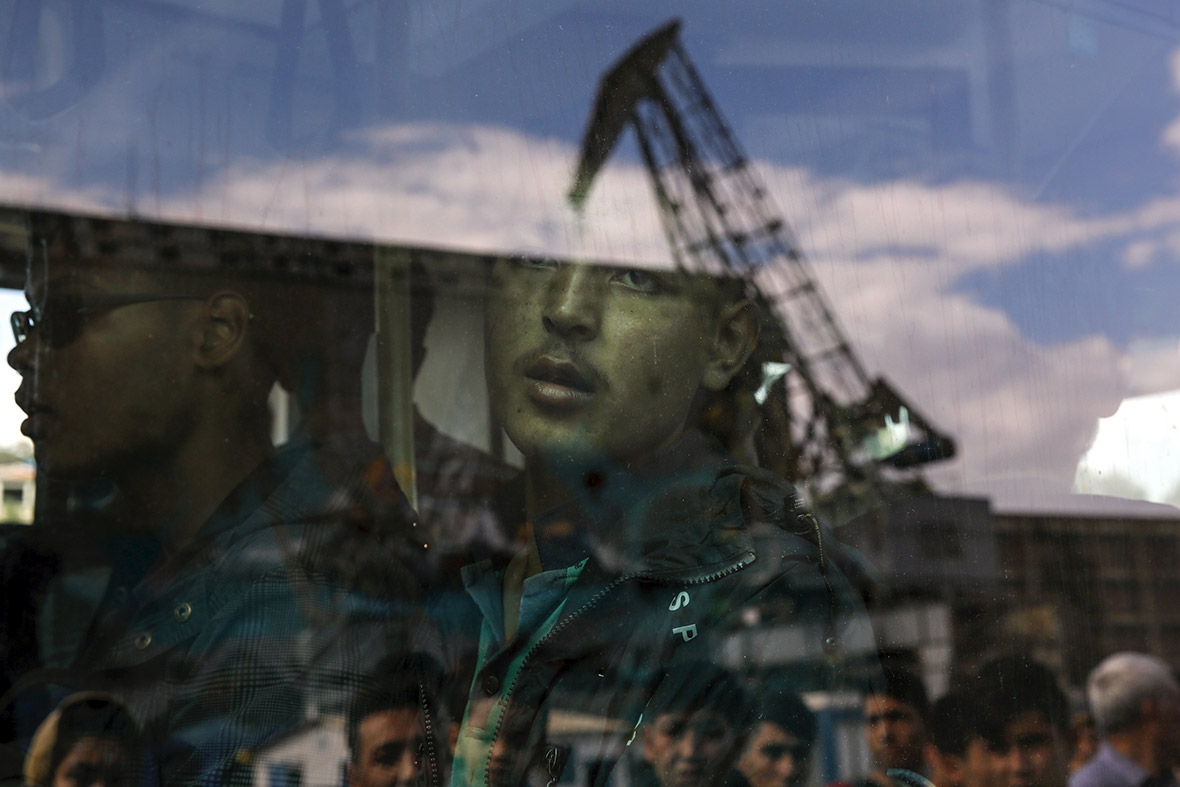
8
October 2015: An Afghan man is seen inside a bus after he disembarked
from the Eleftherios Venizelos passenger ferry at the port of Piraeus,
near Athens, along with over 2,500 migrants and refugees from the island
of Lesbos
Yannis Behrakis/Reuters
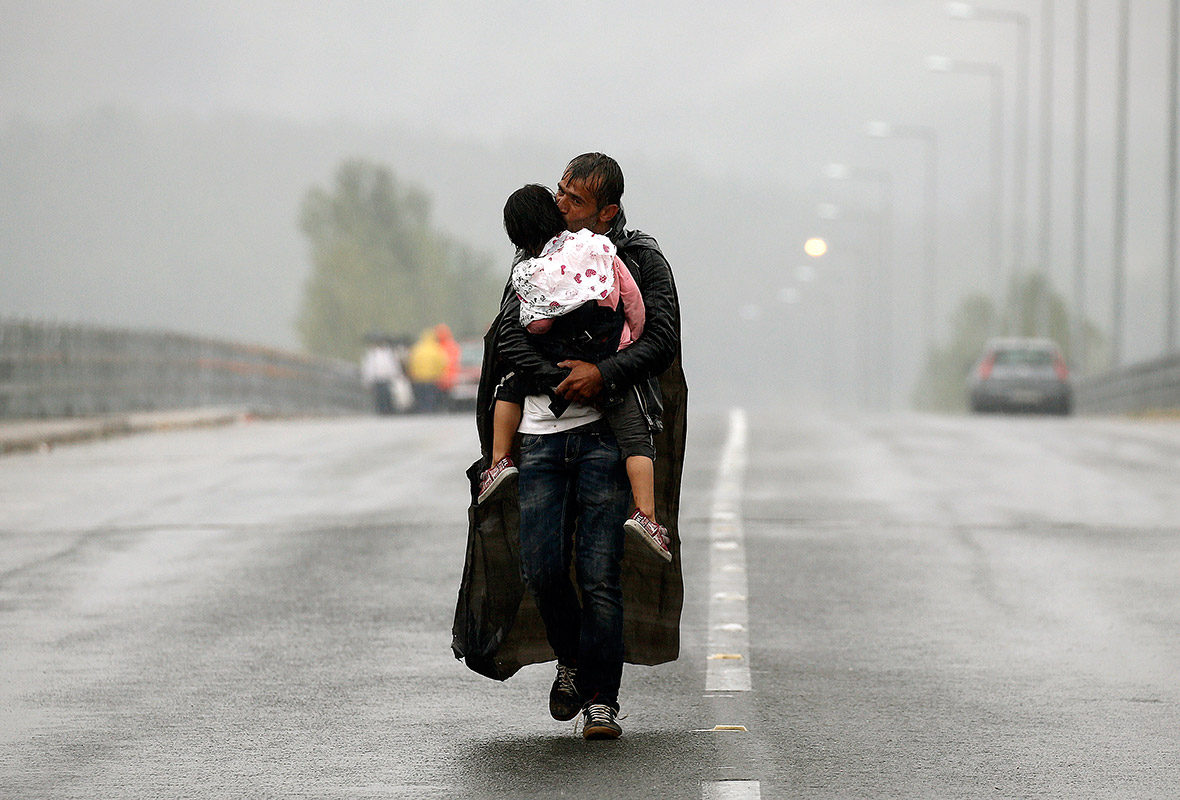
10 September 2015: A Syrian refugee kisses his daughter as he walks through a rainstorm towards Greece's border with Macedonia
Yannis Behrakis/Reuters
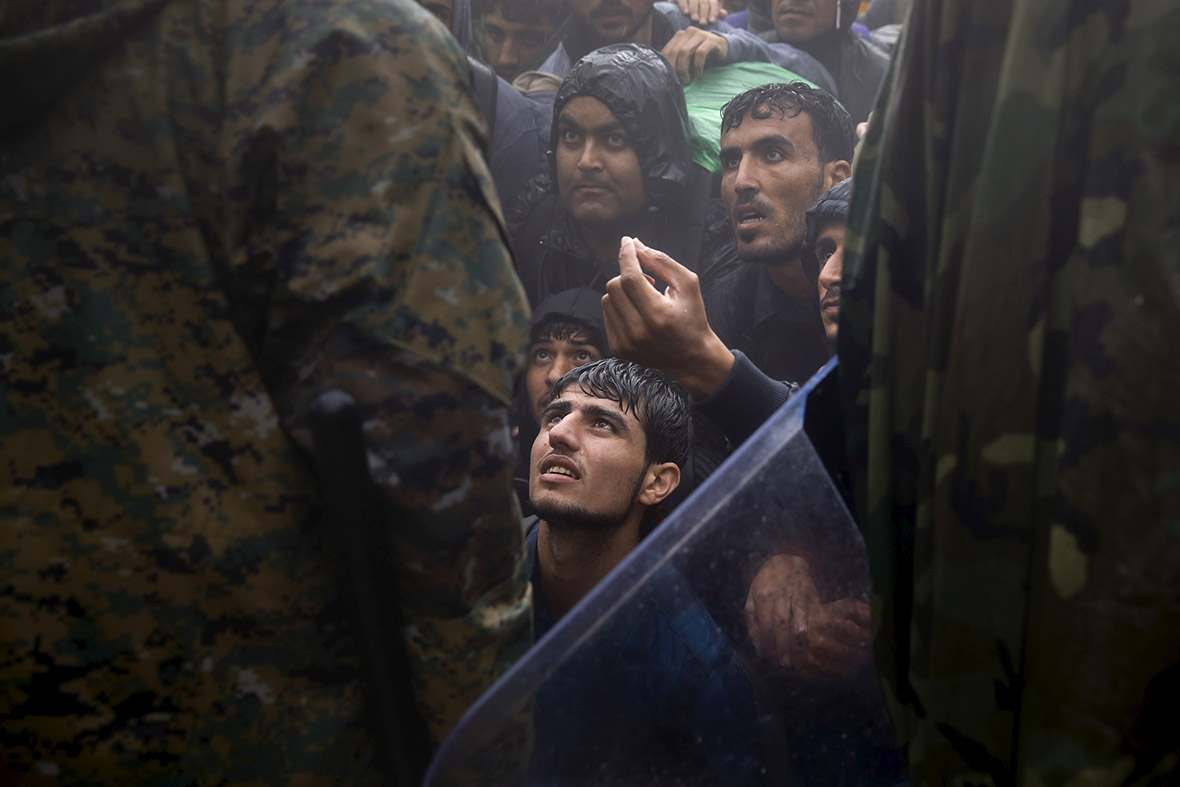
10
September 2015: Migrants and refugees beg Macedonian policemen to allow
them passage to cross the border from Greece into Macedonia during a
rainstorm, near the Greek village of Idomeni
Yannis Behrakis/Reuters
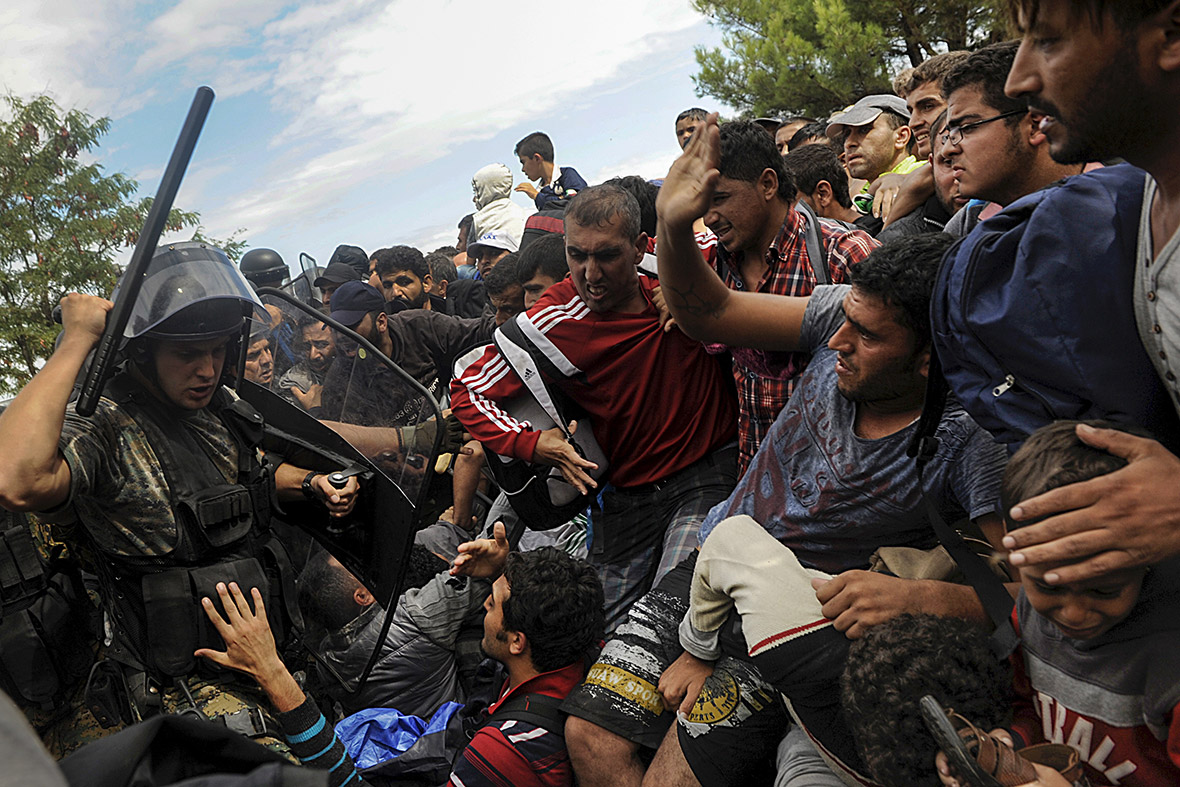
22
August 2015: A Macedonian police officer raises his baton towards
migrants and refugees in an attempt to stop them from entering into
Macedonia at Greece's border near the village of Idomeni
Alexandros Avramidis/Reuters
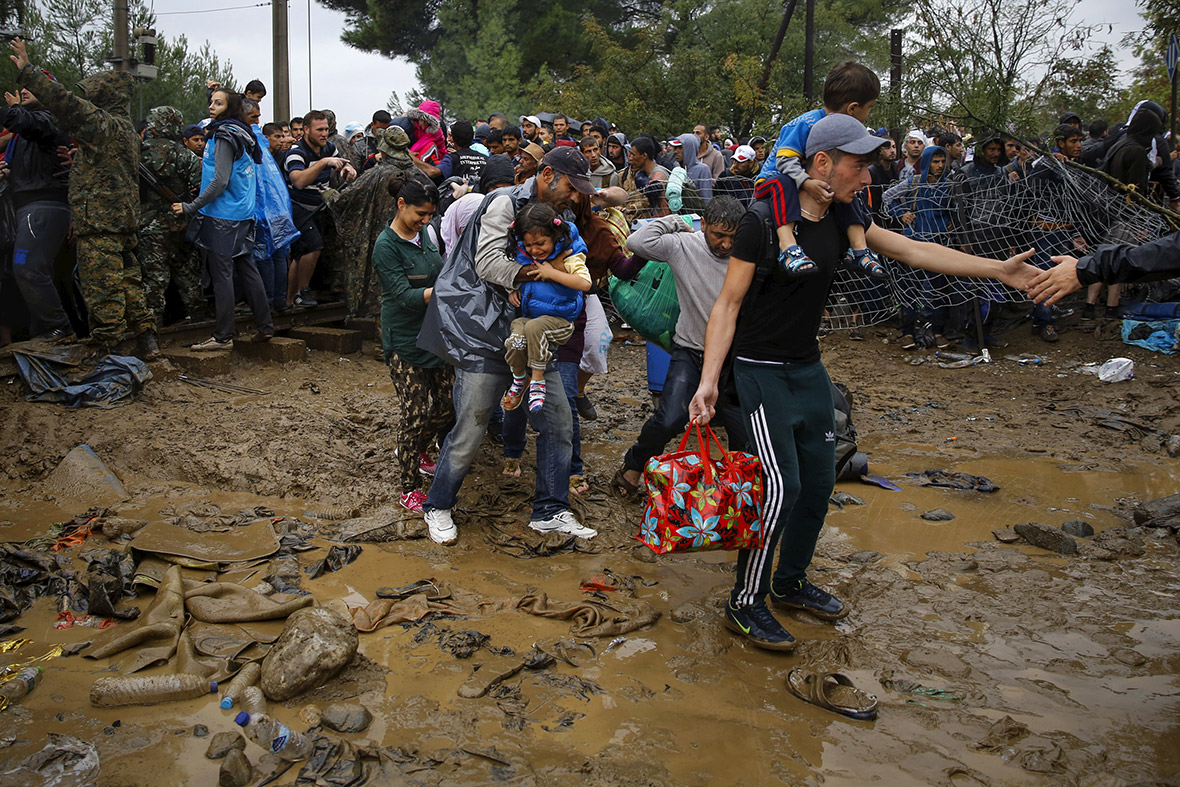
10
September 2015: Syrian refugees walk through the mud as they cross the
border from Greece into Macedonia, near the Greek village of Idomeni
Yannis Behrakis/Reuters
15
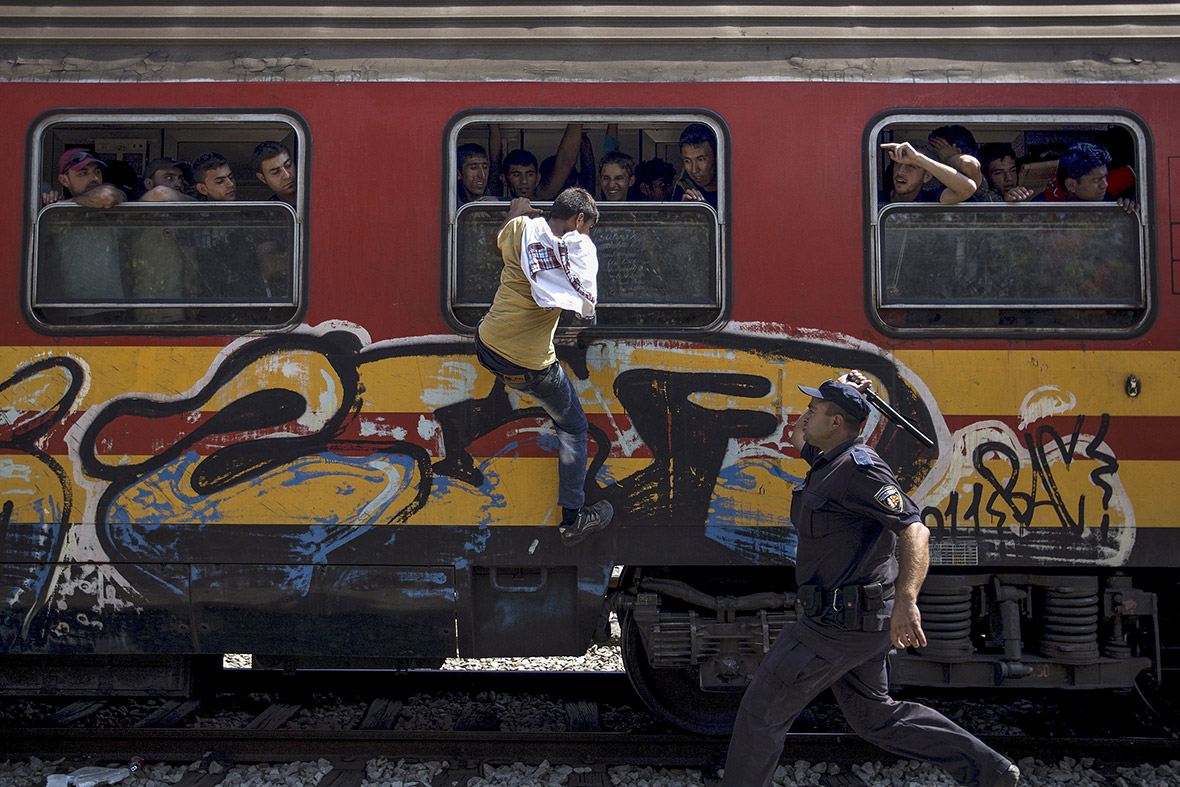
August 2015: A policeman tries to stop a man from boarding a train
through a window at Gevgelija train station in Macedonia, close to the
border with Greece
Stoyan Nenov/Reuters
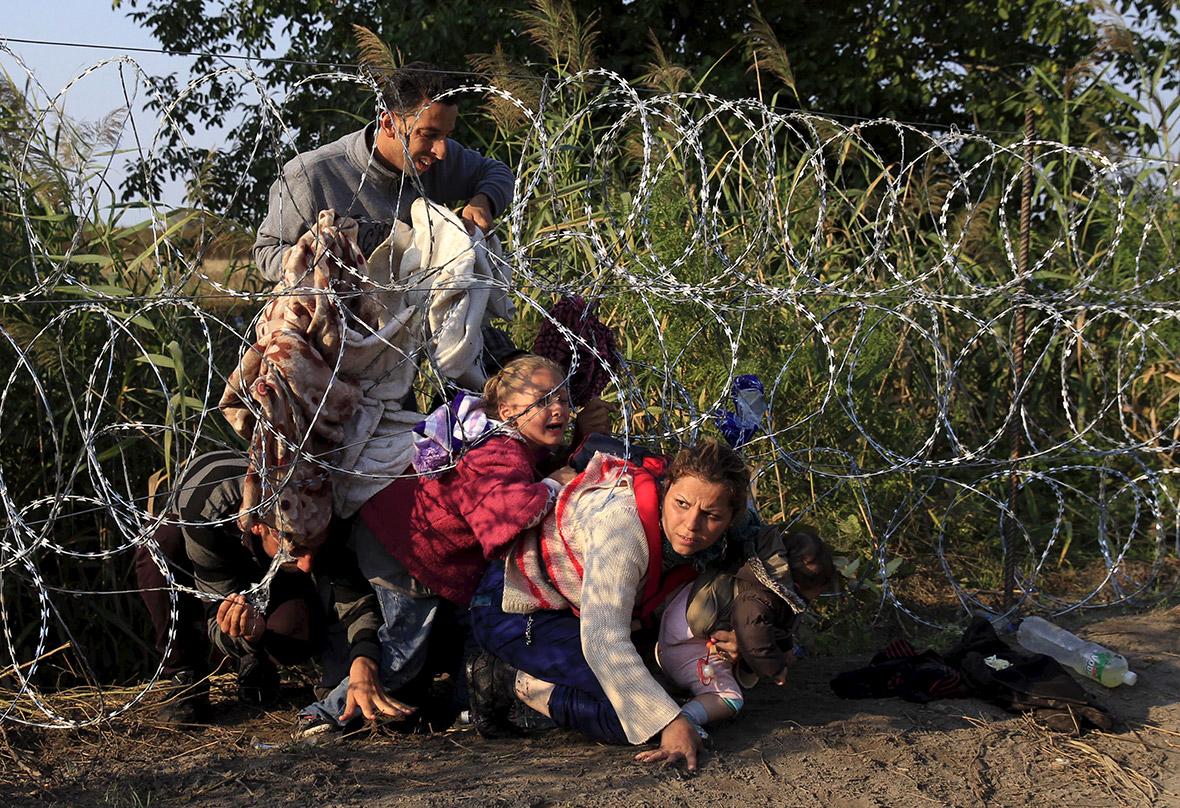
27 August 2015: Syrian refugees cross under a fence into Hungary at the border with Serbia, near Roszke
Bernadett Szabo/Reuters
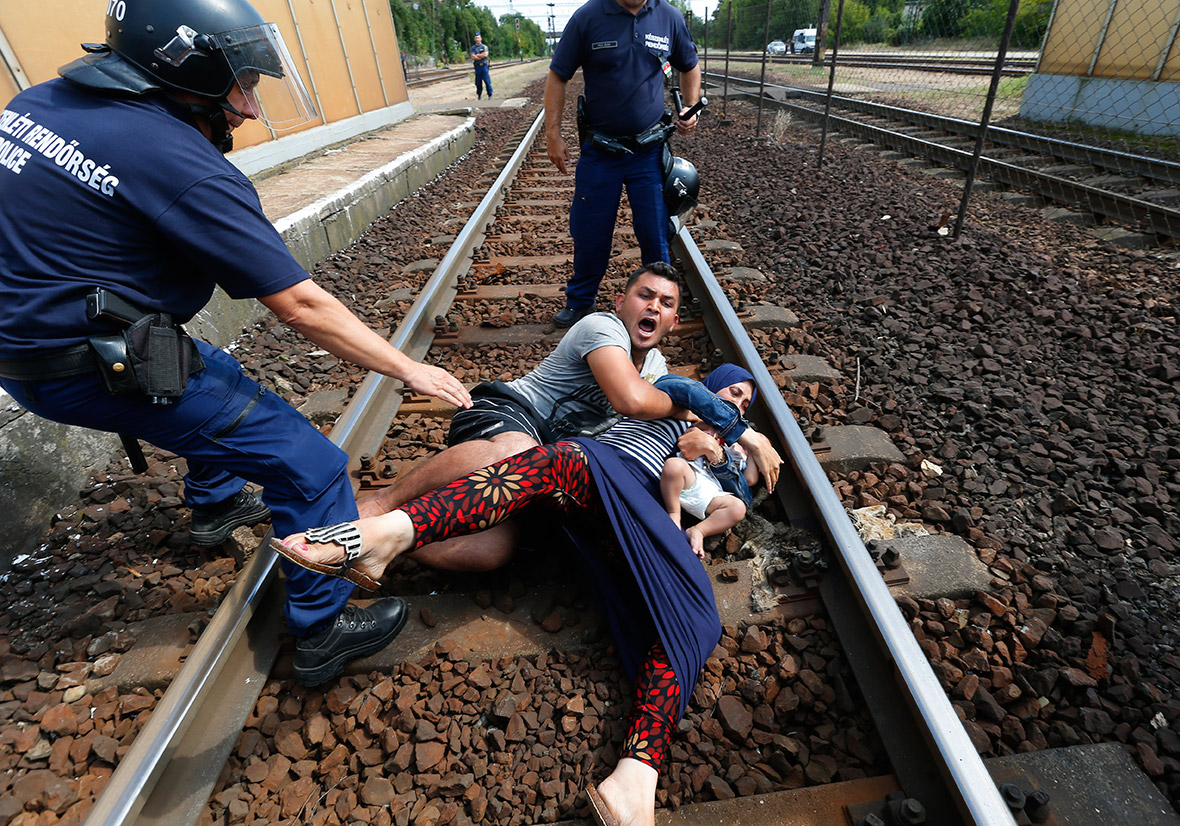
3
September 2015: Hungarian police stop a family of refugees as they
tried to run away at the railway station in the town of Bicske
Laszlo Balogh/Reuters
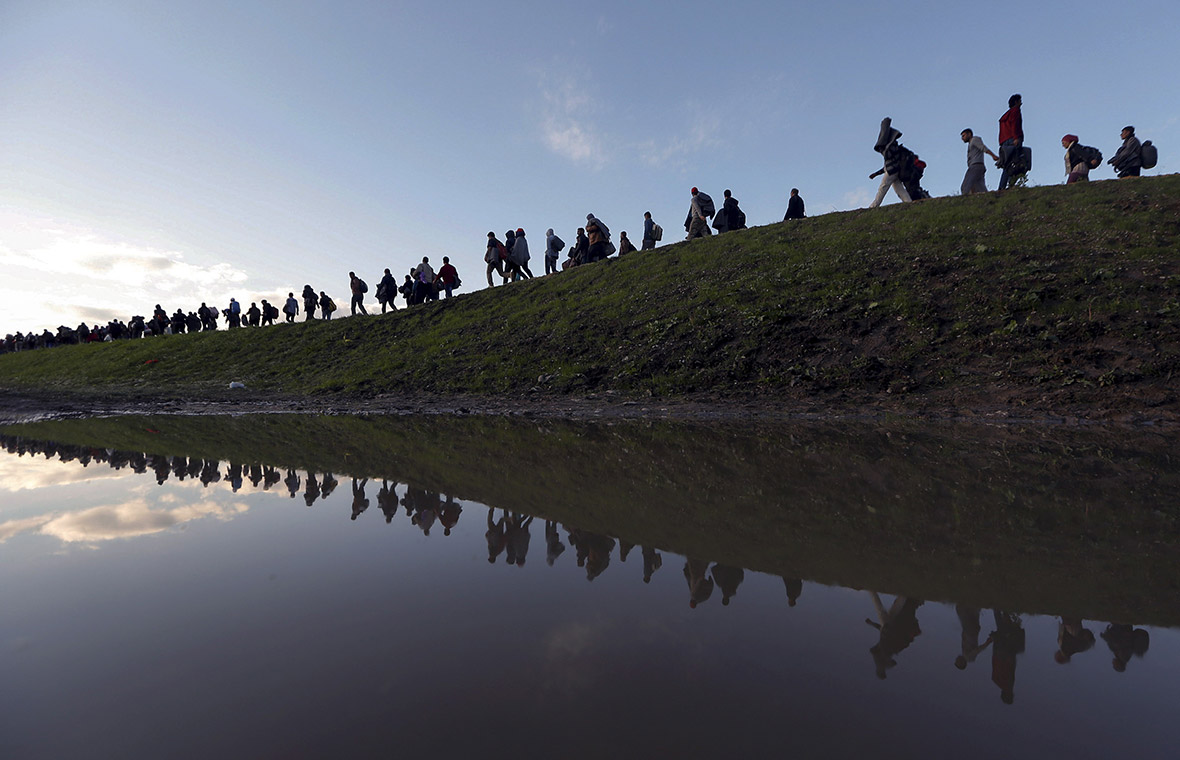
20 October 2015: Migrants and refugees make their way on foot on the outskirts of Brezice, Slovenia
Srdjan Zivulovic/Reuters
20
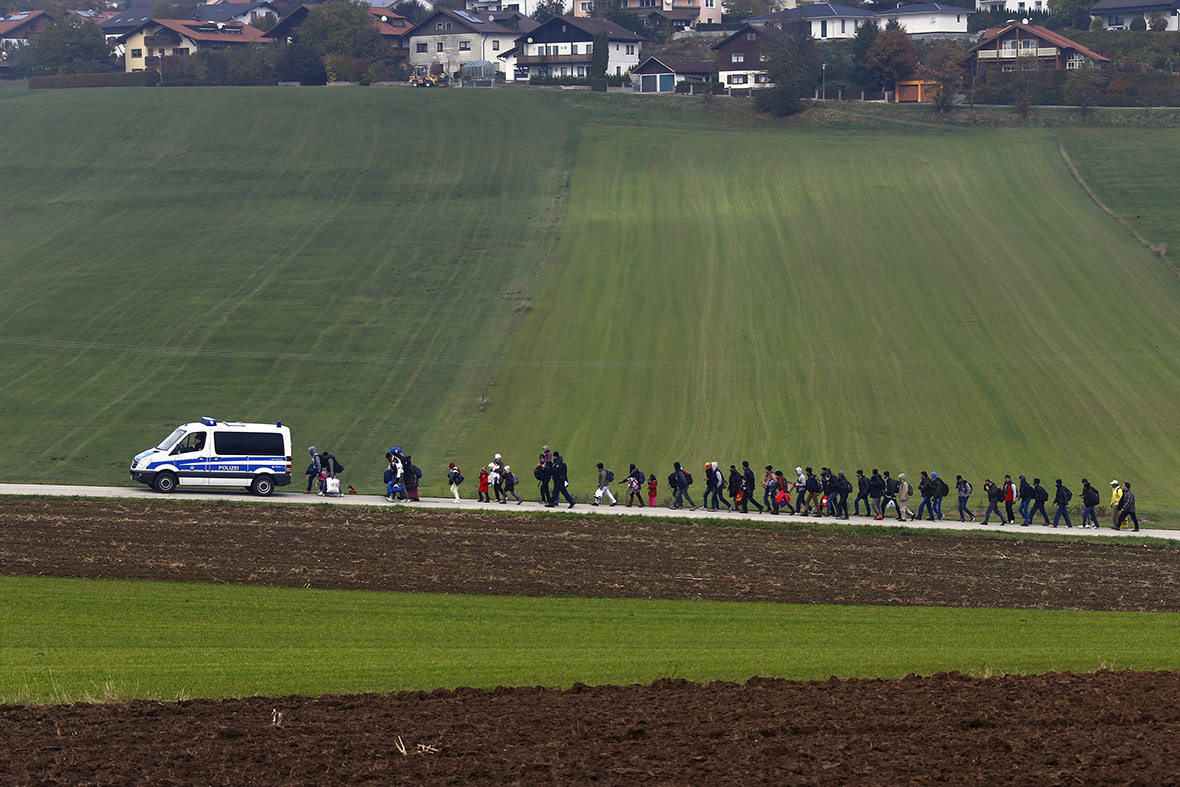
October 2015: Immigrants are escorted by German police to a
registration centre in Wegscheid near Passau, after crossing the border
from Austria
Michael Dalder/Reuters
The
Reuters team shared the breaking news photography prize with Mauricio
Lima, Sergey Ponomarev, Tyler Hicks and Daniel Etter of The New York
Times.
Ex-militant leaders have distanced themselves from the serial bombings
of oil and gas pipelines in the Niger Delta region, particularly in
Delta State.
The former warlords from the six Niger Delta states said on Friday that
none of them, including Chief Government Ekpemupolo, aka Tompolo, were
involved in the recent destruction of oil installations in the region.
The ex-militant leaders, under the auspices of the Leadership Peace and
Cultural Development Initiative said unknown criminal elements, who were
bent on causing disaffection between the region and the Federal
Government, were behind the act.
The former creek warlords in a statement signed by their leader, Chief
Reuben Wilson, said they were ready to partner with the government to
arrest and prosecute the perpetrators.
Wilson, popularly known as ‘General’ Pastor, said, “What happened was
not carried out by ex-militants. The world should not label the
ex-militants with evil deeds. These attacks were carried out by criminal
elements.
“Some people claim Tompolo did it but he has come out to clear himself.
Tompolo is a man known for his words. If he is involved in such things,
he will come out open to say it and give reasons. But he is not behind
these recent attacks.”
Wilson, who said no ex-militant leader would send anybody to blow
pipelines in the region, insisted that their investigations absolved
Tompolo.
He added, “Ex-militant leaders from the Ijaw and Itsekiri extractions
have come out to express concern over the direction the issue of the
attack is heading.
“The era of violence is over in the Niger Delta and the ex-militant leaders cannot send anybody to blow pipeline.
“We call on the Federal Government to integrate the ex-militant leaders
into the protection and surveillance of oil pipelines in the region.
“The ex-militant leaders have important role to play with their
knowledge of the creeks and water channels. Because we don’t carry arms,
we expect that such security job will involve the security personnel.”