Articles by "EDUCATION"

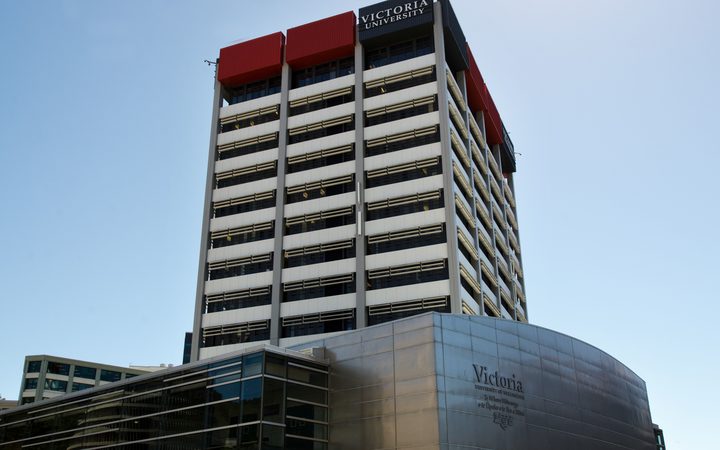
Victoria University of Wellington is offering free education to people affected by the Covid-19 coronavirus pandemic.
No caption
Victoria University of Wellington. Photo: 123rf.com
A scholarship covering 100 percent of tuition fees is available for new students beginning in Trimester 2 this July.
Vice-Chancellor Professor Grant Guilford said the grants would support people who found themselves in changed circumstances.
"Whether that be losing a job, or being forced to be home to look after a dependant or being forced back here to the city from overseas as a result of Covid-19, it was a simple thing we could do to support the community in a time of need," he said.
Guilford said that during an economic downturn, as people start to lose their jobs, they look to universities as a new beginning.
Domestic students who meet the university's academic entry requirements can register their interest online.
Victoria University of Wellington is also offering hardship support to current students whose lives have been significantly affected by Covid-19.
Join Geezgo for free. Use Geezgo's end-to-end encrypted Chat with your Closenets (friends, relatives, colleague etc) in personalized ways.>>

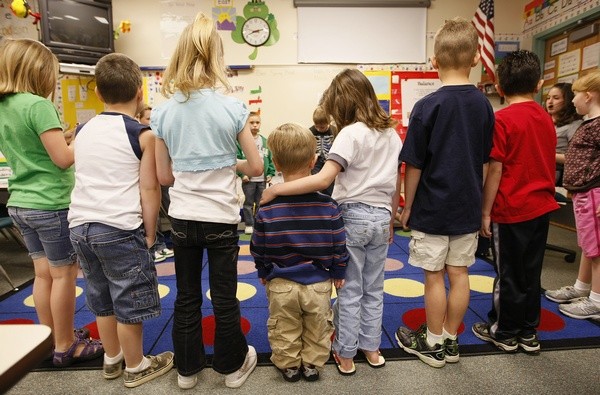
By Conor Duffy and Sophie Scott In anxious days, with a microscopic enemy tearing across the globe, parents across Australia are rightly wondering: should I send my child to school?A student sits with his back turned to the camera facing the front of a classroom with other students in the background.
The urge to protect our children makes it a natural concern, so given the urgent calls to enforce stricter social distancing measures, the answer may surprise many.
Governments have had pressure from parents to follow the lead of 30 countries with school closures, including France, where classrooms will shut as of this school week.
"I would say to all parents that I understand that this is a worrying time, but they should be heartened by the fact that we have the best medical experts in the world here in Australia, and we are working closely with them and acting upon their advice," federal Education Minister Dan Tehan said.
Well-placed sources within the sector say mass school closures are unlikely to happen in Australia soon, and that schools could be one of the last institutions to face mass closures.
The exceptions are exclusive boarding school Geelong Grammar — which is ending term one this week — and Launceston's Scotch Oakburn College, which has moved to online learning.
In a letter to parents, Geelong Grammar principal Rebecca Cody cited the school's unique position, hosting students from 16 countries as well as every Australian state and territory.
"We deem this to be a timely judgment with a highly precautionary emphasis," she said in a written statement.

If social distancing is key, why not close schools?

One reason is that, at this stage, school-aged children seem to be the cohort least affected by the virus. The reasons for that are not yet known.
Data from countries that have closed schools to slow the spread of COVID-19 shows it's not the panacea some think.
According to modelling from the US Centres for Disease Control and Prevention (CDC), there's no evidence that Hong Kong — which closed schools — was more successful in containing the virus than Singapore, which didn't.

What if kids are 'super spreaders'?

Virologist Ian MacKay from the University of Queensland said making the decision whether to send kids to school was indeed challenging.
"If we were really serious about flattening the curve [of spread of the virus] we would have to think about closing schools," he said.
"But we have to balance that against all the social disruption that would cause, including taking people out of various jobs so parents could look after small children at home."
Professor MacKay said experts simply don't know yet if children who appear to be healthy are in fact carrying and spreading the virus.
"We know children get the virus, but are they creating a major part of the transmission chain, or are they having low viral loads and not passing the virus on?" he said.
"We need to find that out so we can have a better understanding of the role that schools play in transmitting the virus."
If a student or teacher tests positive to coronavirus, temporary closures will continue, to allow for disinfecting and contact tracing.
What's unequivocal is that the best thing parents can do is ensure children wash their hands for 20 seconds with soap and water, and observe good hygiene.
Easier said than done? This cartoon may help when you explain to your little ones why they should sing the alphabet twice while they wash their hands.

School closures could be dangerous

The other advice experts are urging us to consider is that it could actually be more dangerous to close schools than to keep them open.
"The advice from medical experts is that not having students at school could actually lead to a greater risk of the virus spreading," Mr Tehan said.
According to the CDC, that's because unsupervised children might engage in social mixing without adults keeping track of who is meeting who.
"Longer closures may result in more students congregating outside of school [eg other students' homes, shopping malls], which will increase risk to older adults or those with comorbidities," it warns.
Robert Booy, from the Centre for Research Excellence in Population Health, said a review of scientific literature of school closures and epidemics found closing schools had an "equivocal benefit" on stopping transmission.
"If you take kids out of school, they then mix with adults and other kids in the park and that may do as much harm as good," Professor Booy said.
Without school, of course, children still need to be cared for and that may mean grandparents are called on for extra babysitting duties.
Older carers are among the most susceptible to suffering serious symptoms and are also among those most likely to die.
Professor Booy said if children are at all unwell, their grandparents should not be the people caring for them.
"If possible, one parent working from home or alternative care would be better," he said.

How else could schooling change?

Education ministers are actively considering extending the two-week Easter holidays to three weeks.
That would allow social distancing to continue but with a degree of planning and with less disruption than an immediate long-term mass closure.
It would also allow time and breathing space to assess and implement additional hygiene measures on campuses.
It will likely be considered for the two-week winter break too.
"That will be dependent on the medical advice that the government is given but obviously schools and government are planning contingencies so we have them in place if the medical advice says that we need to look at such things," Mr Tehan said.
More schools may also move to cancel large gatherings like assemblies and change long-established school routines.
Other options to slow the spread of the virus could include closing playgrounds, stopping non-essential gatherings at schools, staggering lunch breaks, changing the timetable to a three or four-day week, and rotating secondary school teachers between classrooms rather than having scores of students changing classrooms.
"These measures can make a difference and there are very high costs of lengthy school closures," Professor Booy said.
The public, private and catholic sectors at this stage are united in their plans to keep classes running, although all are making preparations for remote teaching.

Closing schools could impact the medical workforce

Closing schools across the board could also impact the ability of the health workforce to provide medical care, when it's most needed.
"If you have a school where a significant number of [parents are] health workers and they have to take time off work to look after their kids, then the intensive care units could end up under a lot more stress," Professor Booy said.
Health authorities across the world are grappling with how to manage school closures and still allow the health workforce to function.
Mr Tehan said that is a key reason schools are remaining open for now.
"It's also so we don't have any impacts on workforce, in particular, on our medical workforce, at this stage," he said.

What would likely trigger mass closures?

The newly formed National Cabinet will review schools again on Friday.
If the outbreak begins to climb steeply, it could change its advice.
Mr Tehan said the decision will be made by experts rather than politicians.
"They are the ones that have the expertise when it comes to pandemic planning and it is their advice that both the Federal Government and state and territory governments are listening too," he said.
Australian authorities believe coronavirus will pose a threat for at least six months.
School closures would be an extreme social distancing measure and part of the arsenal held in reserve.
"All contingencies have been planned for and Australia has been preparing now since the end of January and [has] put in place contingencies and we will continue to do that," Mr Tehan said.
School closures are currently being deployed as part of wider lockdowns across Europe, which is the new epicentre of the virus.
About 30 countries have implemented national school closures, affecting 400 million children, and a further 20 countries have enforced localised closures.
Belgium, France and Switzerland are the latest countries to close schools and despite being hit hard by COVID-19, most German states have opted to keep classes running.
The Republic of Ireland closed schools before its neighbours in Northern Ireland. Northern Ireland is now warning its closures may be as long as 16 weeks.

What about childcare?

Essentially, that's up to you. If you're able to work from home, experts say it would greatly assist Australia's social distancing efforts.
It would also help minimise contact and therefore the spread of the virus for adults, rather than young children.
There is also evidence early childhood learning at childcare and pre-school can help children achieve better results when they start primary school.
Parents should note that childcare centres are unlikely to offer a fee break, unless parents forfeit the child's spot altogether.
Join Geezgo for free. Use Geezgo's end-to-end encrypted Chat with your Closenets (friends, relatives, colleague etc) in personalized ways.>>

Publishing insiders are horrified because they claim that powerful university presses “ganged up” on the New York Review of Books after it published a story by accused sex offender Jian Ghomeshi.

Backlash over the essay, “Reflections from a Hashtag,” in which he moaned he’d become a pariah since the 2016 charges (of which he was acquitted), ultimately led to the sensational firing of NYRB editor Ian Buruma for running it.

After Buruma’s ouster, Jennifer Crewe, president of the Association of University Presses — whose members, we’re told, are the NYRB’s main advertisers — told the New York Times, “the university press community was greatly concerned” about the article, but “to my knowledge no one threatened to pull ads.”

But in a large email group that included Crewe — messages from which have been leaked to Page Six — the executive director of the University of California Press, Tim Sullivan, said he planned to write a letter of complaint to the NYRB, and, “if their response isn’t satisfactory, I plan on pulling the Press’s advertising and inviting others to do the same.”

He asked others to sign the letter, but we’re told it wasn’t sent.

On Wednesday Sullivan told us, “I never sent the letter (or contacted the Review in any other way) because Buruma’s departure and the Review’s explanation of his departure – which I’m sure you’ve seen, and which involved multiple factors, including a breakdown of editorial process – made it unnecessary.”

Crewe, also director of the Columbia University Press, replied that she’d spoken to the NYRB’s associate publisher Catherine Tice, and told her, “I thought that the way the magazine deals with the aftermath of the publication of the Ghomeshi article will be all-important, and any decisions Columbia makes about our future working relationship with them would be taken after that …”

On Thursday, Crewe told us her message was “intended to urge the few directors who seemed to be contemplating pulling ads to wait until we had a response from the NYRB to their own story before anyone responded.”

She added, “university presses have had a long and strong tradition of defending freedom of expression” and said that, “I fully expect that we will continue our strong relationship with the NYRB.”

A publishing insider said, “we just find it concerning that university presses, which are supposed to stand for liberal values, open inquiry and free thought, would gang up on an editor who made an unpopular choice.”

Sullivan told us he wondered how his proposed letter could be seen as a threat, and said, “The idea that we ‘ganged up on’ Buruma is an outright mischaracterization. And the idea that the I – or anyone else – reacted because the choice was ‘unpopular’ seems laughable.

He called Ghomeshi’s piece “mendacious, self-serving, poorly argued, lacking in any revelatory moment or insight, deeply anti-empathetic, obusfactory, and, in my estimation, unworthy of the New York Review of Books’ editorial approval,” and said “One could also argue – and I would – that by publishing such a flawed piece, the Review exacerbated Ghomeshi’s original act of silencing of women’s voices.”
https://www.geezgo.com/sps/41751

Join Geezgo for free. Use Geezgo's end-to-end encrypted Chat with your Closenets (friends, relatives, colleague etc) in personalized ways.>>

Schools' stop-gap measures for coping with the teacher shortage are masking the full impact of the problem, principals say.

Auckland Primary Principals' Association president Helen Varney said measures that were once considered unusual, were now commonplace as schools in the city tried to cover about 80 unfilled vacancies.

"They're being filled by relievers that are working part-time, they're filled by people that have come back that would only work a couple of days a week rather than doing a full week in a classroom. It's stop-gap, it isn't adequate," she said.

Ms Varney said principals were even being forced to supervise several classes at once in the school hall because they could not find relievers.

"That's happening across Auckland," she said.

She said schools were solving the problems but it was not fair on children, who deserved to have one teacher in charge of their learning all year.

"The real crisis is being masked because we're solving some of the problems. Where it will come to a head is when we just cannot mask it any more, when we cannot take three or four classes in the hall, what are we going to do? That's going to be the problem."

Invercargill Primary Principals' Association president Kevin Silcock said schools in the city were also making compromises and it was not fair on children.

"It's not sustainable, it's the children at the end of the day that are suffering," Mr Silcock said.

"When you're putting extra children into a classroom the numbers are going up so there's less teacher time for each child, if they're going to a different room each day or on a regular basis, the classroom teacher doesn't know them like their normal classroom teacher does, so it does affect their education."

In addition, Auckland Secondary Principals' Association president Richard Dykes said the teacher shortage would be largely invisible to the public because schools were asking more teachers to teach outside their subject area, or had reduced the number of classes or even the number of subjects they offered.

"You won't see it because principals will find a solution. If you don't have a teacher you don't have a class."

The shortage would not cause wholesale changes, but it would affect schools in hard-to-staff subjects like te reo Māori, physics and technology, he said.

"You're hearing this creep and erosion around the edges."

Mr Dykes said his own school, Glendowie College, found a te reo Māori teacher recently only thanks to help from the Education Ministry. Without that, he would have had to cancel the subject.

"That's the place where schools are at and that's a tragedy if we get schools having to make really hard choices about cancelling courses and opportunities for our young people."

https://www.geezgo.com/sps/41214


Join Geezgo for free. Use Geezgo's end-to-end encrypted Chat with your Closenets (friends, relatives, colleague etc) in personalized ways.>>

Harrowing stories of stress and anxiety have been by shared by students at the first of a series of mental health hui being run by the Green MP Chloe Swarbrick.

Students have been demanding better services and support since it was revealed that a student was told to leave her Victoria University hostel a day after she tried to kill herself.

Green Party MP Chloe Swarbrick has started holding hui at universities around the country and has described New Zealand's mental health issues as an epidemic needing urgent attention.

She said 60 to 70 people turned up to the first one at the University of Canterbury yesterday, and told stories of stress, anxiety, isolation and exam pressures.

"The stress and strain and insecurity that young people in particular in society are facing in 2018 is becoming unsustainable for many," she said.

She said it was not good enough that vulnerable people should be turned away and put on waiting lists when seeking counselling or other mental health services.

Ms Swarbrick said more resources should be put into mental health services so that students in desperate need could access care 24/7.

"It is also currently a few weeks out from exam period so that stress and strain is pretty compounded," she said.
https://www.geezgo.com/sps/41056

Join Geezgo for free. Use Geezgo's end-to-end encrypted Chat with your Closenets (friends, relatives, colleague etc) in personalized ways.>>

The Vice Chancellor of the Federal University of Lokoja, Prof. Angela Freeman Miri, on Monday defended the expulsion of 13 students over examination leakage.

Making the clarifications over allegations of unjust expulsion by one of the affected students, Lydia Lawal, a 400 -level student of the Department of Economics, Miri said Lawal and other students were expelled over leakage of examination papers in 2017.

Many of the expelled students were final year students of the Department of Economics.

She said the institution’s disciplinary panel would decide the fate of employees that were allegedly involved in the scandal.

The VC in a statement made available to newsmen said: “I can say in the affirmative that these students were expelled from the school before the second convocation in 2017 over alleged exam leakage.

“Those involved were final year students in the Economics Department. They were suspended and due process was thereafter followed.

“We set up a disciplinary committee and the examination misconduct panel and the matter was sent to the Senate.

“At the second to fourth Senate meeting, two weeks ago, the Senate sat on the matter and took the decision. It was on that basis that the Senate took its decision and expulsion letters handed to the affected students.”

https://www.geezgo.com/sps/28913

Suman Varandani
Syria children
Internally displaced children run inside a refugee camp in Dana town after fleeing Palmyra, in northern Idlib province, Syria April 2, 2016. Photo: REUTERS/Khalil Ashawi
Nearly 75 million school-aged children living in crisis areas around the world are in desperate need of educational support, Unicef said Wednesday. According to its report, one in four children between the ages of 3 and 18  live in countries affected by crises such as wars and disasters.
Conflicts in Syria and Eastern Ukraine have heavily affected the education system, mostly as schools were destroyed or damaged in attacks and airstrikes. Five years of civil war in Syria has left 6,000 schools out of use, while in Eastern Ukraine, one in five schools have been damaged, the report said. The latest Unicef report comes ahead of the launch of a major new fund to help children in need of education in emergencies. 
"During crises, children are particularly at risk of missing out on their education, yet schools provide a safe space and a vital routine for children during times of major upheaval," the report said. "Education gives children the building blocks to rebuild their lives and, eventually, their country."
Unicef said in its report that refugees fleeing worn-torn countries are five times more likely to be out of school. During times of conflict, girls are 2.5 times more likely to drop out of school than boys.
Unicef unveiled its new emergency education fund, called Education Cannot Wait, which is expected to be launched at the World Humanitarian Summit in Istanbul on 23 and 24 May.
The fund aims to raise nearly $4 billion over five years to reach 13.6 million and 75 million by 2030.
"It is time education is prioritized by the international community as an essential part of basic humanitarian response, alongside water, food and shelter," Josephine Bourne, Unicef's education chief, in a statement.

Mary Papenfuss
Students at a North Carolina high school can start loading up for target practice
Reuters/Jim Young
A North Carolina school has become what could be the first non-military high school in the nation to open a shooting range for students. Smithfield-Selma High School has opened the six-lane indoor range for members of the Army Junior Reserve Officer Training Corps program to practice, according to a WRAL-TV report.
They will be limited to using Daisy pump air rifles, filled with pellets. But the pellets can be dangerous, so students have to undergo extensive training before they can head to the range, administrators said.
The North Carolina Wildlife Resources Commission and the National Shooting Sports Foundation donated most of the $10,000 (£7,000) in supplies and material for the range.
"There's a marksmanship safety test they have to take, and they have to get a 100 on it," said reserve Commander David Wegman. "In addition to that, students have to sign a safety pledge, get permission from home and then finally demonstrate on the range that they know how to handle one of these air rifles safely."
He insisted the range would pose no safety threat to the reservists or to other students, despite a troubling history of mass shootings at US schools. At least one cadet agreed.
"You go out there, and you're relying on others," Timothy Jones told WRAL. "You have to have the trust in others that they are handling a weapon, that they are not going to harm you, and you're not going to harm them."

Every year, students around the country compete for a head start on conquering the corporate world by studying business in college. Since 2006, we have ranked undergraduate business programs to help guide prospective college students and their families in choosing the right degree program for the career they want. Today, after surveying nearly 30,000 students and recruiters at almost 600 companies, we present the best undergraduate B-schools of 2016.
As we did with our MBA rankings, we updated how we rank undergraduate programs to put a bigger focus on the outcome most students want from B-school: the brightest possible career path. We based our ranking on four main metrics (see full methodology):
  • Employer Survey (40 percent of total score):  Feedback from recruiters who hire recent business graduates on how well schools prepared students for jobs at their companies.
  • Student Survey (35 percent):  Students' own ratings of the campus, career services department, and faculty and administrators.
  • Starting Salary (15 percent):  The base compensation of students who had jobs lined up, adjusted for salary variation across industries and regions.
  • Internship (10 percent):  The percentage of a school’s graduates who had at least one internship at any time during college.

U.S. Undergraduate Business Programs

Correction: updated to include Case Western Reserve (Weatherhead) as No. 60 in the ranking
Rank School Employer survey rank (40%) Student survey rank (35%) Salary rank (15%) Internship rank (10%) Ranking index score
1Villanova2102915100
2Notre Dame (Mendoza)181133199.86
3Boston College (Carroll)55171298.57
4Indiana (Kelley)413191896.86
5UVA (McIntire)4323695.98
6Texas at Austin (McCombs)121215793.34
7North Carolina (Kenan-Flagler)28891790.34
8Michigan - Ann Arbor (Ross)27156389.49
9NYU (Stern)63481689.4
10Bentley 319532589.13
11Cornell (Dyson)6742988.09
12William & Mary (Mason)393284186.54
13Wake Forest54612586.39
14Ohio State (Fisher)718653786.07
15Emory (Goizueta)519141184.78
16Pennsylvania (Wharton)66141884.58
17Georgetown (McDonough)491741482.88
18Brigham Young (Marriott)1920373480.73
19Penn State (Smeal)838406179.5
20Michigan State (Broad)1529415579.44
21Southern Methodist (Cox)632252178.28
22Northeastern (D'Amore-McKim)144470477.18
23Syracuse (Whitman)1156522076.89
24Texas Christian (Neeley)8011222276.66
25Washington in St. Louis (Olin)927111376.33
26Carnegie Mellon (Tepper)385071076.1
27Fordham (Gabelli)3031203275.77
28Wisconsin3728263374.97
29Boston University (Questrom)2346382874.18
30John Carroll (Boler)195954574.05
31University of Miami1368188073.85
32Lehigh5023272773.69
33Massachusetts (Isenberg)1736735973.26
34Chapman (Argyros)1639608572.74
35College of New Jersey2051673672.2
36UC Berkeley (Haas)4159103571.48
37Illinois at Urbana-Champaign2954244770.75
38Ohio 2233937770.52
39Georgia Tech (Scheller)8716164670.44
40Miami University (Farmer)5926634069.56
41James Madison2552438469.55
42Bradley (Foster)1084647069.45
43Fairfield (Dolan)4037483969.43
44Bryant5225764868.79
45Ohio Northern (Dicke)3335981968.18
46University of Richmond (Robins)8524232667.8
47North Carolina State (Poole)5527746967.57
48Elon (Love)683255267.4
49Pittsburgh (Katz)992886066.88
50Maryland (Smith)5745345466.87
51Santa Clara (Leavey)6540314466.3
52Washington (Foster)3265338265.76
53San Diego5348397365.48
54George Washington4776214264.27
55Duquesne (Palumbo)2177967663.63
56Denver (Daniels)3167877262.66
57Purdue (Krannert)7442446262.59
58Florida (Heavener)4671563862.56
59Cal Poly (Orfaela)8143258361.82
60Case Western Reserve (Weatherhead)7053465661.63
61Providence College3579776460.47
62UC Boulder (Leeds)7955477459.44
63Loyola (Quinlan)4485457958.55
64Virginia Tech (Pamplin)6281366858.45
65Seton Hall (Stillman)7666545358.37
66American (Kogod)6972496658.21
67Georgia (Terry)9930426557.47
68Butler757583157.42
69Minnesota (Carlson)9149503057.01
70Michigan - Dearborn2691899856.83
71Bowling Green State4278859356.56
72Connecticut7873576356.47
73Stonehill8364782356.45
74Arkansas (Walton)6074729255.98
75Illinois State7258819055.36
76Missouri (Trulaske)34102942954.91
77Lipscomb24108925053.95
78Drexel (LeBow)9562662453.47
79Northern Illinois82616910352.85
80Arizona (Eller)10047627852.75
81New Hampshire (Paul)8957848751.55
82Kansas State5888909950.86
83Tennessee (Haslam)6497719649.59
84Cincinnati (Lindner)9360918848.67
85Buffalo369910410548.56
86Seattle (Albers)488910510847.99
87Ithaca College9686595247.48
88Texas at Dallas (Jindal)104418210447.36
89Tulane (Freeman)10390324347.35
90Colorado State8880759547.15
91Quinnipiac 9782617546.95
92Sacred Heart (Welch)9887585146.67
93Cristopher Newport (Luter)111631024946.58
94Worcester Poly (Foisie)10883308146.34
95St. Thomas (Opus)11070796746.17
96Toledo73941039745.59
97Rutgers - Newark841005110644.55
98Akron611068610043.91
99Tulsa (Collins)107963510140.86
100Oregon (Lundquist)7110410110739.65
101Hartford (Barney)101931085739.26
102St. Louis (John Cook)106981008638.19
103Belmont (Massey)861071115837.35
104U.S. Coast Guard Academy1142111211437.03
105Utah (Eccles)771119910936.82
106Portland State5611010711236.36
107Vermont (Grossman)941011109135.44
108Marist College90112687135.43
109Florida Southern College (Barney)1056911311133.14
110Kentucky (Gatton)102109979431.94
111Kent State 4511410911029.83
112Rowan (Rohrer)113113808927.62
113Texas at San Antonio10910510611325.2
114Hult11210311410225.11

Ananya Roy
Inequality among rich and poor children in Britain was highlighted in a latest Unicef report
REUTERS
The UK is lagging behind smaller European countries like Denmark, Finland and Norway in tackling children's inequality, according to an Unicef report. The findings prompted
the global agency for children to
call for greater efforts from the government to bridge the gap between the rich and the poor.
The Unicef report
, "Fairness for Children: A league table of inequality in child well-being in rich countries", studied the gap between children at the bottom and in the middle of the societal chain. The report considered four major parameters for studying inequality: income, educational achievement, self-reported health and life satisfaction.
It ranked 41 nations from the EU and the Organisation for Economic Co-operation and Development (OECD) on how they fared on these parameters.
UK report card
Britain was ranked seventh among the 41 countries in income inequality, with a 39.94% relative income gap and 9.3% child poverty rate. The relative income gap is based on the disposable incomes of households with children up to the age of 17 after adding benefits, deducting taxes and making an adjustment for the different sizes and compositions of households.
The country was ranked 25th out of 37 rich nations – behind countries like Chile, Poland, Romania, Slovenia and the US – for equality levels in children's reading, maths and science skills at the age of 15.
Britain is also falling short when it comes to providing health benefits to the poor, after being ranked 19th (out of 35) for health inequality. The report showed 21.4% of children report one or more health complaints every day in the UK. The relative health gap between rich and poor children in the UK was 28.87%.
Unicef reaction
Lily Caprani, Unicef's deputy executive director for the UK, urged the country to be "more ambitious" for its children as the disparity among rich and poor children was "damaging their lives and aspirations".
She said the UK "can and must do better", emphasising the need to urgently work towards the government's long-delayed childhood obesity strategy. "Taking children's rights seriously means acting with urgency to make sure no child is left behind," Caprani added.
Government response
In response to the report findings, a government spokesperson said: "We're working to eliminate child poverty and improving life chances for children and there are now 300,000 fewer children in poverty."
The National Living Wage scheme introduced by the government is aimed at "increasing the incomes of the lowest paid", the spokesperson added. The government is also working towards its free school meal scheme and is continuing to spend £80bn ($113bn) every year "to provide a safety net for those who need extra support".
Other findings
Denmark ranked in the top three
based on all four parameters and made it to the top of the overall league table, with "comparatively low bottom-end inequality in each of the four domains of child well-being".
Finland, Norway and Switzerland share second place in the overall league table, faring well in all four domains.
Israel and Turkey were ranked lowest in the overall league table as they have "comparatively high bottom end inequality" in each of the four domains.

Abby Jackson
US Marshals patrol the area outside federal court in Washington, Wednesday, July 2, 2014, where Libyan militant Ahmed Abu Khattala, charged in the deadly attack at the U.S. diplomatic outpost in Benghazi, is being held for a detention hearing. (AP Photo/Manuel Balce Ceneta)AP Photo/Manuel Balce CenetaUS Marshals patrol in Washington in 2014.
Last week, seven deputy US Marshals arrested Paul Aker in Houston, Texas, after coming to his home to collect on a federal student loan from nearly 30 years ago.
The arrest was over a $1,500 student loan he received in 1987, Aker said. He says he received no certified mail or notices about the outstanding debt in the past 29 years.
For its part, the US Marshals claim Aker told two deputies "he had a gun" when they showed up to arrest him after he failed to appear at at a court hearing related to his debt.
Aker's assertion that he was armed spurred US Marshals to call for back-up, the US Marshals said in a statement.
Despite the Marshals' statement, the story of Aker's arrest went viral — drawing shock and outrage — after he went on Fox to talk about it.
His arrest renewed interest in information about when the governement has recourse to pursue legal action against your unpaid student loans.
Business Insider spoke with Joshua Cohen, an attorney specializing in student loan debt, to understand the consequences borrowers may face when they default on student loans.
Cohen first explained that borrowers cannot simply be arrested for not paying their loans.
"Aker wasn't arrested because he owed a student loan," Cohen told Business Insider. "He was arrested because he ignored a court order to show up."
Indeed, the Consumer Financial Protection Bureau has cautioned that if "you ignore an order to appear in court, a judge may issue a warrant for your arrest" and that "you should never ignore a court order."
Still, Cohen explained that if you default on your federal student loan — meaning that you miss nine consecutive monthly payments — the federal government can come after you in four different ways.
W-2 wage garnishment
If you are W-2 wage earner, the government can garnish your wages with a 30-day warning, and it doesn't need a lawsuit to do so.
Paul Akerscreengrab via FoxPaul Aker.
Typically, a debt collector will call a borrower's human resources department to verify they are an employee. That information is passed along to a guarantee agency or to the US Department of Education, so either one can move forward to collect on the debt via the wages.
Cohen cautions borrowers in this situation to move quickly and request a hearing on the wage garnishment. This temporarily stops the process and allows the borrower to work out alternate payment strategies with the loan servicer.
"It's quite messy," he said. "If someone doesn't quickly get on their feet during that 30-day period, the garnishment will probably happen."
Social Security garnishment
If a borrower doesn't work, but collects Social Security, the federal government can garnish that money.
"That's really hard because you are dealing with people who are barely surviving as is and now you're taking more money from them," Cohen explains.
Social SecurityFlickr/FDR Presidential Library & Museum
Those instances bother him the most, because individuals living on Social Security typically don't have enough income to be responsible for making federal loan payments.
He attributes this to a communication issue where not enough people know they qualify for income-driven repayment (IDR) plans.
IDR plans allow borrowers to pay a percentage of their discretionary income toward student loan bills each month. If your discretionary income isn't above a certain level, however, your payment will be zero, until you start earning more income.
If you earn at or below 150% of the poverty line income, your payment will be $0.
Federal tax refund garnishment
tax refundFlickr/frankieleonA tax refund check.
Employees who file tax returns normally look forward to getting their refunds back in the spring. But if you've defaulted on your federal student loan, don't expect to get your refund, according to Cohen.
The federal government will use the return amount to pay down the principal and interest on student loans in default.
"My advice on that is don't file your tax return," Cohen said.
He explained that if you're due a refund, you have up to three years to file. Work on getting yourself out of default and then file the return. There's no penalty to postpone filing your refund.
Lawsuit
If you're not a W-2 wage earner, don't receive Social Security, and aren't due back a tax refund, the government's last option for collecting on a student loan is to sue the borrower.
It's the situation most self-employed individuals find themselves in, according to Cohen. And it's what happened to Paul Aker.
Aker was sued by the federal government in 2006 for the unpaid student loan. When Aker didn't show up in court, a judge issued a "default judgment" ordering him to pay about $2,700.
A statement from the US Marshals claims, that they "spoke with Aker by phone and requested he appear in court, but Aker refused. A federal judge then issued a warrant for Aker’s arrest for failing to appear at a December 14, 2012, hearing."
Aker claims he never received any notification of the court order.
Private loans
Private loan collection operates separately from federal loan collection. Unlike the federal government, private lenders are under no obligation to offer deferments or income-driven repayment plans.
Empty courtroomAs they can't garnish W-2 wages or Social Security payments, private lenders must pursue legal action in court.
"The only remedy that a private lender has is to sue you, and they are suing you under state law and every state differs," Cohen said.
His advice for borrowers whether they have federal or private student loans is to pay attention to mail and to answer the phone.
If a borrower ignores calls they are taking a defensive rather than an offensive position. There are likely a number of solutions that can borrowers can take advantage of to get themselves out of default.
"It's all about power and who has control," Cohen said.


The Director-General, National Mathematic Centre, Prof. Adewale Solarin, has attributed the high rate of failure in the subject to poor quality of teachers.

He also blamed the failures on the wrong teaching approach adopted by teachers.


The DG, who described failure in the subject as a national problem, called for an emergency in the teaching of algebra in schools.

The NMC boss disclosed these in Abuja at the inauguration of the United Nations Educational, Scientific and Cultural Organisation (UNESCO) Chair Programme on Mathematics on the centre and a Workshop on Algebra.

Prof. Solarin explained that the use of non experts to teach algebra, which is a core subject in the training of mathematicians at the undergraduate level, had not yielded much result.

He said: “We are not calling for emergency in mathematics. We are calling for emergency in algebra.

“The high rate of failure in mathematics is a national problem we are addressing. We have done a lot of pilot survey. “The teaching approach, methodology used by teachers is partly responsible. That is why students have to cram the subject.

“The best way to handle mathematics is to allow the student to discover the concept so that they don’t have to cram the subject.

“If all teachers are trained by us, you can be sure that in the next three years there will be difference.”

He said that the centre had adopted a new approach where students had to discover new concepts and create formulas themselves so as not to cram the subject.

The Minister of Education, Mallam Adamu Adamu, said the award of UNESCO Chair on Mathematics to the centre would be useful to Nigeria as countries seek to share experience and learn from one another to strengthen the education system.

Adamu said that no socio- economic transformation can take root in any nation without sound education in science and technology.

This, he stressed, had made the teaching of mathematics imperative in modern education of Nigeria.

A student's letter explaining why men and women are not equal in his engineering class has gone viral gathering over 1.4million likes on Facebook alone.

Jared Maudlin, a senior in mechanical engineering at Eastern Washington University in the US, wrote to the editor of the student paper after seeing his female counterparts struggle to have their voices be heard in STEM subjects.

“To the women in my engineering classes,” writes Jared Mauldin, a senior at Eastern Washington University. “While it is my intention in every other interaction I share with you to treat you as my peer, let me deviate from that to say that you and I are in fact unequal….I did not for example, grow up in a world that discouraged me from focusing on science.” With eloquence, this mechanical engineering senior goes on to address many of the societal challenges facing women entering STEM careers.
Women are dramatically underrepresented in many STEM fields, particularly engineering: in 2012, only 18% of engineering bachelor’s degrees in the US were granted to women. It's also common for women who graduate from engineering programs to leave the profession, often because of discrimination and hostile work environments -- something Mauldin also tackles in his letter to the editor published in the current issue of his college newspaper, The Easterner. “I have had no difficulty whatsoever with a boys club mentality, and I will not face added scrutiny or remarks of my being the ‘diversity hire.’ When I experience success, the assumption of others will be that I earned it.”
Mauldin also addresses the societal attitudes that teach girls that intelligence and ingenuity are not what we celebrate in women: “I was not bombarded with images and slogans telling me that my true worth was in how I look, and that I should abstain from certain activities because I might be thought too masculine. I was not overlooked by teachers who assumed that the reason I did not understand a tough math or science concept was, after all, because of my gender… So, you and I cannot be equal. You have already conquered far more in this field than I will ever face.”

13-year-old Harendra Singh Chauhan got a check for 500,000 rupees (approximately $7,500) from the Uttar Pradesh government after a photo of him studying on the ground outside the Noida City Centre metro station in Noida, India, went viral on Facebook.

Harendra was photographed outside the metro station with his notebooks and a scale where he was studying and at the same time weighing passers-by to make small money.

The post was shared by Vikas Sharda, who called on people at the station to use his services and help him get back to his studies. The post grabbed the attention of Chief Minister Akhilesh Yadav, who was moved by Chuahan's story and gave him the money to help fund his education.

Found this article titled 'Each time a man connects with a woman sexually and releases his life form energy within her, he leaves a part of his information (DNA) in her birth canal" on BlackSupremacy, and thought to share. Read below and tell us if you agree with the writer's school of thoughts...
Each time a man connects with a woman sexually and releases his life form energy within her, he leaves a part of his information (DNA) in her birth canal. If she doesn’t clean herself, his energy remain inside of her. That imprint can often create illusion sexual addiction to the individual.
When some one decide to have multiple partners, it can sometimes send mixed emotional signals within the inside of the body’s vibration system. Women must be careful of different energies or spiritual forces polluting their internal temple. You are a sacred doorway, where life is intended to pass through, respect yourself, use your gifts wisely!

Just think about it and ask yourself… Ever wonder why they call it sexual intercourse (INTER-Course)? It’s an internal course that unites man and woman, mind with mind, spirit with spirit, or energy with energy. This is something that a condom can’t protect you against because energy is behind the elements of all flesh.

There is no such thing as “casual” sex or “friends with benefits”. No, No, No, I Don’t Think So!!! Intimate activity intricately entwines the energies between two people. Sex creates a powerful exchange of energy between those involved. These connections, imprints and debris are left upon the mind, soul and spirit for a long time because they are not easily purged or cleansed.

Casual sex’ with multiple partners can intertwine the energies and spirits of a lot of people into your own aura if they are not severed and cleansed. You become joined to every person with whom your partner has slept, as well as all the partners those people had.

This type of “soul clutter” can be felt by your partner’s subconscious. Even if they are not completely in tune or aware of the extra-curricular sexual activities, they still are able to sense the subtle disturbances of multiple energies and/or familiar spirits that have entered causing restlessness and inner turmoil.

The longer and more intimate the contact with another person, the more powerful the reinforcement and the interaction of the bond becomes, and all the more difficult it is for them to untangle and leave.

Soul stains, transference of odors, perceptive connections and even mutually formed habits are now left to burden the psyche long after that relationship has ended.

~use your conjuring powers wisely in every aspect of your life. Sexual energy is sacred~
What do you guys think?

Geezwild

Contact Form

Name

Email *

Message *

Powered by Blogger.
Javascript DisablePlease Enable Javascript To See All Widget