Myanmar is creating new generation of prisoners of conscience warns Amnesty International
Ludovica Iaccino
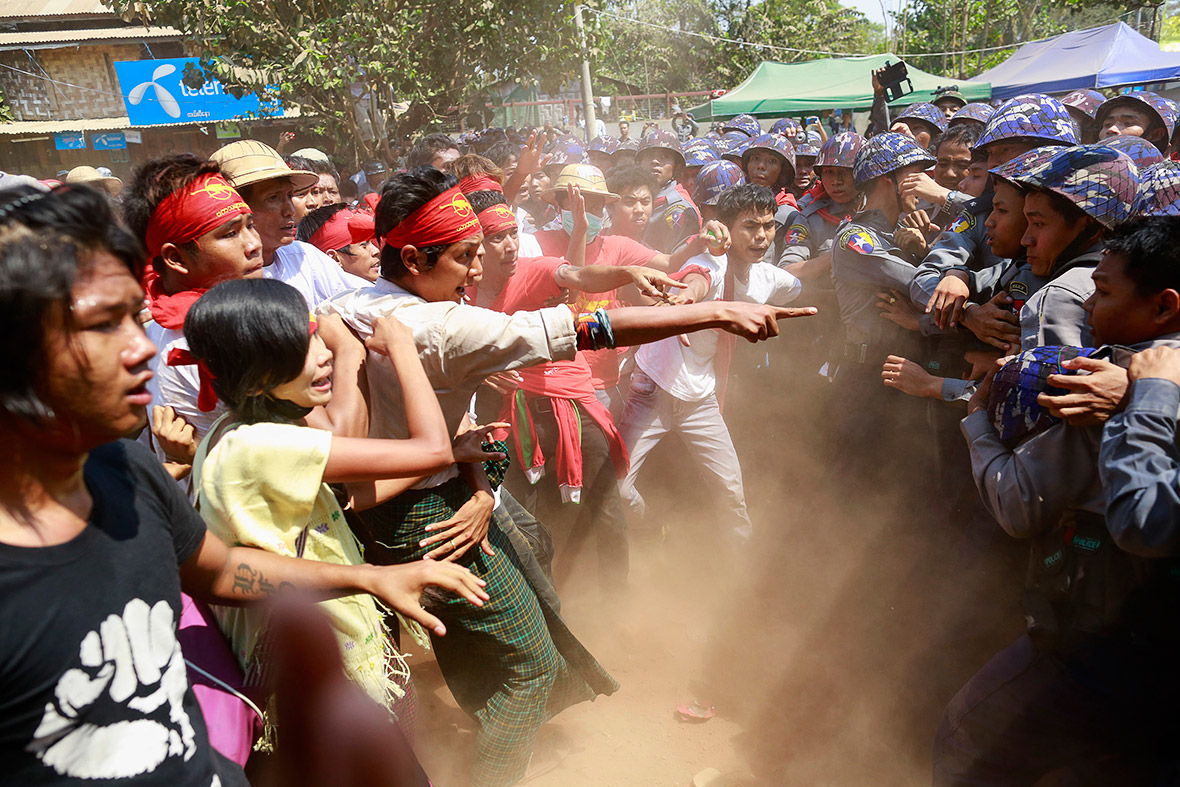
Student protesters clash with security forces while trying to break a police line in Letpadan
Soe Zeya Tun/Reuters
Burmese people are experiencing the erosion of freedoms of expression, association and
peaceful assembly in spite of key social reforms being implemented by a
government installed in Myanmar in 2011, a rights group has claimed.
In its new report, New Expression Meets Old Repression,
Amnesty International claimed the country's authorities have
increasingly cracked down on peaceful expression by arresting, incarcerating and charging "hundreds of people since 2014."
The
quasi-civilian government that replaced Myanmar's long military rule has been a
ccused of persecuting student
protesters, political activists, media workers, human rights defenders, land and labour
activists and advocates of religious tolerance, by using laws passed during the military era.
"While there have
been some efforts by the government to address the question of ongoing
arrests and imprisonment of human rights defenders and other activists,
these efforts have been largely ad hoc and focused on securing the
release of only some political prisoners, often at politically
advantageous moments," Amnesty said.
"In July 2013 President Thein Sein announced his government's intention to release all prisoners of
conscience, stating that none would be in jail by the end of the
year. Hope soon faded however, when it became clear that not all
prisoners of conscience and other political prisoners had been released.
Moreover, political arrests resumed within days of the pardon," the
report continued and added the country is creating "a new generation of
prisoners of conscience in Myanmar."
Demonstrators were demanding more freedom for universities and
students, banned from forming student unions. The protests started in
January and continued despite the government issuing a warning and
accusing demonstrators of being led by political organisations that
aimed to overthrow the regime.
Referring to the 2015 student protests, Mark Farmaner, Director at Burma Campaign UK, told IBTimes UK: "We
have seen shocking scenes of violence and we received reports from
people who said that police even attacked students while they were being
carried to ambulances. No efforts from senior commanders were made to
stop the violence. Burma has been under authoritarian law for decades so
police don't act without permission. I believe the Burmese government
gave police order to beat the protesters."
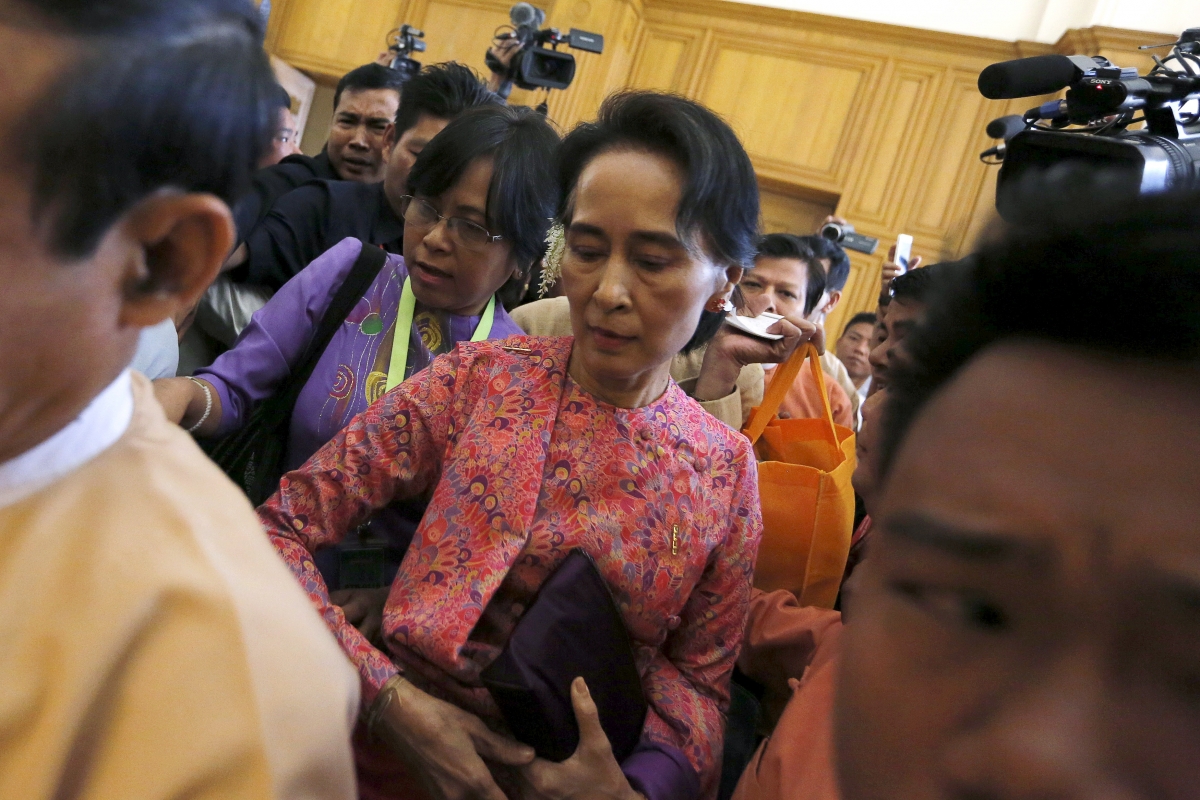
Myanmar's
National League for Democracy leader Aung San Suu Kyi arrives for the
opening of the new parliament in Naypyitaw on 1 February
Reuters
New government
In November 2015 the country held general elections that saw the opposition party National League for Democracy (NLD), led by Aung San Suu Kyi, emerging as winner. The new government is set to assume power at the end of March.
"Aung San Suu Kyi is said to have told diplomats at a
briefing shortly after the election that the continued imprisonment of
peaceful political activists would not be consistent with the country's transition to democracy," Amnesty said.
"Myanmar's
new government will take office with a historic opportunity to change
course on human rights but must break away from the deeply repressive
legal framework that for years has fuelled arbitrary arrests and
repression."
Myanmar is creating new generation of prisoners of conscience warns Amnesty International

Post a Comment