Cult recruitment: Why do people join them and what techniques are used to lure them in?
Léa Surugue
Cults employ sophisticated techniques to recruit their followers
Istock
For people who have
never been in contact with cults, these destructive groups may exert
some kind of morbid fascination. Secretive, isolating and hierarchical,
these structures appear difficult to escape. But how do people end up in
cults in the first place?
A lot of literature has been dedicated to how cults recruit and
operate, but despite years of research, scholars do not entirely
understand the psychology of victims, and why they end up being trapped.
Men and women who
join cults are often unaware of it until it is too late, and they are
isolated from everyone they know. They become dependant on the group,
which feels like the only perceived safe place – but also paradoxically
like a source of threat.
wo questions : who is more likely to join? And more importantly, how can people recognise they are being pulled in?
During a transition-time
One of the problems is there is no real consensus on whether cult victims have a typical 'psychological profile'.
"There is a failure to find a profile of a cult victim,
despite many scholars looking for such. However, prominent scholar
Margaret Singer found that people in a "normal life blip" such as a
normal transition - to or from university, a job, a relationship, and
other kinds of normal life changes - seem to be more at risk"
, Alexandra Stein, who specialises in social psychology of ideological extremism, told
IBTimes UK.
Her insight is particularly interesting because she herself was part
of a political cult in the United States, years ago. Looking back on her
experience, she says one of the push factors into the group was the
fact she was experiencing important changes in her life at the time. She
had just broken up with a boyfriend, and because she was idealist, she
wanted to meet people who fought for social justice.
A question of ideology?
Though it is difficult to generalise, idealism is often a common characteristic shared by cult victims.
"These
people are often idealists, they think they will make a difference to
humanity, or that they will best serve their God or their ideals within
the group. Individuals who are recruited are also often young adults in
the middle or upper class", Robert Pardon, director of the
"Individual
are holistic beings. They don't just join because of ideology, they go
in it for the feeling of worthiness, of belonging. Sometimes they don't
even understand what the theology of the group really is about", Pardon
adds.
Raising awareness and recovering
Victims' stories all are chilling reminders that dangerous groups
also rely on sophisticated techniques to recruit their members.
"Cults use elaborate techniques to break individuals down mentally and physically. We have identified 26 of these techniques.
The process of recruitment can be very quick, it is not uncommon for
victims to become trapped in just three to four days" Ian Haworth,
general secretary of Cult Information Centre told IBTimes UK.
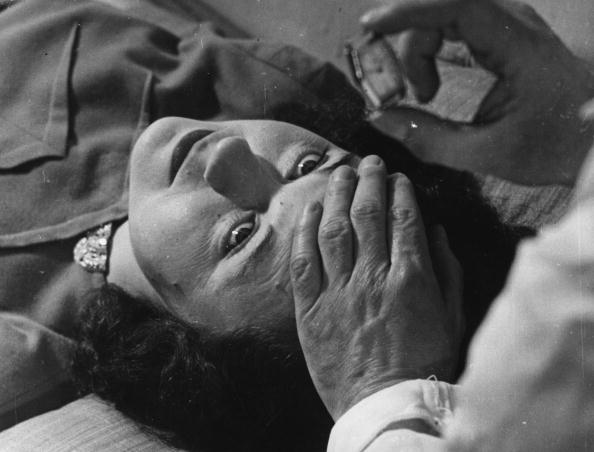
The Cult Information Centre explains hypnosis is one of the tactic used by cults to recruit people.
Charles Hewit/Getty Images
Some
experts believe it is in fact more useful to identify common
recruitment tactics rather than to focus on victims' psychological
traits.
It is important to recognise for example that a cult will try to separate its members from friends and family.
"If a group or an individual tries to isolate you from all your previous relationships, you can start worrying", Stein says.
Though it is not enough on its own, having strong relationships can offer a form of protection against cults.
"A victim will go
through a sudden change in personality that is called 'snapping'. After
snapping, the person ceases to be who he or she was, and becomes
entirely consumed by the group. All they do then is not in their own
interest, but in the interest of the group", Haworth says. Families and
friends can help by researching the group as quickly as possible. If it
turns out to be a cult, then they can warn a person before they are
trapped.
Learning from experience
For victims lucky
enough to escape, the process of recovery can be long and arduous, with
people experiencing feelings of guilt, confusion, depression or
disorientation which can last for about a year.
When victims do get better, raising awareness around them often becomes a priority.
"The
important thing is teaching how these organisations work, what is
happening in the relationship between members and leader, and why people
were successfully isolated. This should be done early, during school
years. We have to educate everyone about the fact that it is dangerous
to end up in isolating and hierarchical relationships", Stein concludes.


Post a Comment