
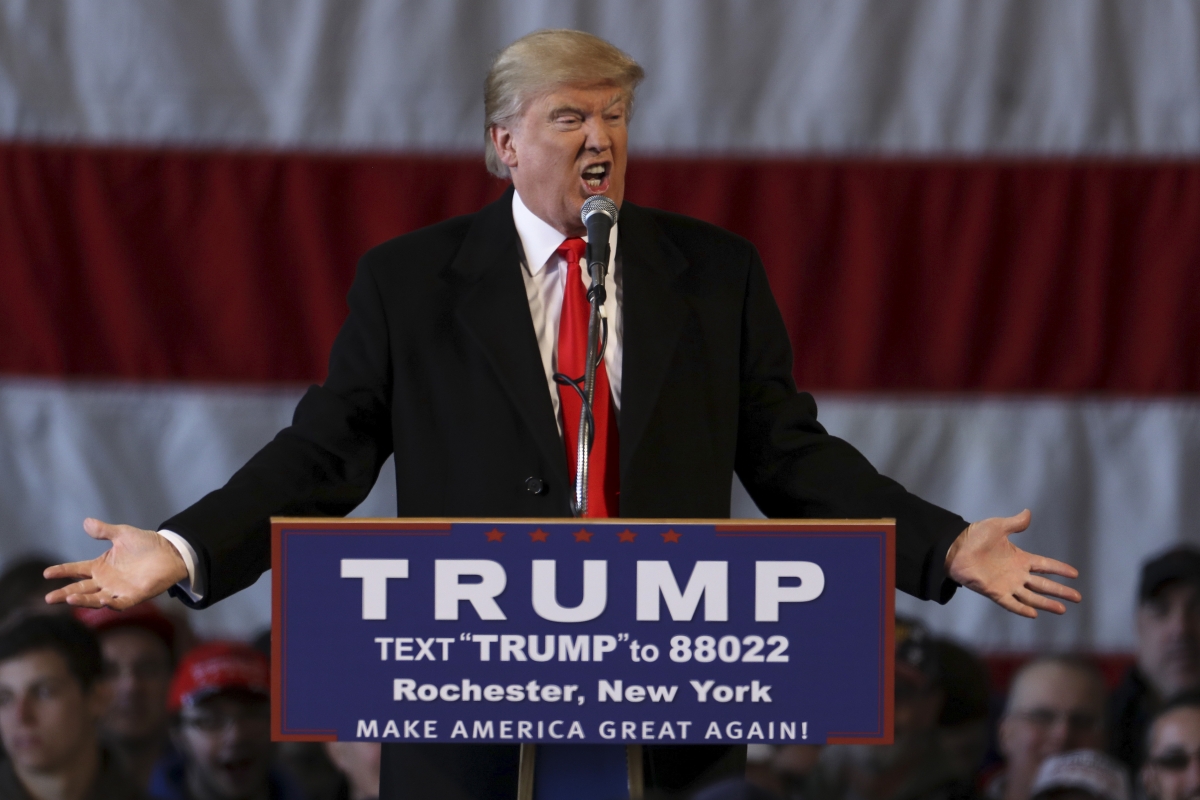
Donald Trump is tearing up the Republican party's foreign policy orthodoxy
Reuters
Fresh from his five smash victories in Tuesday's primaries,
Donald Trump took the time to unburden the secrets of his heart and
deliver a major foreign policy speech. The mode of it was probably more
shocking than the content itself. Trump actually read a script from a
teleprompter, something he has been very reluctant to do thus far in a
campaign marked by pro-wrestling-style ad-libs.
The shift in style was mirrored by a change in tone; this speech is
probably about as presidential as Trump is ever going to get.
Perhaps, at this point in the current year, pundits have become blasé
about Trump's ability to casually tear up Republican party orthodoxy
and profit from doing so at the ballot box. At any rate, I remain
utterly stunned by his naked contempt for the shibboleths of Republican
neoconservatism, and the manner in which he has reshaped the party's
debate and doctrines surrounding foreign policy, just as he has on trade
and immigration.This would be an impressive enough feat for a party insider, but for an outsider it is a staggering achievement. The Republican party cannot escape some elements of Trumpism now, even if Trump himself loses ignominiously to Hillary Clinton in November. Candidates in future presidential primary campaigns will surely revisit many of the themes of Trumpism, especially those shared with the older, Buchananite tradition of paleoconservatism.
Ignoring for now the issue of weapons of mass destruction, Trump aimed his fire at the broader project of nation-building, "a dangerous idea that we could make Western democracies out of countries that had no experience or interests in becoming a Western democracy... we tore up what institutions they had and then were surprised at what we unleashed. Civil war, religious fanaticism..."
It's hard to overstate just how extraordinary this is, coming from the presumptive presidential nominee of a party that thinks of unreconstructed neocons Lindsey Graham, John McCain, and Marco Rubio as its leading lights on foreign policy. Graham's reaction, naturally, was outrage, calling Trump "worse than Obama". Certainly Trump signalled a tendency to scepticism of foreign intervention that perhaps runs even deeper than Obama's, as he attacked Obama's intervention in Libya that ended in the death of Colonel Gaddafi, and lack of support for Egypt's Hosni Mubarak during the Arab Spring.
The Republican party cannot escape some elements of Trumpism now, even if Trump himself loses ignominiously to Hillary Clinton in November.In a Trump presidency, it seems likely friendly autocrats will be explicitly supported when Trump calculates that the disorders of nascent democracies are a greater danger to America. He is interested in the promotion of "regional stability, not radical change". This message will probably be welcomed by the Gulf monarchies, which fund a vast chunk of the Beltway's foreign policy think tanks.
Trump's mercantilist bent can in any case be reconciled with democracy promotion. In a 2015 paper, Swed and Weinreb found that higher levels of Western arms sales lead to lower levels of repressive actions against internal dissent by the buyers: firstly because the buyers become dependent on the West, and secondly, perhaps, because Western moral norms diffuse through foreign militaries as a result of the purchasing process (my thanks to the brilliant Anonymous Mugwump for bringing this research to my attention).
Naturally, just as Trump's speech contained much else to celebrate, such as a return of the Powell Doctrine ("if America fights, it must fight to win"), and a strident call for America's Nato partners to pay their fair share towards the common defence, it also contained a number of dubious claims.
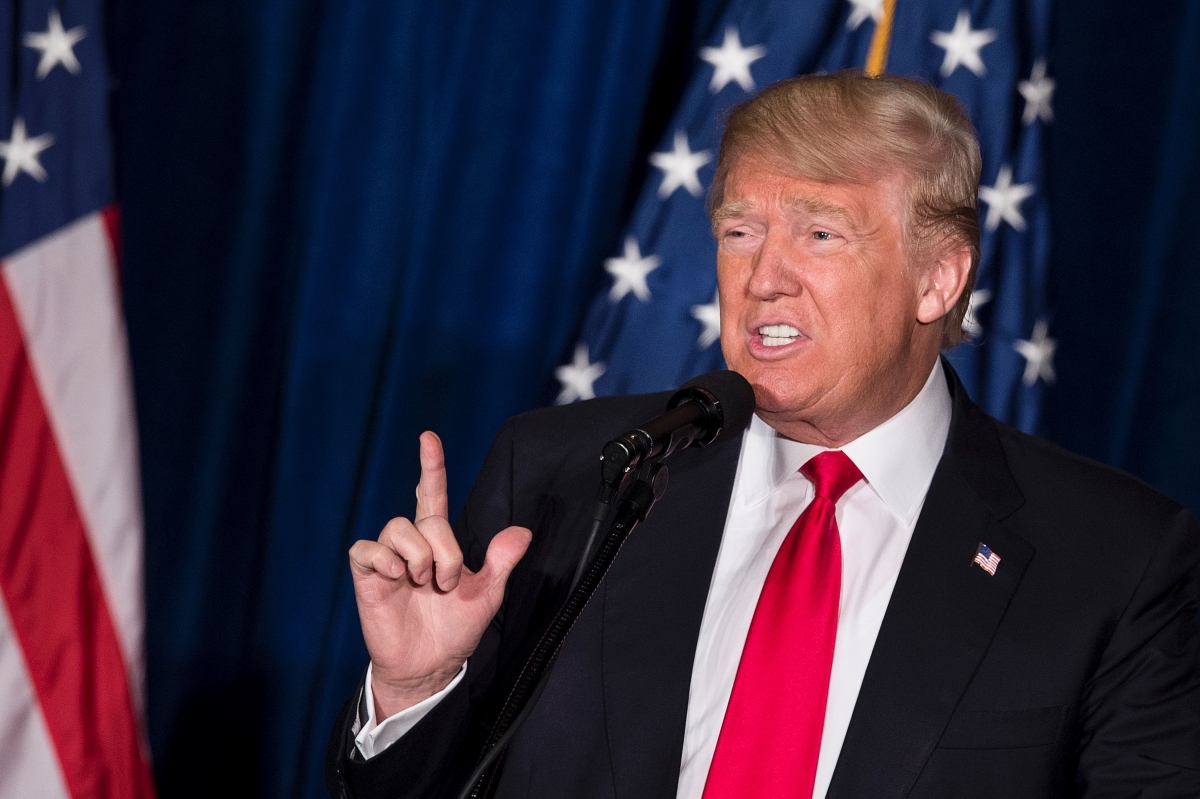
Donald Trump delivers his foreign policy speech at the Mayflower Hotel in Washington
GettyTowards the end of his speech, Trump explicitly turned to a theme that I have previously explored — the choice that America faces between potential futures as either globalist market state or traditional nation state. There is no doubt which choice Trump prefers. In one of the most remarkable rejections of 21st-century elite doctrine that we've ever seen, Trump stated: "We will no longer surrender this country or its people to the false song of globalism. The nation state remains the true foundation for happiness and harmony."
The choice between
these competing visions lies, of course, with the American people.
Regardless of whatever choice they indicate that they prefer in the
current year, the Republican party is surely indebted to Trump for
shattering the straitjackets of its foreign policy
orthodoxy,
and forging a pathway for a more rational, electable foreign policy
platform, one that represents an acceptable compromise between
Trumpism and neoconservatism.
Andrew Sabisky is an independent research worker and writer. Follow him on Twitter @AndrewSabisky
Post a Comment