Jacob Zuma could face 783 corruption charges as 2009 arms deal ruling set aside by High Court
Ludovica Iaccino
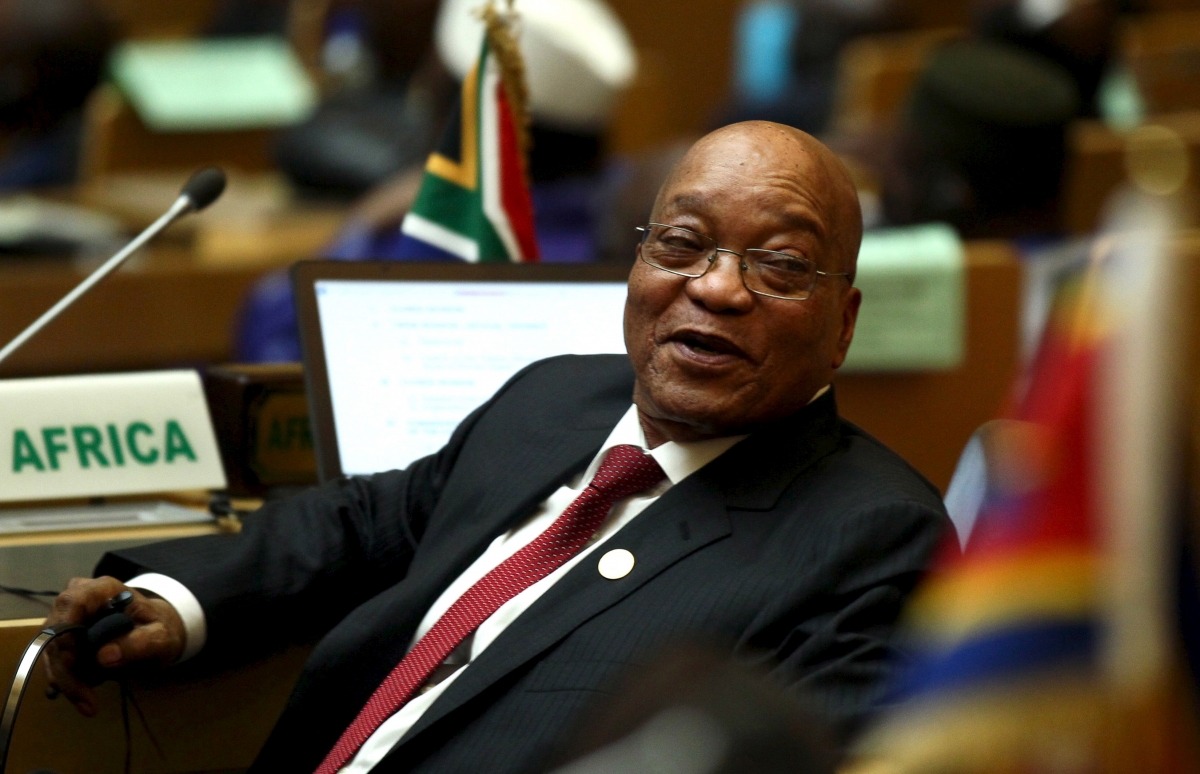
South Africa's President Jacob Zuma has been urged to resign following growing discontent and allegations of corruption
Reuters
South Africa's High Court in Pretoria has ruled that the decision to drop 783 corruption charges against Jacob Zuma in 2009 was
"irrational"
and did not follow correct procedure. With the ruling set aside, the
National Prosecuting Authority (NPA) will now decide whether to
reinstate the charges or not.
The charges were withdrawn
by then Director of Public Prosecutions Mokotedi Mpshe
on grounds of alleged
political interference in the case, related to a multi-billion-dollar arms deal.
Mpshe made the decision after the emergence of recorded
phone conversations, submitted as evidence in the case – the so-called 'spy tapes'.
The controversial decision came a few months before the 2009 general election that saw Zuma emerging as president.
The main opposition Democratic Alliance (DA) brought the motion to reinstate the charges.
Deputy Judge
President Aubrey Ledwaba said the decision to drop the charges was
irrational: "We find that Mr Mpshe found himself under pressure, and
consequently made an irrational decision.
The DA's application succeeds. The decision of first respondent in 2009 to discontinue prosecution is reviewed and set aside."
The
ruling came as Zuma is facing mounting pressure and has been urged to
step down following growing discontent and allegations of corruption.
The president is accused, among other things, of having close ties with
the
who are accused of wielding excessive political influence in the country. The Gupta family denies the allegations.
Earlier in April, a commission of inquiry set up by Zuma cleared of any wrongdoing people
implicated in the controversial deal, that enabled the ruling party
African National Congress (ANC) to purchase weapons to modernise the
country's defence force. Announced in 1999, it was the largest arms deal
since the end of apartheid in 1994 and it involved several European
companies.
Zuma was
dismissed as deputy-president in 2005 after his former financial adviser
Schabir Shaik was convicted of corruption over the 1999 deal.
in
April after the country's Constitutional Court ruled the leader and the
National Assembly breached the constitution for failing to repay state
funds used to renovate Zuma's Nkandla private residence, in
KwaZulu-Natal province.
Jacob Zuma could face 783 corruption charges as 2009 arms deal ruling set aside by High Court

Post a Comment