New maritime archaeology and documents mark the advent of Atomic Age and Cold War
Léa Surugue
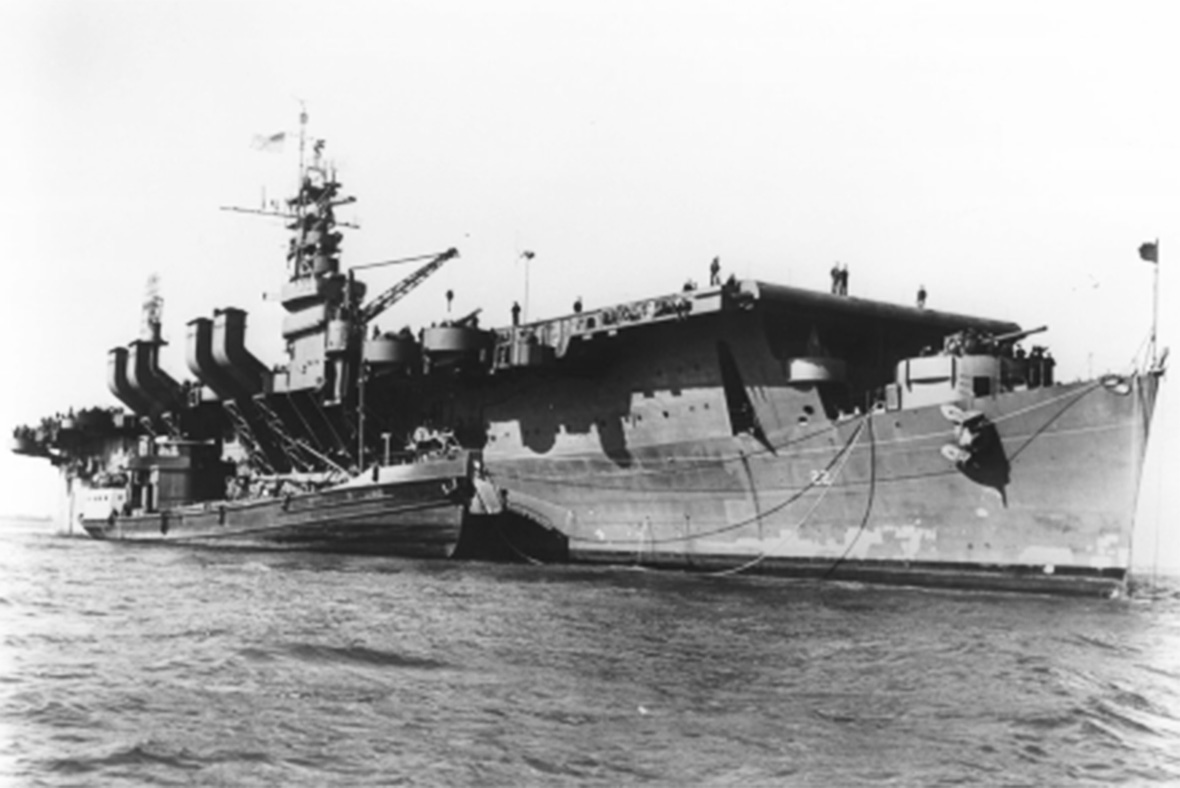
The USS Independence carried aircrafts during WW2.
Naval History and Heritage Command
Recently declassified documents, dating back to the end of
WW2, have provided archaeologists with a unique opportunity to study the
advent of the atomic age and the cold war. The archives record how the
USS Independence - a ship which served as an aircraft carrier during the
second world war – was used for nuclear tests in the summer of 1946.
The warship was deliberately sunk in 1951 by US forces, to prevent it from falling into soviet hands.
In 2015, the US
National Oceanic & Atmospheric Administration
(NOAA) and the Office of National Marine Sanctuaries both worked with
the Boeing Company to locate the exact place of the wreck. They gathered
information about the remains, which were found approximately 30 miles
off the coast of California, US.
In the April issue of the journal of Maritime Archaeology, scientists have analysed these remains, as well as the newly declassified documents, to see what they tell us about the dawn of the nuclear era, which gave way to decades of cold war.
The bikini tests: a testimony to the cold war
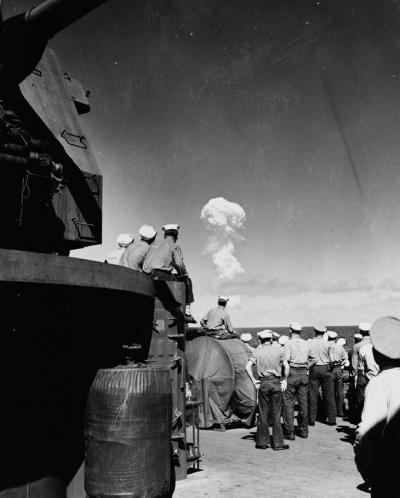
Sailors watched the Able Test burst miles out to sea from the deck of the support ship USS Fall River on July 1, 1946.
Naval History and Heritage Command
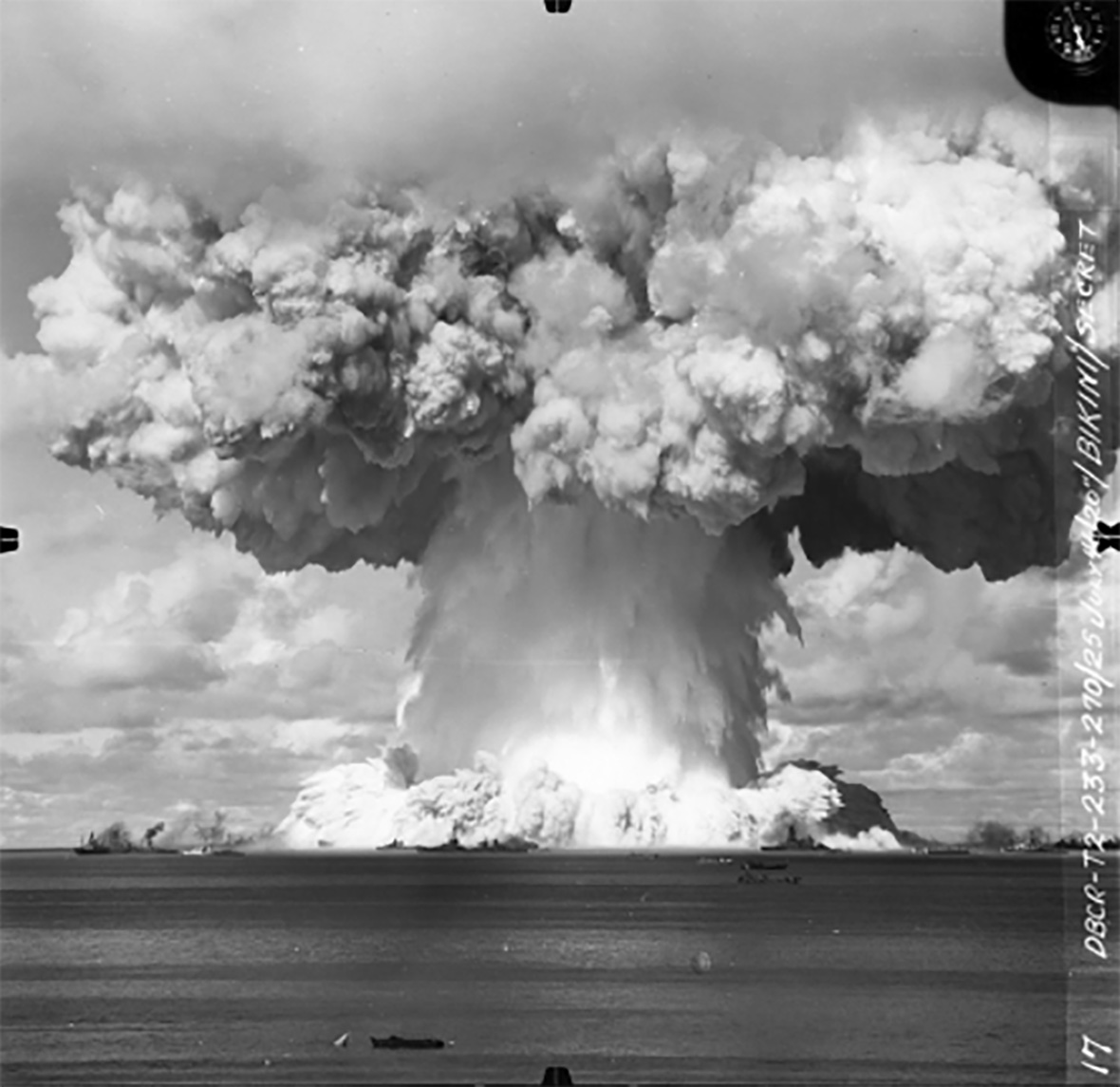
There are a number of written accounts suggesting that in the summer of 1946, at Bikini Atoll
(Marshall Islands), the US conducted a first series of nuclear tests known as the "Bikini tests".
The declassified
documents reveal that one of the goals was to test whether warships -
including the Independence - could survive under nuclear attack.
Two bombs were
detonated, one dropped above the fleet and the other exploded below
water. It was a clear success, as the Independence remained afloat,
although badly damaged and contaminated with radiation.
The accuracy of these written sources was confirmed by
maritime archaeological work. Sonar images of the Independence show the
destruction and distortion to the hull that resulted from the atomic
blasts. They also compare, favourably, with the drawings and photographs
taken of the vessel at the time.
"Historical and, by extension, maritime archaeology of the
recent past can and should include merging documentary evidence with
physical remains," says NOAA's James Delgado, one of the lead researcher
working on the project.
Entering the atomic age
The Independence's resistance to nuclear warfare was tested in 1946.
Naval History and Heritage Command
The
combination of written and archaeological sources leaves no doubts to
the fact that the US planned to use veteran warships for nuclear
warfare, seemingly a reason for why these ships had to be thoroughly
tested.
The Independence's remains are important relics of the cold
war. Analysed in the light of the declassified documents, they suggest
that the 'Bikini tests' marked a definite entry into the Atomic Age.
Studying the Independence provides new evidence that by 1946, "t
he question was not will, but when the USA and USSR would be drawn into a nuclear war", the scientists write in the Journal
of Maritime Archaeology's editorial.
New maritime archaeology and documents mark the advent of Atomic Age and Cold War

Post a Comment