
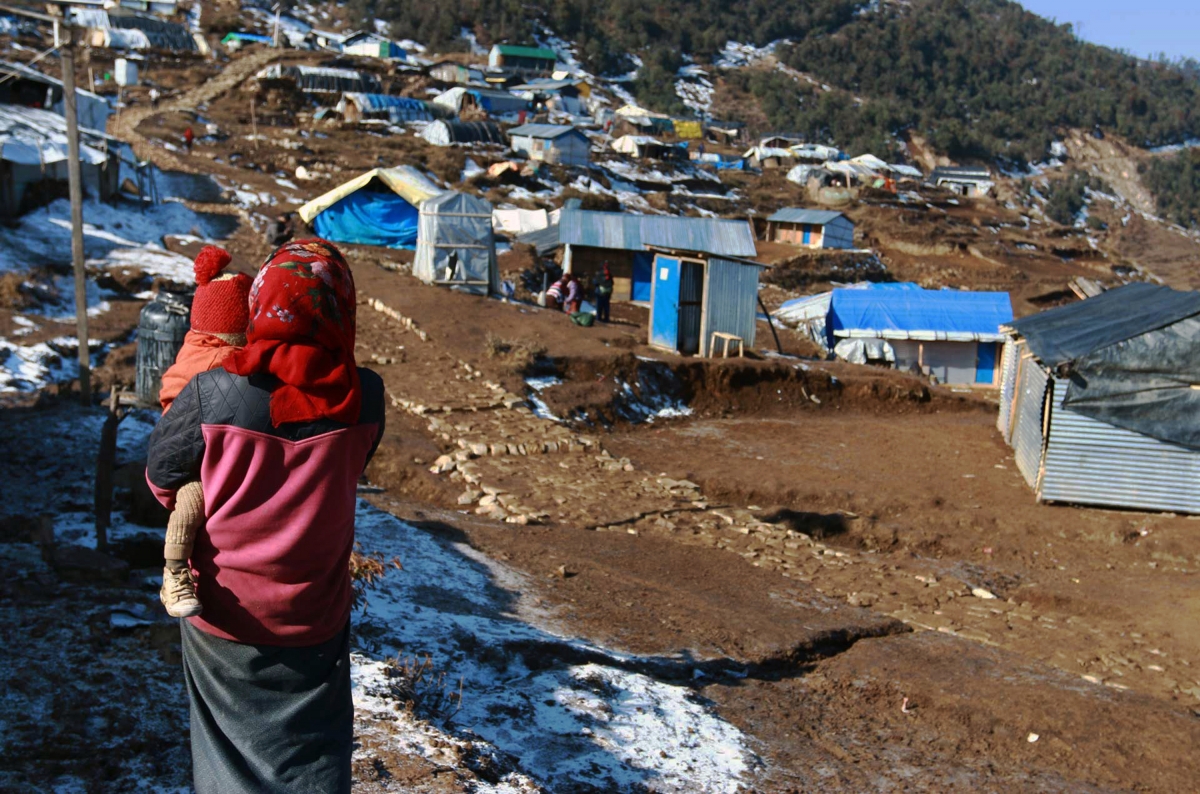
Nine months after an earthquake hit Nepal, survivors fight sub-zero temperatures in flimsy temporary shelters
Getty Images
The news that criminal gangs have penetrated refugee
communities from the area hit by the Nepali earthquake and are offering
their children for sale as domestic servants in the UK and other wealthy
destinations is shocking, but not surprising. This kind of transaction
is happening all over the world.
For those concerned about the emergence of modern forms of
slavery, it is a commonplace that the numbers of adults and children
trafficked into sexual or labour exploitation, including domestic servitude, is huge and growing.
Compared with the 200 years of the Transatlantic Slave
Trade, during which around 14 million black Africans were forcibly
trafficked across the Atlantic to the Caribbean and the Americas, there
are now probably in excess of 30 million adults and children at any one
time who could be regarded as modern slaves. At this order of magnitude,
there remains considerable doubt about precise numbers.
Although international conventions have emerged since the
creation of The League Of Nations, and slavery is now illegal in most
states, this brings problems of its own. Unlike the Transatlantic Slave
Trade, managed as an international enterprise, the modern slavery
business is hidden and conducted, not in the open by states, but
covertly by criminal gangs. It is now the second or third most
profitable global trade, after the drugs and arms trades, depending on
how you count turnover.
These gangs exploit
the increasing mobility and vulnerability of labour to move people to
where modern slaves might be put to work, whether as domestic servants,
picking vegetables, packing meat products, working in brothels, farming
cannabis or even being available for organ harvesting.
Slavery is now the second or third most profitable global trade after the drugs and arms trades
States are waking up slowly to this trade; cases are
increasingly (although still in small numbers) being brought before the
courts. However, despite legislation addressing the modern slave trade,
most professionals whose job should include spotting the victims of
trafficking and forced labour, and the vast majority of the public,
remain unaware of this trade in human beings, having little
understanding of how to spot a victim.
Some cases achieve a very high media profile, although the
public, through misreporting or misunderstanding, often don't understand
the significance of what they are reading. One such case was that of
the Morecambe Bay cockle pickers in the UK in 2004 in which 23 Chinese
workers drowned when they could not run faster than the incoming tide in
a notoriously dangerous coastal area in Northern England. For most
people, however, the issue came to be understood as an issue of illegal
immigration given that the workers were smuggled into the UK before they
were trafficked into forced labour.
Another was the case of Victoria Climbie, a little girl from
West Africa, brought to the UK allegedly to improve her life chances,
but who ended up being beaten to death by adults who imprisoned her.
This became a case primarily of child cruelty and professional
incompetence. The fact that she had been trafficked into the UK was lost
sight of.
Current visa arrangements mean that if a servant (who may in time be one of these sold children) protests their actual conditions of employment − abuse, severe exploitation and rape − they face deportation to perhaps being re-trafficked.
Border Agency
officials are getting wiser now but this has not stopped the flow of
children and young adults being trafficked into the UK and other
so-called "developed" countries. Even where Border agencies are
suspicious of the stories told by unaccompanied children or by those
bringing them across borders, and children are taken into care, many
still escape from care homes rapidly and are found later as prostitutes
on the streets of cities, or disappear into private domiciliary
settings.
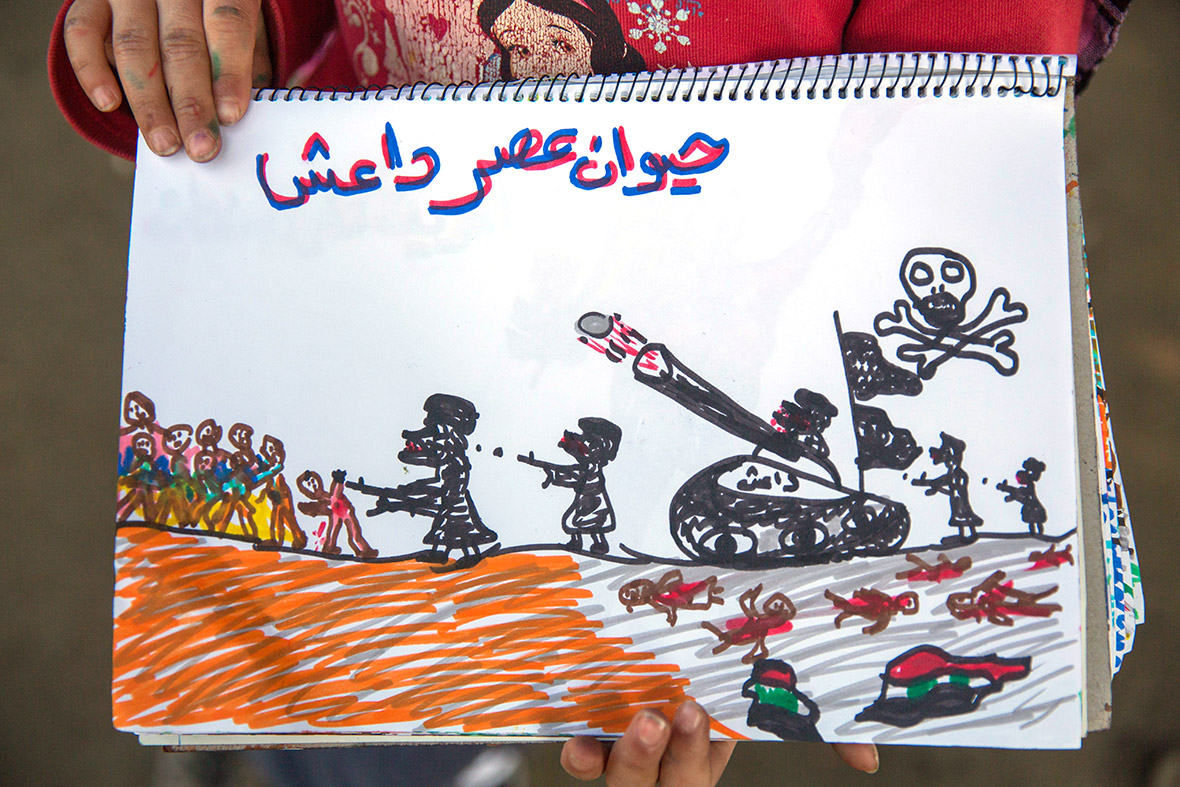
An illustration by eight-year-old Shaharzad Hassan from Syria on the horrors perpetrated by Isis
Getty Images
One
such case recently highlighted was of a 13-year-old girl brought to a
northern UK city and incarcerated in domestic servitude for 15 years,
beaten and abused by older adults, until she was accidentally discovered
by a professional worker investigating, ironically, some other form of
wrongdoing.
In situations of
chaos, as with the migrant exodus from Syria, gangs find easy pickings
amongst children separated from parents. There is now considerable
concern that as many as 10,000 or more children who have either come
unaccompanied or been separated from their carers have fallen into the
hands of trafficking gangs.
The case of the Nepali children raises specific, pressing
issues even in this grotesque context. It is common for children in
poorer countries to be trafficked across borders (as Nepali girls are
into India for prostitution), or within countries (as with Ghanaian
children, sold into working for fishermen on the Volta Lake) often under
the misapprehension that they are going to a better life. Parents and
guardians, often driven by extreme poverty, collude in this trade by
accepting "cash for kids".
Within the UK, the issue of domestic servitude – the final
destination for some of these children – was the focus of heated debate
as the Modern Slavery Act became law. Home Secretary Theresa May might
say that the act is designed to stop modern slavery but at present the
government is colluding in a system of domestic servitude whereby
diplomats and rich businesspeople bring domestic workers with them on
their own passports.
Current visa arrangements mean that if a servant (who may in
time be one of these sold children) protests their actual conditions of
employment − abuse, severe exploitation and rape − they face
deportation to perhaps being re-trafficked. A fundamental review of this
provision has told the home secretary that current arrangements are
highly exploitative. Perhaps she should deal with this issue first
before wringing her hands over the plight of these children.
Gary Craig is the professor of social justice at Durham
University, UK and emeritus professor of social justice at the
University of Hull.
Post a Comment