
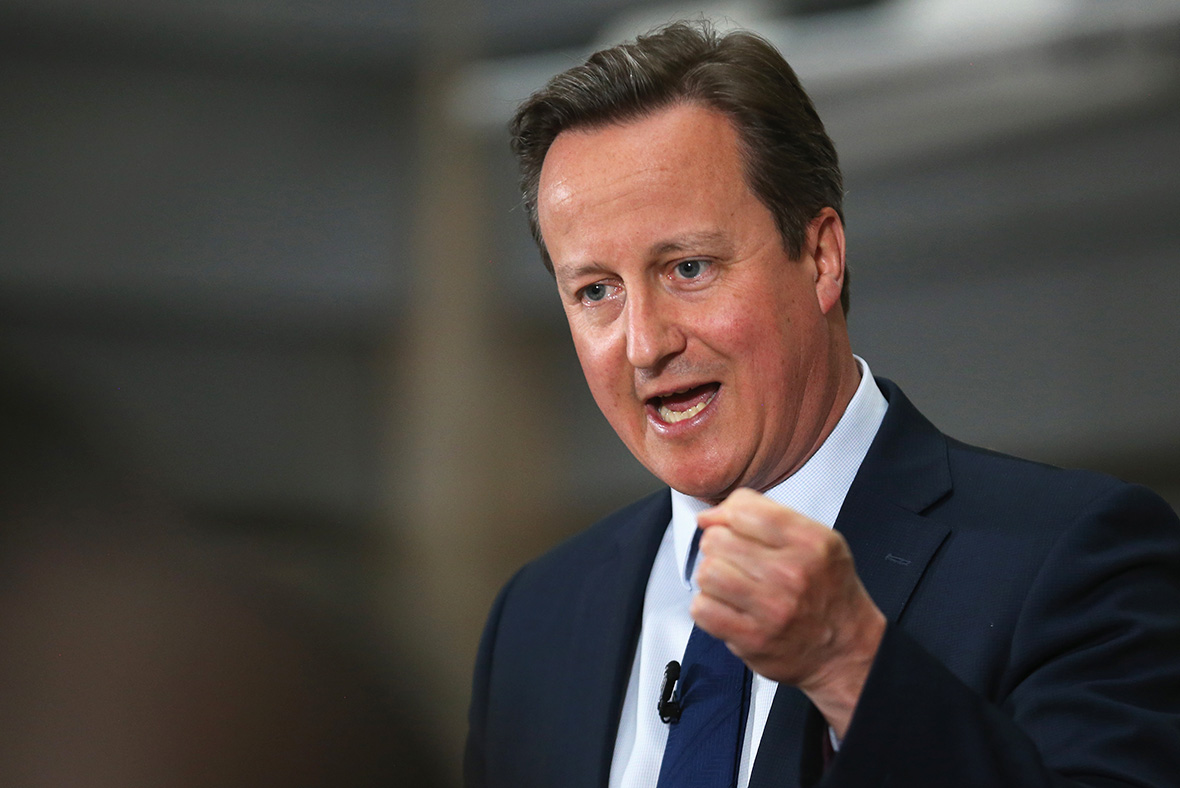
Prime Minister David Cameron in a 2013 letter advocated that trusts be dealt differently in tax-evasion crackdown
Christopher Furlong/ Getty Images
Even though Prime Minister David Cameron showed initiative
in addressing tax evasion and corruption through establishment of
offshore companies, he also urged the European Union to exempt trusts
from such measures, a 2013 letter has revealed.
The prime minister is facing increased scrutiny since the so-called Panama Papers
revealed that his late father Ian Cameron ran an offshore trust,
Blairmore Holdings Inc, registered in Panama and that the senior Cameron
was among the clients of Panama-based law firm Mossack Fonseca. David has denied owning any shares or having any links with the trust.
The Financial Times first reported on David's
letter dated 14 November
2013 sent to Herman Van Rompuy, the then president of the European
Council, in which the prime minister pushed for the creation of a
publicly accessible central register of beneficial ownership of
companies for greater transparency and prevention of misuse of
companies.
He urged the EU to initiate crackdown on tax evasion and
corporate secrecy through the 4th Money Laundering Directive (MLD) and
called for "global efforts to strengthen transparency of company
beneficial ownership", arguing that "a lack of knowledge" about the real
owner of a company "facilitates illicit domestic and cross-border money
laundering, corruption, tax evasion and other crimes".
However, David suggested that instead of subjecting trusts
to the same transparency measures, the EU must back efforts by the
Organisation for Cooperation and Development (OECD) and G20 countries to
form a "new single global standard on automatic tax information
exchange" to prevent tax evasion and misuse of trusts.
"I know some want Europe to go even further to prevent the
abuse of trusts and related private legal arrangements. It is clearly
important we recognise the important differences between companies and
trusts. This means that the solution for addressing the potential misuse
of companies — such as central public registries — may well not be
appropriate generally," the letter read.
The prime minister argued that authorities are already
"gaining access to more information than ever before on trusts,
especially off-shore trusts, through the automatic tax information
agreements being concluded by UK and other EU countries".
A senior government source was quoted as saying to the Financial Times
that David's letter was aimed at highlighting the complications
involved in creation of a central registry for trusts and that it may
lead to distraction from the main objective of tracking the ownership of
shell companies.
"It would have slowed down the process because of the
different types of trust involved," the official told the newspaper,
adding: "They are sometimes used to protect vulnerable people, so that
would have been an extra complication."
"As the [money laundering] directive went through, we
reached a position where trusts which generate tax consequences had to
demonstrate their ownership to HM Revenue & Customs," the official
added.
France, Austria and members of the European Parliament were
opposed to the UK's stance of excluding trusts and accused the country
of double standards, the officials reportedly said.
Post a Comment